• Skip to primary navigation
  • Skip to main content
  • LinkedIn
  • Videos
  • Research
    • Facilities
    • Vehicles
    • Sponsors
  • Publications
    • Books
    • Journal Papers
    • Conference Papers
  • People
    • Faculty
    • Staff
    • Graduate Students
    • Undergraduate Students
    • Alumni
    • Where VSCL Alumni Work
    • Friends and Colleagues
  • Prospective Students
  • About Us
  • Contact Us
  • Where VSCL Alumni Work

Texas A&M University College of Engineering
  • A26U8345-2
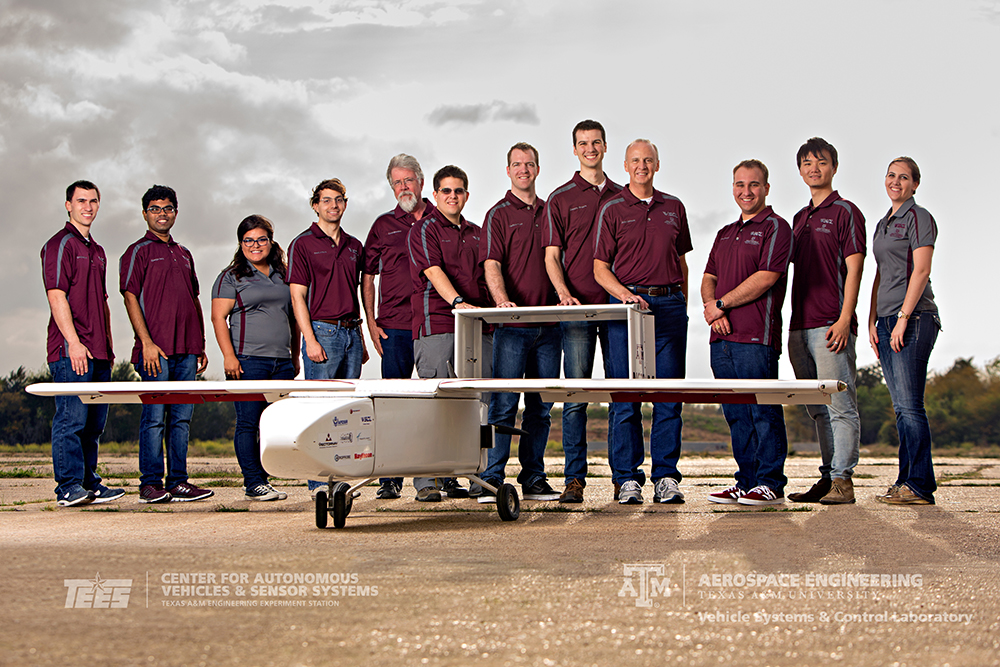
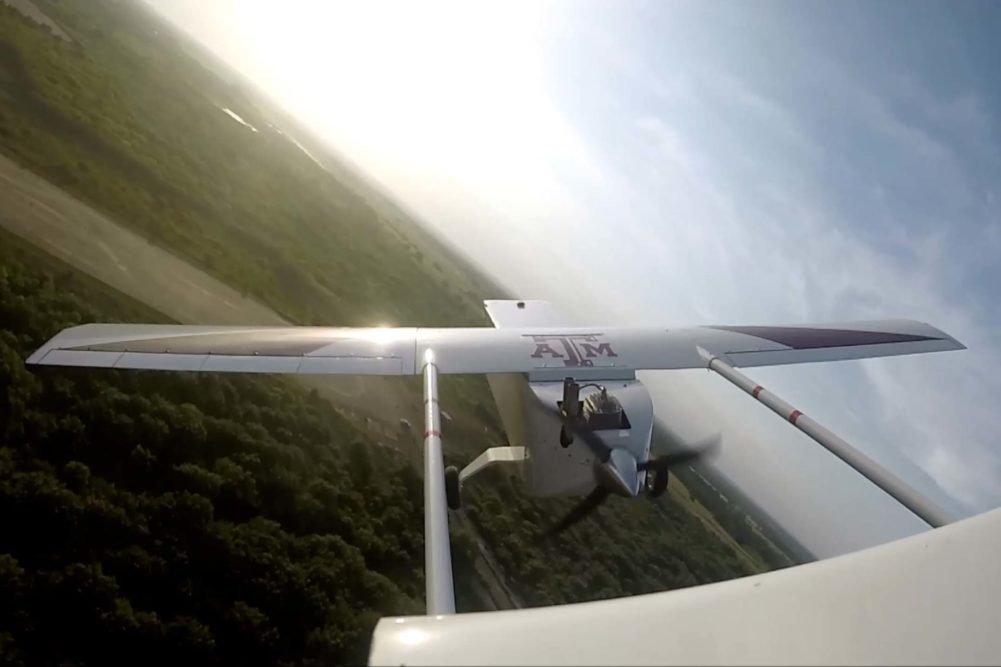
    Pegasus UAS Designed, Built, and Patented by VSCL
  • VSCL Group 2025
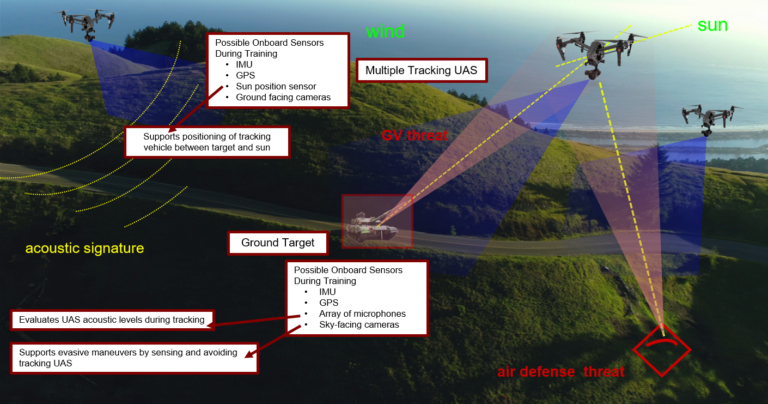
  • RTD Full Scenario
    Robust Threat Detection for Ground Combat Vehicles with Multi-Domain Surveillance in Hostile Environments
  • AUS-2
    Pegasus UAS Designed, Built, and Patented by VSCL
  • image001 (2)
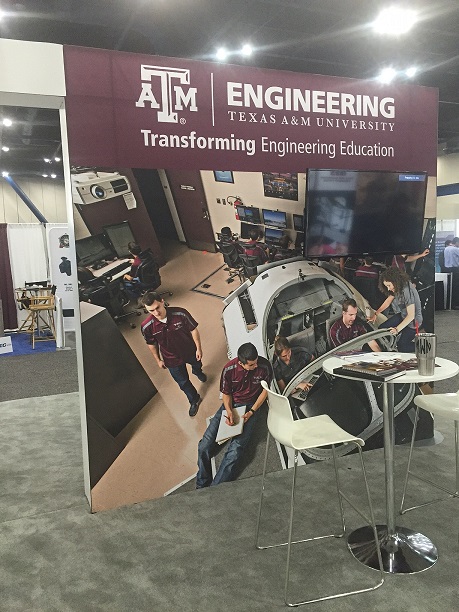
    2017 ASEE Annual Conference & Exposition, Columbus OH
  • col_diagram_exp2
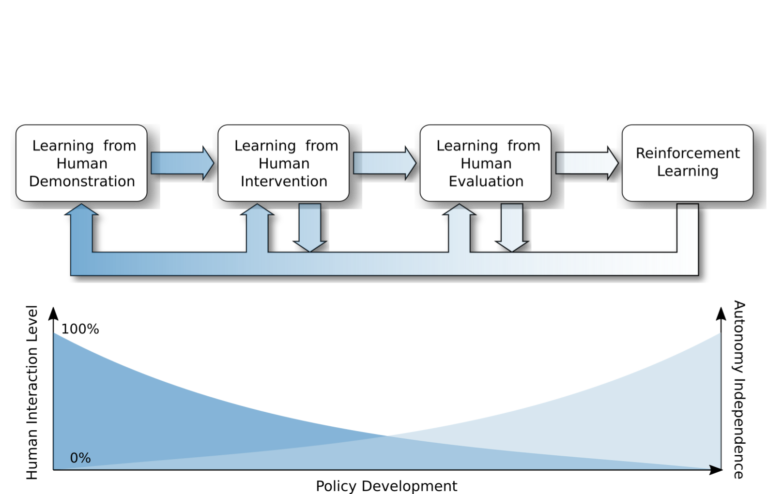
    Cycle of Learning for Human-Agent Interaction
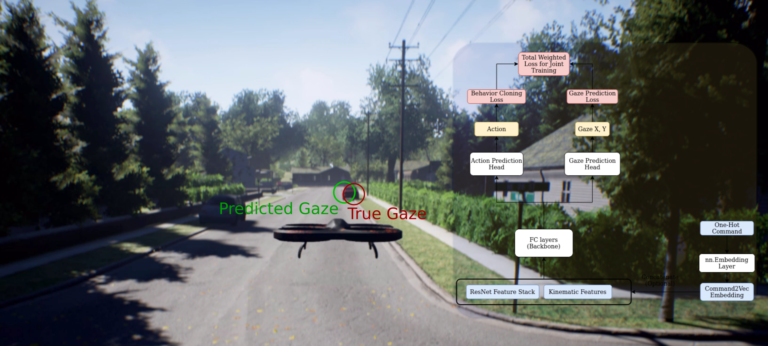
  • gaze_vscl(1)
    Gaze-Guided Imitation Learning
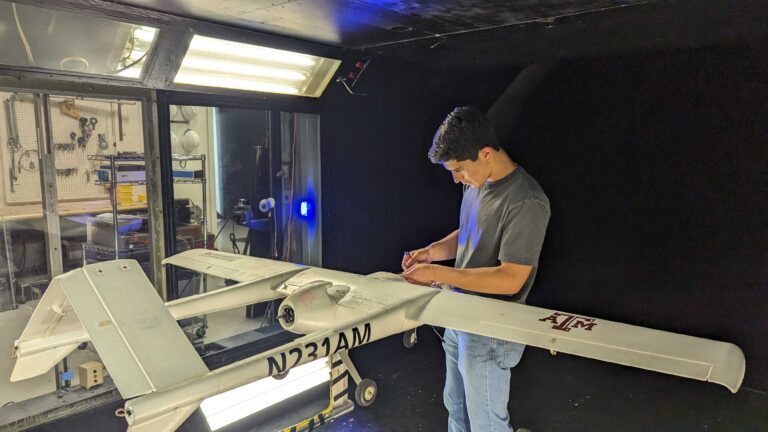
  • Undergraduate research assistant working on UAS platform for wind tunnel testing.
    Wind tunnel testing of UAS platform.
  • airsim_col
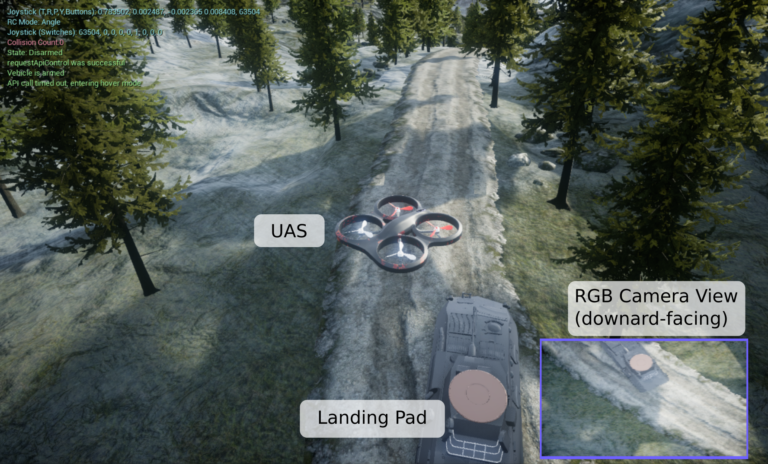
    Cycle-of-Learning for Autonomous Systems to Facilitate Human-Agent Teaming
  • WebsiteTarget
  • 28-Army-futures-command-1200×750
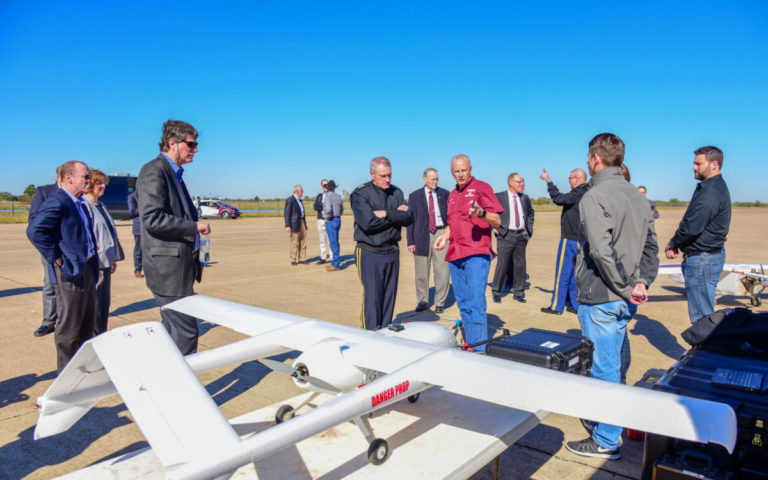
    Dr. John Valasek briefs General John M. Murray, commanding general of United States Army Futures Command (AFC), on autonomous UAS research in VSCL
  • A26U7927

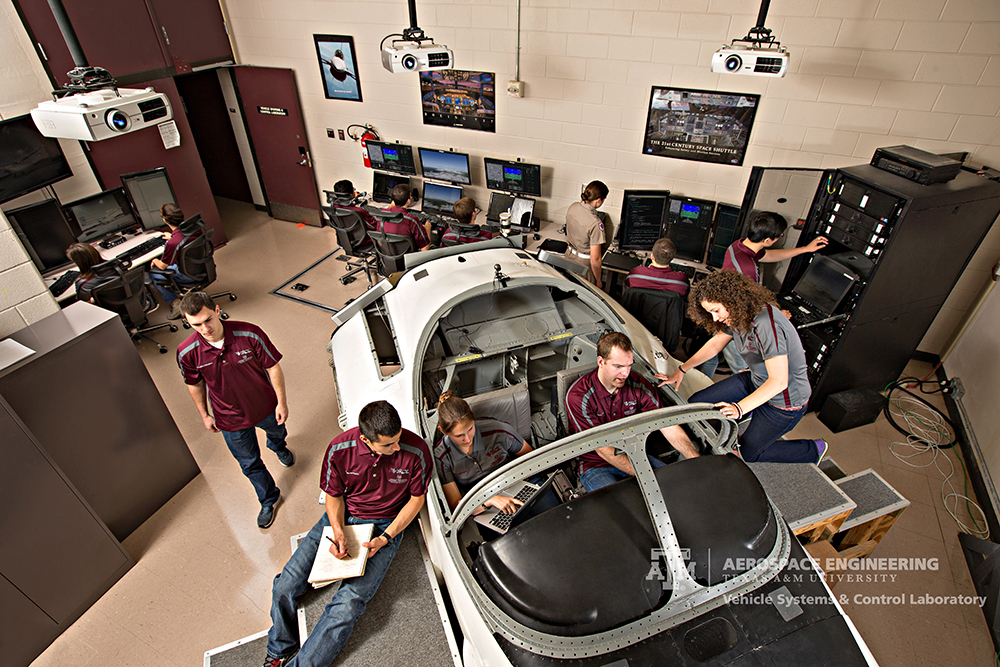
    Engineering Fight Simulator Facility
  • A26U8172
    UAS Flight Research Facility at RELLIS Test Range
  • 20160727_143456
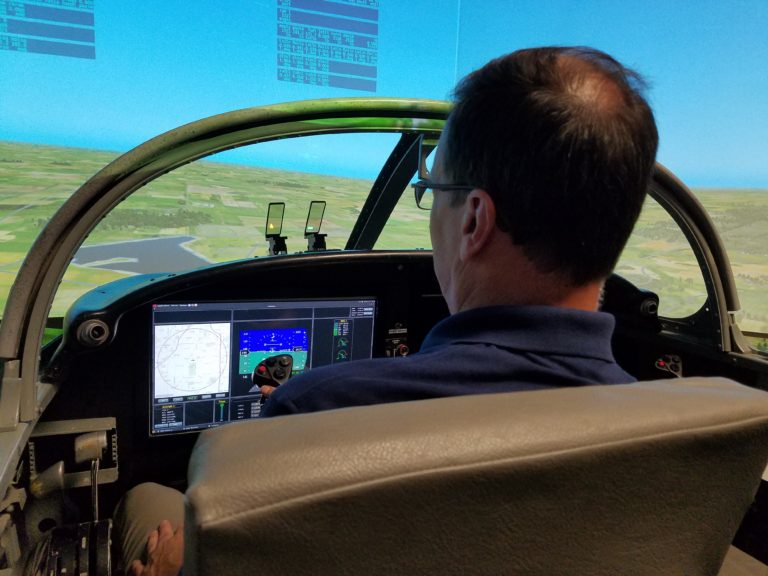
    FAA Test Pilot David Sizoo Flies an Approach Using Derived AOA in the Engineering Flight Simulator

People, Innovation, Excellence

Research Goal

Utilize the Theory-Computation-Experiment paradigm to research Low Cost Attritable Aircraft Technology (LCAAT) with autonomy to establish trust, providing a game changing capability that transforms the way manned and unmanned air, space, and ground systems are designed, controlled, and operated to effectively accomplish missions and tasks. VSCL is thus focused on synergistic strategies for the analysis, control, validation & verification of complex autonomous vehicle and sensor systems operating in challenging environments.

The Vehicle Systems & Control Laboratory is directed by Dr. John Valasek.

Graduate Research Assistant Positions Available

The Vehicle Systems & Control Laboratory (VSCL) has multiple fully funded Ph.D. positions in Aerospace Engineering that are available. Interested students are encouraged to apply for research in the following areas:
– Autonomous and Nonlinear Control of Cyber-Physical Air, Space, and Ground Systems
– Vision Based Sensors and Navigation Systems
– Cybersecurity for Air and Space Vehicles
– Air and Space Vehicle Control and Management
– Advanced Cockpit/UAS Systems and Displays
– Control of Bio-Nano Materials and Structures
– Human-in-the-Loop Artificial Intelligence for Coordinated Autonomous Unmanned Air Systems

More information and details for applying can be found here.

UAS Research and Flight Testing by the Numbers

  • 21 Years of Fixed-Wing UAS Flight Testing under FAA Auspices
  • 26 Externally Funded UAS Research Programs (1999 – Present)
  • 400+ Flights with an operational tempo of 133 thermal IR and multi-spectral data collection flights in the field over 12 months (2015 – 2016)
  • 24 Certified UAS Flight Testers Currently on Staff
  • 3 Certified UAS Pilots Currently on Staff
  • 13 UAS Vehicles in Current Fleet

Research Project Spotlight

Project: System Identification for Unmanned Air Systems

Sponsor: National Science Foundation (NSF) Center for Autonomous Air Mobility & Sensing (CAAMS)

Purpose: System Identification is a process to develop a mathematical representation of the dynamics of a physical system from measured data. Accurate models enable prediction of performance and dynamics of a system.

Challenges: Models for sUAS are generally not available as manufacturers do not have models for commercial sUAS and models for military sUAS are not typically available. Modeling and control systems are often vehicle dependent and not easily portable across sUAS. Many commercial autopilots do not provide data needed for online system identification

Our Approach: Utilizing the Observer Kalman Filter Identification algorithm with the Developmental Flight Test Instrumentation 2 framework, full state space models can be identified in near-real time onboard the vehicle utilizing data from a variety of sensors.


Recent News


VSCL graduate students present papers virtually at the 2021 International Conference on Unmanned Air Systems (ICUAS)

Posted on June 21, 2021 by Garrett Jares

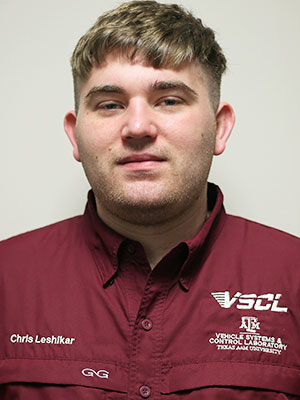
VSCL graduate students Garrett Jares and Chris Leshikar presented papers virtually on 18 June at the 2021 ICUAS in Athens, Greece.
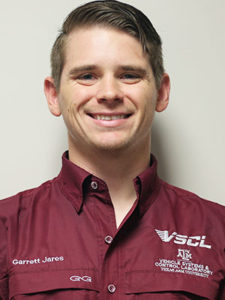
Garrett Jares ’17 presented the paper “Investigating Malware-in-the-Loop Autopilot Attack Using Falsification of Sensor Data”, which seeks to investigate and further understand the threat of UAS hijacking via cyber attack. The paper builds on previous work by further investigating an attack method in which the attacker attempts to gain control of the vehicle by intercepting and modifying the vehicle’s sensor data. This attack is explained analytically, demonstrated on a simple second-order system in a MATLAB/Simulink simulation, and validated in a series of Gazebo simulation experiments using the ArduPilot Software-In-The-Loop simulation.  These experiments serve to validate and evaluate the performance of the attack on a real-world autopilot software and the attack is shown to pose a legitimate threat to the system.
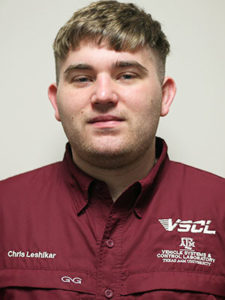
 

Chris Leshikar ’20 presented the paper “Asymmetric Quadrotor Modeling and State-Space Identification”, which addresses system identification flight test results of an asymmetric quadrotor.  The goal of the flight tests was to obtain a linear state-space model of an asymmetric Modified F450 quadrotor using the Observer/Kalman Identification (OKID) algorithm.  Automated excitation maneuvers were injected using the Developmental Flight Test Instrumentation Two (DFTI2) system. The identified models obtained from the flight tests are then compared to analytical state-space models derived and presented in the paper.  The identified linear state-space model using automated excitations matched reasonably well with the nonzero elements of the analytical linear state-space model.
Filed Under: Presentations

VSCL undergraduate Alex Gross recognized for scholastic and research excellence with AIAA Foundation Cary Spitzer Digital Avionics Scholarship

Posted on June 21, 2021 by Hannah Lehman

VSCL Undergraduate researcher Alexander Gross ‘23 is the recipient of the AIAA Foundation Cary Spitzer Digital Avionics Scholarship for his research contributions on the Aided Threat Recognition from Mobile Cooperative and Autonomous Sensors project and in applications of the Cycle-of-Learning methodology for training of Mars rover vehicles and their interaction with human operators. He is currently working towards his bachelor’s degree in Aerospace Engineering with minors in Computer Science and Mathematics while in Engineering Honors. He has been conducting research in the Vehicle Systems & Control Laboratory under Dr. Valasek since his sophomore year.

Filed Under: Awards

Three VSCL Engineers Co-Inventors on new US Patent for Autonomous Aircraft Taxiing

Posted on June 20, 2021 by Hannah Lehman

VSCL alumni Tiffany Williamson and Felix Turcios and current VSCL Ph.D. student Hannah Lehman are co-inventors on newly awarded US Patent 11,037,455, “Autonomous judgmental oversteering determination system for aircraft taxiing”. The system uses reinforcement learning  to create a system for an autonomous taxi assistance program. The program is designed to help pilots taxi around airports, especially in situations where oversteer is required and may be difficult for the pilot to properly judge.

Tiffany Williamson
Felix Turcios
Hannah Lehman

Tiffany Williamson and Felix Turcios currently work at Collins Aerospace in Cedar Rapids Iowa as an Engineering Leader and Sr. Systems Engineer respectively. Hannah Lehman is a former Collins Aerospace summer intern with Tiffany and Felix in the Advanced Concepts Group. The team is expecting one more patent for the autonomous taxiing user interface in conjunction with this project.

Click here to view the patent.

Filed Under: Awards

VSCL Students Warnock and Dorsett Graduate with Bachelor of Science

Posted on May 14, 2021 by Garrett Jares

VSCL Undergraduate Research Assistant Natalie Warnock graduated with her Bachelor of Science degree in Aerospace Engineering with Summa Cum Laude in May 2021. Warnock has been hired by Bell, Fort Worth, TX.

VSCL Undergraduate Research Assistant Garrett Dorsett graduated with his Bachelor of Science degree in Ocean Engineering in May 2021. Dorsett with be pursuing his Master of Science in Ocean Engineering in Fall 2021.

Filed Under: Alumni, Graduation

Michaela Stratton Selected for Summer 2021 Undergraduate Summer Research Grant (USRG) Program in VSCL

Posted on April 24, 2021 by Garrett Jares

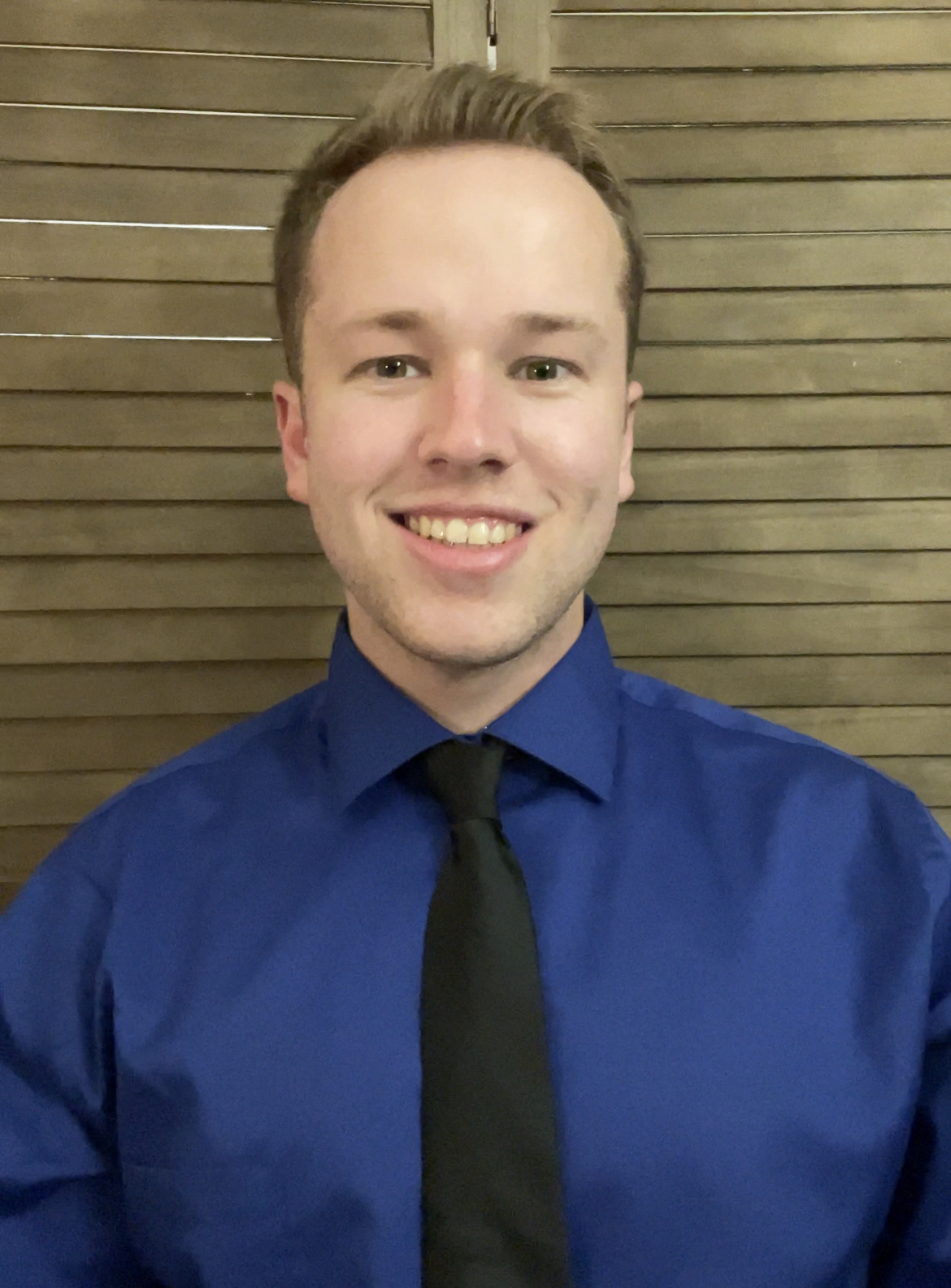
VSCL is proud to welcome and host Michaela Stratton for the 2021 Undergraduate Summer Research Grant (USRG) Program, where she will be researching Reinforcement Learning for aerospace applications.  Stratton is a rising junior at North Carolina State University currently pursuing a Bachelor of Science degree in Aerospace Engineering. She  maintains an interest in Computer Vision, Robotics, and Autonomous Machines. Her research interest began during her freshman year when she  developed a project that she presented at the National Conference of Undergraduate Research. The Research  involved evaluating the viability of using Computer Vision and Machine learning in order to translate American Sign Language(ASL) in real-time.
Filed Under: Internships

Four New Ph.D. Graduate Students Join VSCL in Fall 2021

Posted on April 15, 2021 by Garrett Jares

VSCL is proud to welcome four new Ph.D. graduate research assistants:

Ian Holmes is a Ph.D. student in the aerospace engineering department, and inaugural recipient of the Department of Aerospace Engineering National EXcellence in Aerospace Sciences (NEXAS) Fellowship.  He graduated in May 2021 from the California State University, Long Beach with a B.S. degree in Aerospace Engineering with an emphasis in Astronautics. During his undergraduate studies, he spent three years participating in the BUILD program as an NIH-funded research assistant focused on experimental and computational high-speed impact testing. He completed his engineering honors thesis on developing computational strategies using smoothed particle hydrodynamics to simulate bird strike impacts in commercial aviation.


MD-Nazmus Sunbeam is a Ph.D. student in the aerospace engineering department. He will graduate in May 2021 from the University of Texas at Austin with a B.S. degree in aerospace engineering. During his undergraduate studies, Sunbeam worked on making a chess AI by training neural nets through evolutionary algorithms using NEAT. Additionally, he assembled and configured quadcopters, using the drone footage to train object detection neural nets. He has experience implementing convolutional neural nets on different image classification and speech recognition problems. His research interests are AI/ML/robotics. In the fall at VSCL, Sunbeam will research Enhancing the Cycle-of-Learning for Autonomous Systems to Facilitate Human-Agent Teaming, which is sponsored by the Army Research Laboratory.


Ravi Kumar Thakur is a Ph.D. student in the aerospace engineering department.  His interest is in the field of aerospace robotics and autonomy. He graduated with an MS(Research) degree in Electronics and Communication from the Indian Institute of Information Technology Sri City, Chittoor in 2019. For his thesis, he worked on developing machine learning-based models for estimating scene flow from stereo images. He earned his BS in Engineering Physics from National Institute of Technology Calicut in 2014. In the past, he was a machine learning engineer at Ford Motor Company,  where he worked on driver assistant technology with a focus on visual odometry and object tracking. Before that, he worked at the Indian Institute of science working on the development of an endoscopy simulator. At VSCL, Thakur will be working on the project Enhancing the Cycle-of-Learning for Autonomous Systems to Facilitate Human-Agent Teaming which is sponsored by Army Research Laboratory.


David van Wijk is a Ph.D. student in the aerospace engineering department, funded by the College of Engineering Graduate Merit Fellowship. He will graduate in May of 2021 from Cornell University with a B.S. in Mechanical Engineering from the Sibley school of Mechanical and Aerospace Engineering. During his undergraduate studies, van Wijk was an active member in the Laboratory for Intelligent Systems and Controls under Professor Ferrari, concentrating on classical control for quadrotors, object detection, and mapping. His research contributed to a paper on Visibility-based Directional Sensor Path Planning submitted to IEEE Transactions on Robotics. He also interned at Northrop Grumman Remotec, focusing on mechanical design of hazardous duty robotic vehicles. He is interested in robotics, autonomous systems, and machine learning.


Filed Under: New Members

VSCL detection and tracking of small uncrewed air systems research featured in Aerospace America’s 2020 Year in Review

Posted on January 21, 2021 by Hannah Lehman

VSCL research on detection and tracking of small uncrewed air systems research was featured in Aerospace America’s 2020 Year in Review. To view the full article, please visit the Aerospace America website here.

Filed Under: Publications, Target Tracking

VSCL Graduate Student Chris Leshikar Awarded PhD Graduate Excellence Fellowship

Posted on January 9, 2021 by Garrett Jares

Chris Leshikar ’20, a graduate research assistant in the Vehicle Systems & Control Laboratory (VSCL), has been awarded the PhD Graduate Excellence Fellowship for Spring/Summer 2021. This competitive fellowship awards $20,000 over the span of 8 months , in addition to covering tuition and fees. All graduate research assistants within the department of aerospace engineering pursuing a PhD starting in Spring 2021 were considered for this Fellowship.

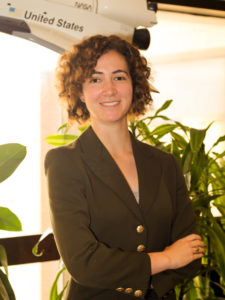
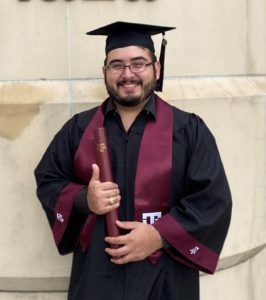
Leshikar has been an active member of VSCL since Spring 2017, focusing on system identification and nonlinear multiple-time-scale control theory. He graduated with a B.S. degree in Aerospace Engineering with Engineering Honors in December 2020. As a graduate research assistant in VSCL, Leshikar will be focusing his research on control of uncertain nonlinear multiple-time-scale systems and near real-time online system identification. Dr. John Valasek will serve as his research Advisor and Chair of dissertation committee.

Filed Under: Awards

VSCL graduate student Hannah Lehman inducted into the AIAA Intelligent Systems Technical Committee

Posted on January 8, 2021 by Hannah Lehman

VSCL Graduate Research Assistant and Ph.D. student Hannah Lehman has been inducted into the AIAA Intelligent Systems Technical Committee (ISTC).  The ISTC is a group within AIAA that addresses the application of Intelligent System (IS) technologies and methods to aerospace systems, the verification and validation of these systems, and the education of the AIAA membership in the use of IS technologies in aerospace and other technical disciplines. Lehman was inducted due to her technical experience in IS and involvement with AIAA. She was previously a member of the AIAA Software Technical Committee.

Lehman’s undergraduate research experience and doctoral research aligns with the ISTC’s activities.  She is the recipient of the AIAA Foundation Cary Spitzer Digital Avionics Scholarship for her research contributions in Reinforcement Learning for the intelligent control of Unmanned Air Systems, and a Co-Inventor with Collins Aerospace on two patents for IS applied to airplane ground operations at airports.  Lehman researched IS for the 2019 NSF Research Experience for Undergraduates (REU) program, and for a 2020 summer internship with Sandia National Laboratories.  Her doctoral dissertation is sponsored by Sandia National Laboratories on the project Tightly Integrated Navigation and Guidance for Multiple Autonomous Agents.

Lehman earned her bachelor’s degree in aerospace engineering Summa Cum Laude in 2020 from Texas A&M University as a University Scholar, Engineering Honors, and 2019 Gathright Phi Kappa Phi Outstanding Junior in the College of Engineering.  As a first year graduate student Lehman was awarded the College of Engineering Graduate Merit Doctoral Fellowship for 2020-2023.  She has been conducting research in the Vehicle Systems & Control Laboratory with her research Advisor and Chair of dissertation committee, Dr. John Valasek, since her sophomore year.


Filed Under: Awards

Two New Graduate Students Join VSCL in Spring 2021

Posted on December 21, 2020 by Hannah Lehman

VSCL is proud to welcome two new graduate research assistants:

Esteban Gomez is a MEng student in the aerospace engineering department. He earned his bachelor’s degree in Aerospace Engineering from Texas A&M University in December 2020. During his time as an undergraduate, Esteban assisted with sensor integration, as well as flight test validation of UAS (unmanned air systems) across multiple VSCL projects. He has been an active member of VSCL since Spring 2019 and will begin working on his masters in January 2021. Esteban’s main interests include flight test engineering, embedded systems, and aircraft dynamics.


Christopher Leshikar is a Ph.D. student in the aerospace engineering department.  Chris has been an active member of VSCL since Spring 2017, working on non-linear multiple-time-scale control theory and system identification.  As an undergraduate, he attained internships with the Texas A&M University System Office of Federal Relations and the Defense Intelligence Agency (cancelled due to COVID-19).  Chris graduated with a B.S. in aerospace engineering with Engineering Honors in December 2020.  As a Graduate Research Assistant, he will be researching control of nonlinear multiple time-scale systems, and online near real-time system identification, which is sponsored by the National Science Foundation.

Filed Under: New Members

« Previous Page
Next Page »

© 2016–2026 Log in

Texas A&M Engineering Experiment Station Logo
  • State of Texas
  • Open Records
  • Risk, Fraud & Misconduct Hotline
  • Statewide Search
  • Site Links & Policies
  • Accommodations
  • Environmental Health, Safety & Security
  • Employment