• Skip to primary navigation
  • Skip to main content
  • LinkedIn
  • Videos
  • Research
    • Facilities
    • Vehicles
    • Sponsors
  • Publications
    • Books
    • Journal Papers
    • Conference Papers
  • People
    • Faculty
    • Staff
    • Graduate Students
    • Undergraduate Students
    • Alumni
    • Where VSCL Alumni Work
    • Friends and Colleagues
  • Prospective Students
  • About Us
  • Contact Us
  • Where VSCL Alumni Work

Texas A&M University College of Engineering

Presentations

VSCL Students Present at 2026 AIAA SciTech Forum

Posted on January 7, 2026 by Cassie-Kay McQuinn

VSCL researchers Raul Santos, Seth Johnson, Carla Zaramella, Zach Curtis will present papers in January at the 2026 AIAA SciTech Forum in Orlando, Florida.

On 12 January, Raul Santos will present the paper ”Deep Reinforcement Learning Waypoint Generation for Attitude Station-Keeping with Sun Avoidance”. This work studies deep reinforcement learning–based waypoint generation for autonomous on-orbit attitude control and examines how observation and action space design influence neural network performance.

Santos, Raul, Binz, Sadie, McQuinn,Cassie-Kay, Valasek, John, Hamilton, Nathaniel, Hobbs, Kerianne L., and Dulap, Kyle, ”Deep Reinforcement Learning Waypoint Generation for Attitude Station-Keeping with Sun Avoidance,” 2026 AIAA Science and Technology Forum and Exposition, Orlando, FL, 12 January 2026
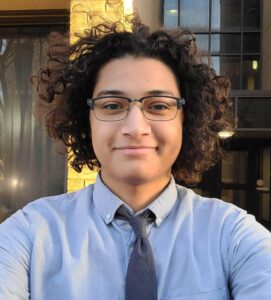
 

On 12 January, Seth Johnson will present the paper “Modular Open System Architecture for Low-cost Integrated Avionics (MOSA LINA)”. This work investigates a modular, open-system avionics architecture for experimental vehicles that reduces integration complexity and supports platform-agnostic mission reconfiguration through plug-and-play sensor integration. Two case studies are investigated: one focused on synchronized high-fidelity data collection and the other on autonomous fixed-wing target tracking.

Johnson, Seth, Santos, Raul, Martinez-Banda, Isabella, Luna, Noah, and Valasek, John, “Modular Open System Architecture for Low-cost Integrated Avionics (MOSA LINA),” 2026 AIAA Science and Technology Forum and Exposition, Orlando, FL, 12 January 2026.


On 15 January, Carla Zaramella will present the paper “Identification of Non-Dimensional Aerodynamic Derivatives using Markov Parameter Based Least Squares Identification Algorithm”. This work expands apon previous developments of the MARBLES algorithm to directly identify non-dimensional stability and control derivatives using computed Markov Parameters with a least squares estimator and a priori information.

Leshikar, Christopher, Zaramella, Carla, Madewell, Evelyn, and Valasek, John, “Identification of Non-Dimensional Aerodynamic Derivatives using Markov Parameter Based Least Squares Identification Algorithm,” 2026 AIAA Science and Technology Forum and Exposition, Orlando, FL, 15 January 2026

 

On 16 January, Zachary Curtis will present the paper “Real-Time Controller Architecture for sUAS Flight Test”. This work investigates a C++/ROS architecture for real -time controller implementation. The said architecture, Kanan, allows safe and fast integration of custom controllers across a broad range of vehicles and controller types.

Luna, Noah, Valasek, John, and Curtis, Zachary, “Real-Time Controller Architecture for sUAS Flight Test,”  2026 AIAA Science and Technology Forum and Exposition, Orlando, FL, 16 January 2026.


Filed Under: Control, Machine Learning, Presentations, Publications, Reinforcement Learning, System Identification, Uncategorized

Payton Clem Defends Masters Thesis

Posted on December 16, 2025 by Cassie-Kay McQuinn

Payton Clem successfully defended her M.S. thesis Autonomous Target Tracking of Hostile Ground Target under Wind Disturbance and Sun Concealment using Deep Reinforcement Learning on 12 December.  Payton has been with VSCL since the first semester of her senior year and is highly engaged in AI and flight testing.

Intelligence, surveillance, and reconnaissance (ISR) missions benefit from the use of unmanned aircraft systems (UAS) capable of maintaining visual contact with ground targets, referred to here as target tracking. For practical deployment, it is valuable for tracking to be autonomous and function without detailed knowledge of the surrounding environment. The task becomes more complex when additional objectives, such as concealment or avoiding a hostile target, are introduced. To address this problem, a Soft Actor-Critic (SAC) reinforcement learning controller is developed that uses only the target’s location in the image frame. The agent controls a multirotor UAS equipped with a fixed optical sensor, requiring the agent to adjust vehicle attitude to keep the target in view while accounting for wind, varying target behaviors, altitude-based concealment constraints, and sun-related concealment. Previous work on fixed-camera target tracking has shown that RL-based algorithms can produce unstable behaviors such as control oscillations and large altitude changes. This work focuses on reward shaping to mitigate these issues and encourage stable, consistent tracking. In addition, the influence of including solar concealment information in the reward function is examined to assess its effect on vehicle behavior. The results demonstrate that the proposed reward structure effectively reduces unwanted behaviors such as diving and pitch and yaw ringing. The reward structure enables stable, long-duration tracking, despite the incorporation of constraints associated with sun concealment strategies. The resulting policy achieves reliable tracking across the evaluated conditions.

Payton’s research is supported by the Army Research Laboratory on the project Robust Threat Detection for Ground Combat Vehicles with Multi-Domain Surveillance in Hostile Environments

Filed Under: Defense, Machine Learning, Presentations

VSCL Hosts Texas Department of Transportation (TxDOT) and Texas A&M Transportation Institute (TTI)

Posted on March 22, 2024 by Cassie-Kay McQuinn

VSCL hosts Texas Department of Transportation (TxDOT) and Texas A&M Transportation Institute (TTI) at the Texas A&M University UAS Flight Testing Facility at RELLIS Campus to discuss recent advances in UAS for infrastructure assessment. TxDOT members met with VSCL lab director Dr. Valasek and VSCL graduate students Jillian Bennett, Payton Clem, Hannah Lehman, Noah Luna, Cassie-Kay McQuinn, and Erin Swansen about the UAS research that VSCL conducts at the flight testing facility and toured the grounds.

Filed Under: Presentations

McQuinn presents at IEEE Aerospace Conference in Big Sky, Montana

Posted on March 8, 2024 by Cassie-Kay McQuinn

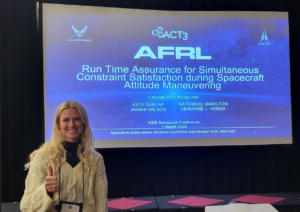
VSCL graduate student Cassie-Kay McQuinn presented “Run Time Assurance for Simultaneous Constraint Satisfaction During Spacecraft Attitude Maneuvering” at the 2024 IEEE Aerospace Conference this month. This work was completed as part of her internship with AFRL in summer 2023.

A fundamental capability for On-orbit Servicing, Assembly, and Manufacturing (OSAM) is inspection of the vehicle to be serviced, or the structure being assembled. The focus of this research is developing Active-Set Invariance Filtering (ASIF) Run Time Assurance (RTA) filters that monitor system behavior and the output of the primary controller to enforce attitude requirements pertinent for autonomous space operations. Slack variables are introduced into the ASIF controller to prioritize safety constraints when a solution to all safety constraints is infeasible. Monte Carlo simulation results as well as plots of example cases are shown and evaluated for a three degree of freedom spacecraft with reaction wheel attitude control. A preprint of the paper is available at: https://arxiv.org/abs/2402.14723

Filed Under: Control, Presentations, Publications

Valasek to give invited talk at the Systems and Control mini-symposia at the 2023 SIAM Conference on Control and Its Applications (CT23)

Posted on July 20, 2023 by Cassie-Kay McQuinn

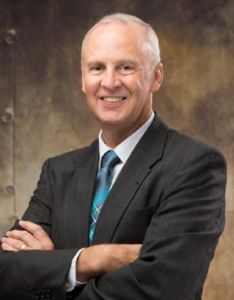
Dr. John Valasek, Professor in the Department of Aerospace Engineering at Texas A&M University and Director of the Vehicle Systems & Control Laboratory, will give an invited talk titled “Multiple-Time-Scale Nonlinear Output Feedback Control of High Performance Aircraft, “ on 25 July 2023 for the Systems and Control mini-symposia at the SIAM Conference on Control and Its Applications (CT23), Philadelphia, PA, July 24-26, 2023.

Abstract:  The Geometric Singular Perturbation theory (Fenichel, 1979) is a powerful control law development tool for multiple-timescale systems because it provides physical insight into the evolution of the states in more than one timescale. The behaviour of the full-order system can be approximated by the slow subsystem, provided that the fast states can be stabilised on an equilibrium manifold. The fast subsystem describes how the fast states evolve from their initial conditions to their equilibrium trajectory or the manifold. This presentation develops two nonlinear, multiple-time-scale, output feedback tracking controllers for a class of nonlinear, nonstandard systems with slow and fast states, slow and fast actuators, and model uncertainties. The class of systems is motivated by aircraft with uncertain inertias, control derivatives, engine time-constant, and without direct measurement of angle-of-attack and sideslip angle. Each controller is synthesized using time-scale separation, lower-order reduced subsystems, and estimates of unknown parameters and unmeasured states. The update laws are so chosen that errors remain ultimately bounded for the full-order system.

The controllers are simulated on a nonlinear, six-degree-of-freedom, F-16A Fighting Falcon model performing a demanding combined maneuver. The slow state tracker accomplishes the maneuver with less control effort, while the simultaneous slow and fast state tracker does so with a smaller number of gains to tune.

Filed Under: Adaptive Control, Multiple-Timescale, Presentations

VSCL Student Presents at Interactive Learning with Implicit Human Feedback Workshop at 2023 International Conference on Machine Learning (ICML)

Posted on July 18, 2023 by Cassie-Kay McQuinn

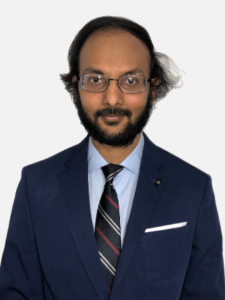
VSCL graduate student M.D. Sunbeam will present a workshop paper on 29 July at the 2023 International Conference on Machine Learning (ICML) in Honolulu, Hawaii.

Sunbeam will be presenting the paper “Imitation Learning with Human Eye Gaze via Multi-Objective Prediction,”. Approaches for teaching learning agents via human demonstrations have been widely studied and successfully applied to multiple domains. However, the majority of imitation learning work utilizes only behavioral information from the demonstrator, i.e. which actions were taken, and ignores other useful information. In particular, eye gaze information can give valuable insight towards where the demonstrator is allocating visual attention, and holds the potential to improve agent performance and generalization. In this work, we propose Gaze Regularized Imitation Learning (GRIL), a novel context-aware, imitation learning architecture that learns concurrently from both human demonstrations and eye gaze to solve tasks where visual attention provides important context.

We apply GRIL to a visual navigation task, in which an unmanned quadrotor is trained to search for and navigate to a target vehicle in a photorealistic simulated environment. We show that GRIL outperforms several state-of-the-art gaze-based imitation learning algorithms, simultaneously learns to predict human visual attention, and generalizes to scenarios not present in the training data. Supplemental videos can be found at https://sites.google.com/view/gaze-regularized-il/, and code will be made available.

Filed Under: Machine Learning, Presentations, Publications

VSCL Hosts Dr. Dimitra Panagou

Posted on March 27, 2023 by Hannah Lehman

VSCL hosted Dr. Dimitra Panagou, Associate Professor with the Department of Robotics, and the Department of Aerospace Engineering Department, University of Michigan. Dr. Panagou met with Lab Director Dr. John Valasek and several VSCL Graduate Students. Dr. Panagou gave a presentation on Tunable Control Barrier Functions for Multi-Agent Safety Via Trust Adaptation and discussed UAS autonomy research and safe and resilient (secure) multi-agent systems.

Filed Under: Presentations

VSCL students present at AIAA SciTech Forum

Posted on January 11, 2023 by Hannah Lehman

VSCL graduate students Kameron Eves and David Van Wijk will present papers in January at the 2023 AIAA SciTech Forum in National Harbor, MD.

Kameron Eves will be presenting the paper “Introduction to Adaptive Control for Multiple Time Scale Systems”. Eves presents a novel approach to Adaptive Control for Multiple Time Scale Systems with [K]Control of Adaptive Multiple Time Scale Systems (KAMS). KAMS fuses two adaptive control signals using multiple time scale techniques. Generalized formal definitions, stability criteria, and examples are developed and presented for each method. Results show that [K]Control of Adaptive Multiple Time Scale
Systems has the best performance because each reduced-order model is stabilized separately and because the fast dynamics converge to the manifold more quickly than the other methods.


David Van Wijk will be presenting the paper “Deep Reinforcement Learning Controller for Autonomous Tracking of Evasive Ground Target”. Van Wijk presents a method of tracking an evasive ground target using deep RL on a rotorcraft wherein the target attempts to hide behind occlusions. A variety of environment conditions are trained and evaluated, resulting in an agent able to successfully track a randomly moving target with the presence of occlusions.


Filed Under: Presentations

Valasek and Jares Present for Sandia National Labs STARCS Mission Campaign

Posted on March 16, 2022 by Garrett Jares

Valasek, John

Dr. John Valasek

Dr. John Valasek, Professor in the Department of Aerospace Engineering at Texas A&M University and Director of the Vehicle Systems & Control Laboratory, and VSCL student Garrett Jares gave a virtual seminar titled “Control Acquisition Attack of Aerospace Systems via False Data Injection of Sensor Data” for Sandia National Laboratories. The seminar was presented as part of a monthly seminar series for the Science and Technology Advancing Resilience for Contested Space (STARCS) Mission Campaign. The date of the seminar was 28 February 2022.


Filed Under: Presentations

Valasek Presents at 6th Annual UAS Handling Qualities Workshop

Posted on February 1, 2022 by Garrett Jares

Valasek, John

Dr. John Valasek

Dr. John Valasek, Professor in the Department of Aerospace Engineering at Texas A&M University and Director of the Vehicle Systems & Control Laboratory, gave a virtual seminar titled “Flight Results of Autopilot Gain Tuning for Large Hexacopter Handling Qualities” for the 6th Annual UAS Handling Qualities Workshop. The date of the seminar was 28 January 2022.

Filed Under: Presentations

Next Page »

© 2016–2026 Log in

Texas A&M Engineering Experiment Station Logo
  • State of Texas
  • Open Records
  • Risk, Fraud & Misconduct Hotline
  • Statewide Search
  • Site Links & Policies
  • Accommodations
  • Environmental Health, Safety & Security
  • Employment