
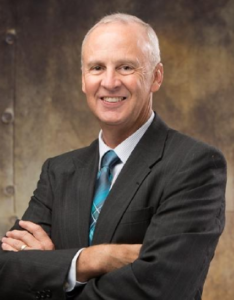
Professor, Aerospace Engineering Department
Director, Vehicle Systems & Control Laboratory
Associate Editor, Journal of Guidance, Control, and Dynamics
Site Director, NSF Center for Unmanned Air Systems (C-UAS)
Site Director, FAA Center for General Aviation Research (PEGASAS)
Research:
Education
B.S. Aerospace Engineering, California State Polytechnic University, Pomona, 1986
M.S. Aerospace Engineering, University of Kansas, 1990
Ph.D. Aerospace Engineering, University of Kansas, 1995
Bio
John Valasek is Director, Vehicle Systems & Control Laboratory, Thaman Professor of Undergraduate Teaching Excellence, Professor of Aerospace Engineering, and member of the Honors Faculty at Texas A&M University (TAMU). He has been actively conducting autonomy and flight controls research of Manned and Unmanned Air Vehicles in both Industry and Academia for 34 years. He began his career as a Flight Control Engineer for the Northrop Corporation, Aircraft Division where he worked in the Flight Controls Research Group, and on the AGM-137 Tri-Services Standoff Attack Missile (TSSAM) program. Dr. Valasek has been with TAMU since 1997, where he teaches courses in Modern Control of Aerospace Systems, Vehicle Management Systems, Atmospheric Flight Mechanics, Flight Test Engineering, Cockpit Systems & Displays, and Aircraft Design. In response to industry requests to address the problem of integrating multidisciplinary technologies in the aerospace field he created the senior/graduate level course AERO 445 Vehicle Management Systems in 2006, which was the first regularly offered course on this topic in a U.S. aerospace engineering department. He is currently writing a book for the AIAA Education Series on this topic. In 2019 Dr. Valasek completely revised the course organization and content of three courses, and taught them: AERO 201 Introduction to Aerospace Engineering, AERO 401 Aerospace Vehicle Design, and AERO 425 Flight Test Engineering.
Throughout his career Dr. Valasek’s research is focused on bridging the scientific gaps between traditional computer science topics and aerospace engineering topics, while achieving a high degree of closure between theory and experiment. What sets Dr. Valasek’s work apart is his unique systems approach and ability to seamlessly integrate different disciplines such as dynamics & control, artificial intelligence, and bio-inspiration. This is clearly evident in his body of work that integrates these disciplines and is creating a lasting impact on communities from smart materials to General Aviation flight safety to Unmanned Air Systems (UAS) to guidance, navigation & control theory. His research has been funded by AFOSR, ARO, ONR, AFRL, ARL, AFC, NSF, NASA, FAA, and industry.
Dr. Valasek has been recognized as a 2017 Fellow of the American Institute of Aeronautics and Astronautics (AIAA) for “Pioneering contributions and outstanding leadership in flight mechanics and control leading to new capabilities in autonomous air refueling, morphing flight, and flight safety.”
Dr. Valasek provides expert input and guidance to federal law makers of the Senate and House. He has advised the Senate Committee on Commerce, Science, and Transportation/Subcommittee on Aviation Operations, Safety and Security, and the House Space, Science & Technology Committee/Subcommittee on Space. Through these interactions, Dr. Valasek has helped develop policy regarding legislative jurisdiction, general oversight, and investigative authority on all matters relating to astronautical and aeronautical research and development. Dr. Valasek is active with the National Academies of Sciences, Engineering, and Medicine. He was appointed to the Steering Committee of the National Research Council (NRC) Decadal Survey of Civil Aeronautics in 2005-2006, which formulated and published a ten year plan for reinvigorating NASA aeronautics research. He served as an invited presenter on UAS research and technology for the Academies’ Government-University-Research Roundtable. He has also served as a subject matter expert for the Academies on the Army Research Laboratory Technical Assessment Board; the Panel on Air and Ground Vehicle Technology; and the Potential Delivery Systems in Conducting Enhanced USMC Company Operations.
Dr. Valasek is the creator and Founding Director of the Center for Autonomous Vehicles and Sensor Systems (CANVASS). CANVASS is unique in being the only university center that addresses Underwater, Ground, Air, and Space autonomous vehicles in one center. CANVASS is composed of 17 laboratories at TAMU, and as Director, Dr. Valasek provided vision and direction in addition to coordinating the proposal writing and research efforts of 75 faculty and graduate students in the engineering departments of aerospace, bio & agricultural, civil, computer science, electrical, engineering technology, and mechanical.
Dr. Valasek has been instrumental in advancing academic UAS research and flight testing, currently tied as being the earliest professor in the United States to conduct UAS research flights since 1999 under full FAA compliance. This novel flight operational experience predates the current COA system, and he has worked with the FAA to develop the COA system. He was also the first professor in the US to obtain full USAF approval to fly UAS at a university. As a result of both of these experiences and continued efforts, Dr. Valasek has been instrumental in creating safe and compliant test environments at many US universities that are compliant with both the FAA and the USAF. Dr. Valasek is the TAMU Site Director of the NSF Center for Unmanned Air Systems (C-UAS). He has conducted more than 400 UAS test flights on 27 funded research programs over a 21 year period at TAMU. This innovative UAS flight research has spanned vehicles as large as 400 pound powered parafoils, to flight with hingeless control effectors (synthetic jet actuators), to autonomous motion video tracking of ground targets, to Attitude Dependent Surveillance Broadcast (ADS-B) transponders. An aviation first was the flight of an ADS-B in and out equipped UAS in the National Air Space in November 2014. Dr. Valasek is co-inventor with his students on a US patent that was issued in 2018 for the design of a novel UAS.
Dr. Valasek’s seminal research in the area of Autonomous Air Refueling (AAR) of UAS led to the first series of flight tests by a university in 2006 and the first archival journal paper on the automatic control of AAR of UAS. The collective body of work that he has produced on this topic has more archival journal papers than any other author, and have been cited more than 500 times since 2002. He is also a co-inventor on a patent for AAR of UAS, and Lockheed Martin Aeronautical Systems Company is using his work to validate and verify their own concept for AAR. When AAR of UAS is fully operational by the DoD it will represent a paradigm shift in military and possibly civilian UAS operations. Dr. Valasek has received international recognition of his AAR work, including invited presentations and a workshop that he conducted at two different conferences in England in 2010. This UAS autonomous air refueling sensor and control laws have also been extended to the space domain by Dr. Valasek and his students, for autonomous docking of space vehicles with the ISS.
Dr. Valasek has made significant contributions to the development of artificial intelligence methods for NASA, and a system that he developed was competitively selected by NASA and demonstrated in flight as part of the Small Aircraft Transportation System (SATS) program in 2005. Working with Boeing he has developed novel HUD symbology and layout for head mounted displays specifically for GA aircraft, and working with Rockwell Collins he is developing novel GA displays. Since 2017 he was worked with Army Research Laboratory to investigate the Cycle-of-Learning methodology, a theoretical foundation that opens new research paths to human-agent teaming scenarios where autonomous agents are able to learn from human teammates and adapt to mission performance metrics in real-time and in real world scenarios. He has edited two books on artificial intelligence, Advances in Intelligent and Autonomous Aerospace Systems (AIAA, 2012, 489 pages), and Advances in Computational Intelligence and Autonomy for Aerospace Systems (AIAA, 2018, 431 pages).
Dr. Valasek is an internationally recognized expert and pioneer in the area of morphing (shape changing) UAS. He gave the plenary talk that covered his 11 years of research contributions on this topic at the ‘2013 International Biometrics Symposium in Taiwan – Learn from Nature’, in Taipei, Taiwan. He is also the author of the first book written on morphing aerospace vehicles, entitled Morphing Aerospace Vehicles and Structures (Wiley, 2012, 306 pages). He is also the co-author of a related theoretical book on Nonlinear Multiple Time Scale Systems in Standard and Non-Standard Forms: Analysis and Control, (SIAM, 2014, 215 pages) that was inspired by problems encountered on morphing aircraft.
Dr. Valasek has contributed to space systems research for NASA in the areas of Mars entry, Earth entry, and spacecraft rendezvous and docking. He was invited to a Keck Institute for Space Studies (KISS) Study Program titled Adaptive Multifunctional Space Systems for Micro-Climate Control, for which he served as the subject matter expert for morphing and formation shape-changing control of planetary rover teams.
Dr. Valasek is nationally recognized in General Aviation (GA) flight safety. He is the TAMU Site Director for the FAA’s Center of Excellence in General Aviation (PEGASAS), where he initiated and led a six university team in investigating Weather Technology in the Cockpit (WTIC). The result of this effort is leading to FAA guidelines and recommend practices for the use of hand-held weather devices in cockpits. He also led a two university effort on Derived Angle-of-Attack for use in the displays and future fly-by-wire control of GA aircraft. The FAA anticipates that both of these programs will positively impact GA flight safety.
Dr. Valasek has published 198 peer reviewed journal articles and conference papers in addition to four books with one in progress. The impact of his contributions are reflected by his Google Scholar metrics (2020): 2,695 citations, an h-index of 26, and an i10-index of 60. He has maintained an externally funded research program for all of the 23 years he has been at TAMU, and has served as Principal Investigator on 43 of 63 research grants totaling over $11M from several government organizations and aerospace industry giants. Dr. Valasek was a Summer Faculty Researcher at NASA Langley in 1996 and an AFOSR Summer Faculty Research Fellow in the Air Vehicles Directorate at the Air Force Research Laboratory in 1997. As a key contributor of the Small Aircraft Transportation System (SATS) Project Team, he was a co-recipient of the Center Team Award and the Turning Goals Into Reality Award from the NASA Langley Research Center (2005).
Dr. Valasek is currently a member of the AIAA Unmanned Systems Technical Program Committee, and the AIAA Intelligent Systems Technical Committee for which he is currently the Chair Elect. He is a former member and Chair of the AIAA Atmospheric Flight Mechanics Technical Committee, as well as the AIAA Guidance, Navigation, and Control Technical Committee and the AIAA General Aviation Technical Committee. As Chair of the AIAA Atmospheric Flight Mechanics Technical Committee he created the Best Student Paper Award, which has been awarded annually at the Atmospheric Flight Mechanics Conference since 2001. He is currently an Associate Editor of the Journal of Guidance, Control, and Dynamics. Dr. Valasek is a Senior Member of IEEE, and Member of the American Astronautical Society (AAS), Society of Industrial and Applied Mathematics (SIAM), and American Society of Engineering Educators (ASEE).
Notably, Dr. Valasek has served as Chair of Committee to 50 completed graduate degrees, including 6 NSF, 6 NDSEG, and 1 SMART graduate fellowship recipients. His students have joined aerospace industry and the national laboratories in addition to winning national and regional student competitions in topics ranging from aircraft design to smart materials to artificial intelligence. Dr. Valasek’s Ph.D. student Anshu Narang-Siddarth ’12 was the 2013 recipient of the TAMU Award for Outstanding Accomplishment in Research, Doctoral Level, for her dissertation titled “Analysis and Control of Non-Affine, Non-Standard Singularly Perturbed Systems.” His M.S. student Joshua Harris was the 2017 recipient of the Department of Transportation / Federal Aviation Administration Research Student of the Year, the 2018 recipient of the TAMU Award for Outstanding Accomplishment in Research, Masters Level, for this thesis titled “Nonlinear Adaptive Dynamic Inversion Control for Variable Stability Small Unmanned Aircraft Systems,” and also the Outstanding College of Engineering Master of Science Graduate Student Award. The latter award ranked Mr. Harris as #1 out of 1,134 M.S. engineering students. Dr. Valasek has also supervised the research of 79 undergraduate students, 44 of which have matriculated to graduate degrees. Dr. Valasek is the recipient of the 2014 ASEE/AIAA John Leeland Atwood Award for national outstanding aerospace educator, a 2019 inductee of the Engineering Hall of Fame at the College of Engineering at California State Polytechnic University, Pomona, the 2018 Aerospace Engineering Honor Roll from the Aerospace Engineering Department of the University of Kansas, and the 2009 Outstanding Alumnus of the Year from the Aerospace Engineering Department, California State Polytechnic University, Pomona. He is a 2018 Charles H. Barclay, Jr. ‘45 Faculty Fellowship recipient and a 2012 Herbert H. Richardson Faculty Fellow by the TAMU Dwight Look College of Engineering. Dr. Valasek has received several teaching and education awards, including the Thaman Professorship of Undergraduate Teaching Excellence (2016), university level Association of Former Students Distinguished Achievement Award for Teaching (2008), college of engineering level Association of Former Students Distinguished Achievement Award for Teaching (2004), Scholar Of The Montague Center For Teaching Excellence (2001), college of engineering level B.P. Amoco Teaching Excellence Award (2001, 2003), and the Thomas U. McElmurry Teaching Excellence Award in the aerospace engineering department (2001, 2004, 2014). From 2006 – 2008 he served as the National President of Sigma Gamma Tau (SGT), the aerospace engineering honor society, and he was Associate Editor of the IEEE Transactions on Education from 1998 – 2001. He served as the faculty advisor to the TAMU student branch of SGT from 2000 – present, AIAA from 2000-2009, and received the National Faculty Advisor Award from AIAA in 2005.
Dr. Valasek earned the B.S. degree in Aerospace Engineering from California State Polytechnic University, Pomona in 1986 and the M.S. degree with honors and the Ph.D. in Aerospace Engineering from the University of Kansas, in 1990 and 1995 respectively.
Recognition
National Level:
- 2019 – Engineering Hall of Fame, College of Engineering, Calif. State Polytechnic University, Pomona. The college’s Hall of Fame recognizes, honors, and preserves the outstanding accomplishments and contributions of alumni engineers and engineering technologists who have distinguished themselves in the community through leadership and professional achievement. From helping usher in the era of digital television to guiding the development of California’s most recognizable structures, each inductee has made meaningful contributions deserving of honor and preservation.
- 2018 – Best Paper, SAE Control & Guidance Systems Committee, Meeting #119
- 2017 – Fellow, American Institute of Aeronautics and Astronautics (AIAA). For “Pioneering contributions and outstanding leadership in flight mechanics and control leading to new capabilities in autonomous air refueling, morphing flight, and flight safety.” The AIAA confers the distinction of Fellow upon 1 percent of its members in recognition of their notable and valuable contributions to the arts, sciences or technology of aeronautics and astronautics.
- 2015 – John Leland Atwood Award, National Outstanding Aerospace Educator, ASEE/AIAA. Bestowed annually to recognize the accomplishments of a superior aerospace engineering educator and his or her contributions to the profession, and for demonstration of improvements of lasting influence to aerospace engineering education.
- 2009 – Outstanding Alumnus Award, Aerospace Engineering Department, Cal Poly Pomona
- 2009 — Exceptional Service and Contributions as National President 2006 – 2009, Sigma Gamma Tau – National Aerospace Engineering Honor Society
- 2008 – Sustained Service Award, AIAA Headquarters
- 2007, 2003 – Special Service Citation, AIAA Headquarters
- 2007 – Best Paper in Session, SAE Control & Guidance Systems Committee, Meeting #99
- 2006 – Elected National President, Sigma Gamma Tau National Aerospace Engineering Honor Society
- 2006 – Group Achievement Award, SATS Project Team, NASA Headquarters
- 2006 – Special Recognition Citation, AIAA Houston Section
- 2005 –National Faculty Advisor Award, AIAA Headquarters
- 2005 – Center Team Award, SATS Project Team, NASA Langley Research Center
- 2005 – Turning Goals Into Reality, SATS Project Team, NASA Langley Research Center
- 2005 – Best Paper in Session, IFAC American Control Conference
- 2004 – Best Paper in Session, AIAA 1st Intelligent Systems Conference
- 2004 – Best Paper in Session, SAE Control & Guidance Systems Committee, Meeting #93
- 2003 – National Research Council Faculty Research Fellowship (offered)
- 2002 – Best Paper in Session, AIAA Guidance, Navigation, and Control Conference
- 2002 – Best Paper in Session, Digital Avionics Systems Conference
- 2001 – Best Paper in Session, AIAA Guidance, Navigation, and Control Conference
- 1997- Air Force Office of Scientific Research Summer Faculty Research Fellow
University Level:
- 2016-2018 – University Thaman Professorship for Undergraduate Teaching Excellence, Texas A&M University. The award is conferred only upon the university’s most distinguished teachers of undergraduates — faculty who have exhibited uncommon excellence and devotion to the education of undergraduate students.
- 2008 – Distinguished Achievement Award for Teaching, University Level, TAMU Association of Former Students
- 2001 – Scholar Of The Montague Center For Teaching Excellence.
Texas A&M College of Engineering Level:
- 2018– Charles H. Barclay, Jr. ‘45 Faculty Fellowship, College of Engineering, Texas A&M University
- 2012 – Herbert H. Richardson Faculty Fellowship, College of Engineering, Texas A&M University
- 2010- Charles W. Crawford Service Award, College of Engineering, Texas A&M University
- 2004 – Distinguished Achievement Award for Teaching, College Level, TAMU Association of Former Students
- 2001, 2003 – B.P. Amoco Teaching Excellence Award.
Aerospace Engineering Department Level:
- 2001, 2004, 2014 – Thomas U. McElmurry Teaching Excellence Award. – Decided by the May and December graduating seniors in Aerospace Engineering, for exemplifying dedication and commitment to developing students professionally and academically by displaying a desire for students to succeed.
Memberships
- American Institute of Aeronautics and Astronautics (AIAA)
- Fellow
- Institute of Electrical and Electronics Engineers (IEEE)
- Senior Member
- American Astronautical Society (AAS)
- Member
- Sigma Gamma Tau Aerospace Engineering Honor Society (SGT)
- Member
- National President (2006-2009)
- Society of Industrial and Applied Mathematics (SIAM)
- Member
- American Society of Engineering Educators (ASEE)
- Member
- American Society of Agricultural and Biological Engineers (ASABE)
- Member