• Skip to primary navigation
  • Skip to main content
  • LinkedIn
  • Videos
  • Research
    • Facilities
    • Vehicles
    • Sponsors
  • Publications
    • Books
    • Journal Papers
    • Conference Papers
  • People
    • Faculty
    • Staff
    • Graduate Students
    • Undergraduate Students
    • Alumni
    • Where VSCL Alumni Work
    • Friends and Colleagues
  • Prospective Students
  • About Us
  • Contact Us
  • Where VSCL Alumni Work

Texas A&M University College of Engineering
  • WebsiteTarget
  • AUS-2
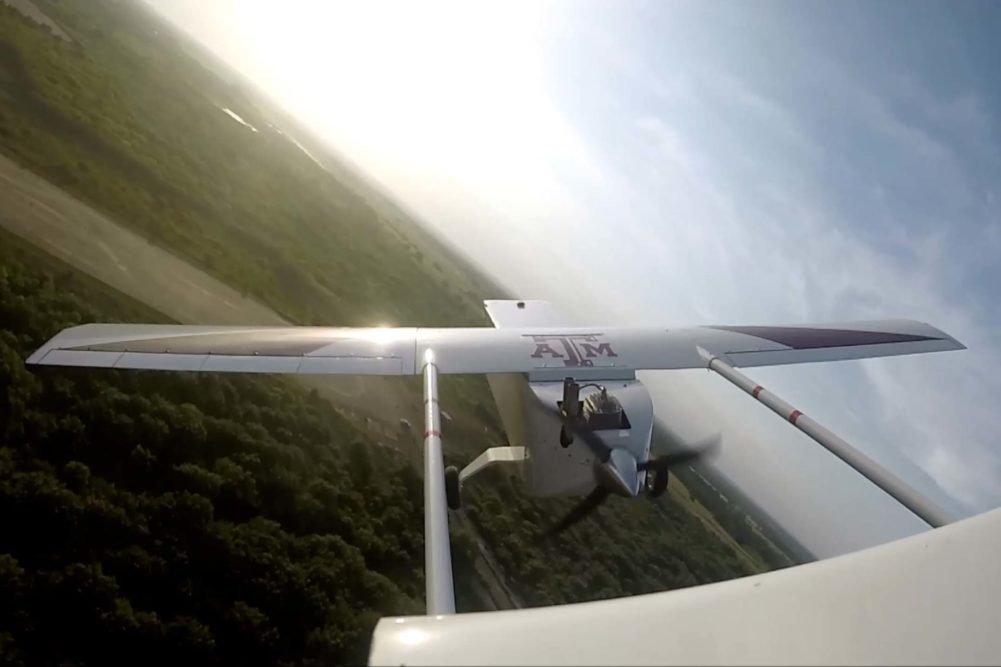
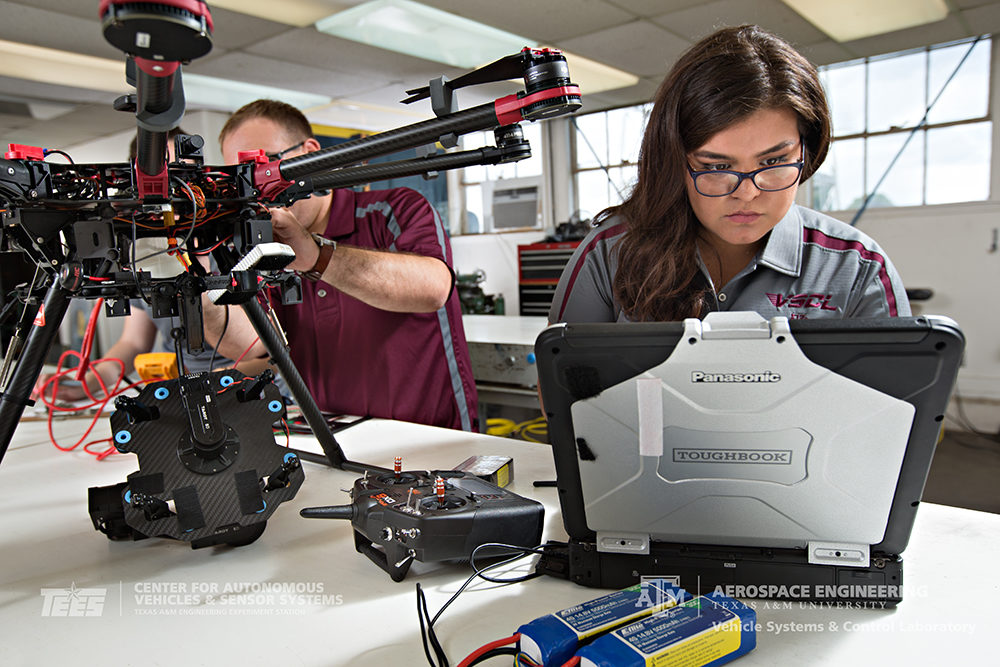
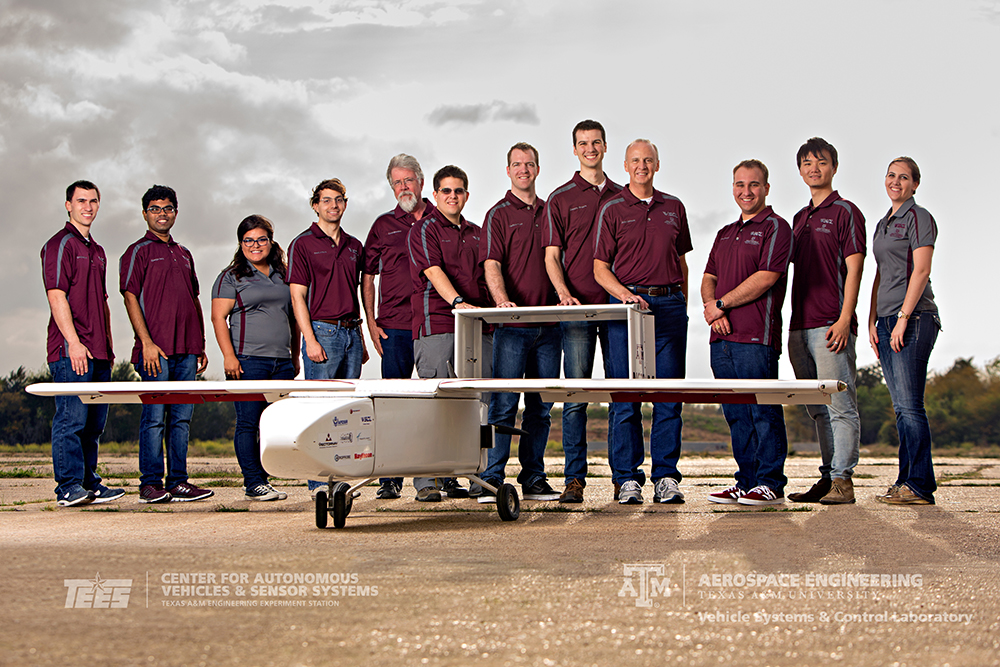
    Pegasus UAS Designed, Built, and Patented by VSCL
  • A26U8172
    UAS Flight Research Facility at RELLIS Test Range
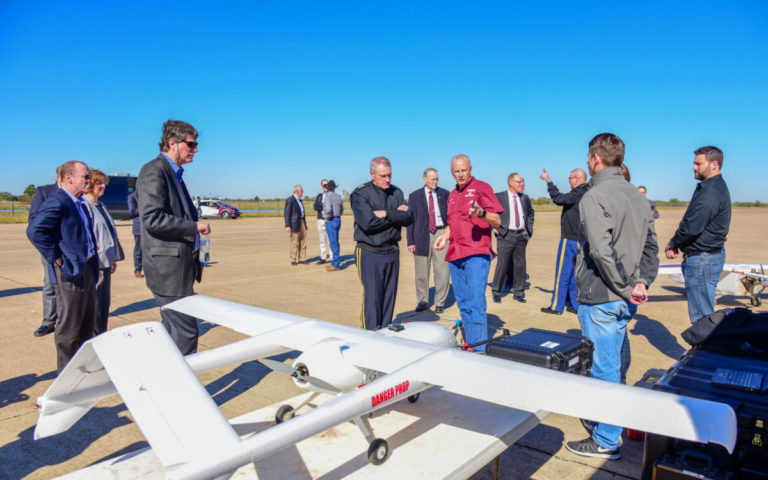
  • 28-Army-futures-command-1200×750
    Dr. John Valasek briefs General John M. Murray, commanding general of United States Army Futures Command (AFC), on autonomous UAS research in VSCL
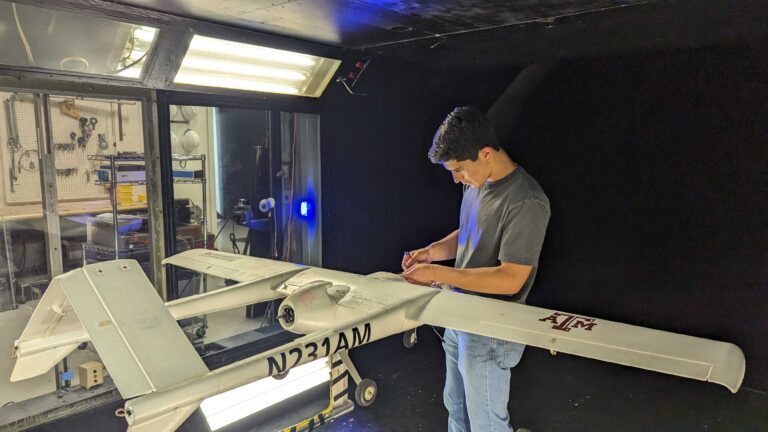
  • Undergraduate research assistant working on UAS platform for wind tunnel testing.
    Wind tunnel testing of UAS platform.
  • A26U7927

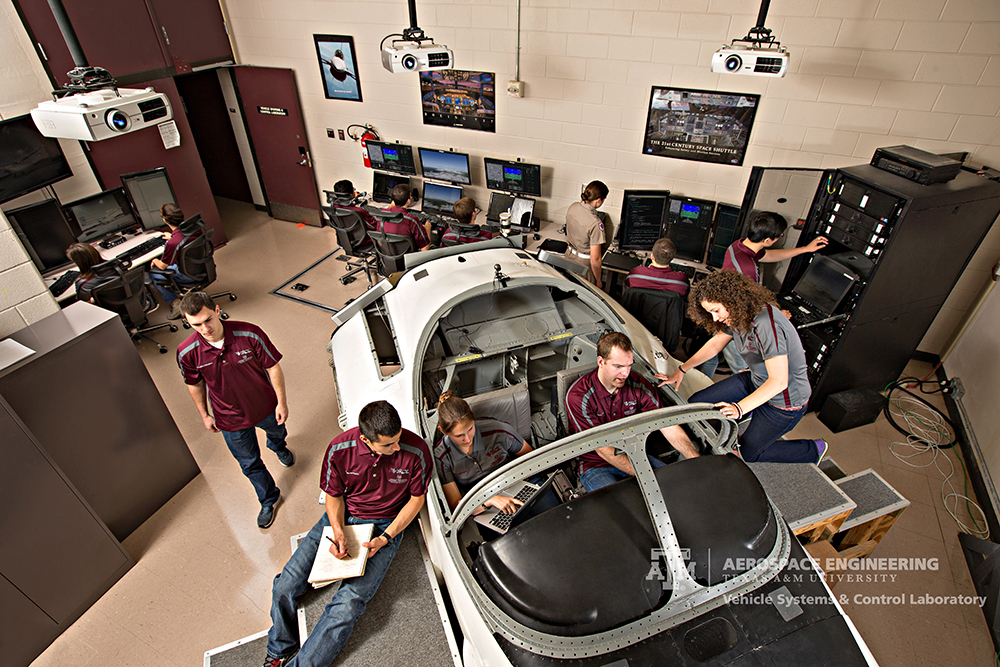
    Engineering Fight Simulator Facility
  • col_diagram_exp2
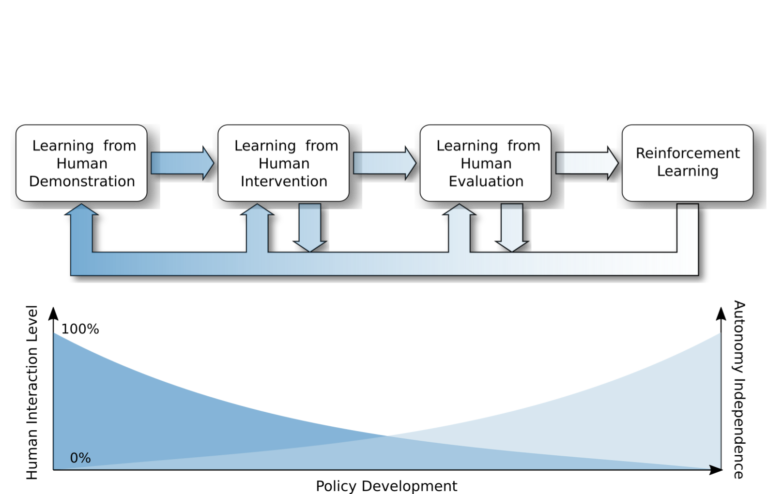
    Cycle of Learning for Human-Agent Interaction
  • 20160727_143456
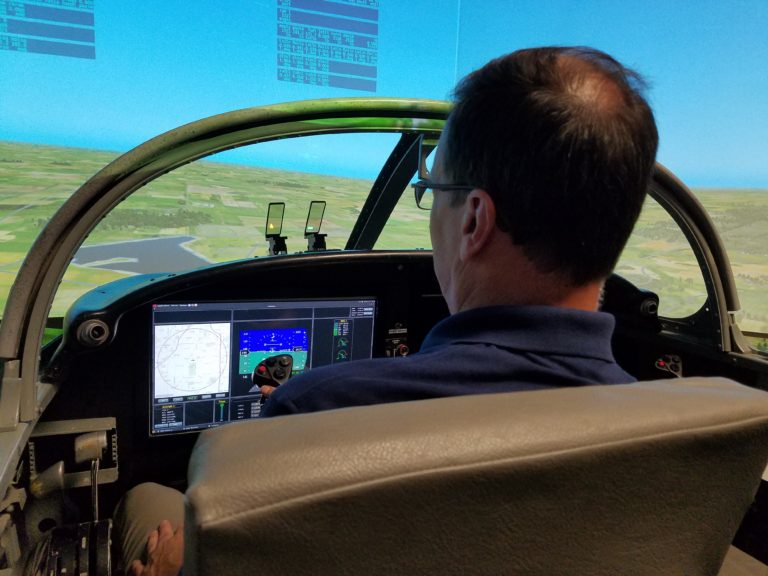
    FAA Test Pilot David Sizoo Flies an Approach Using Derived AOA in the Engineering Flight Simulator
  • RTD Full Scenario
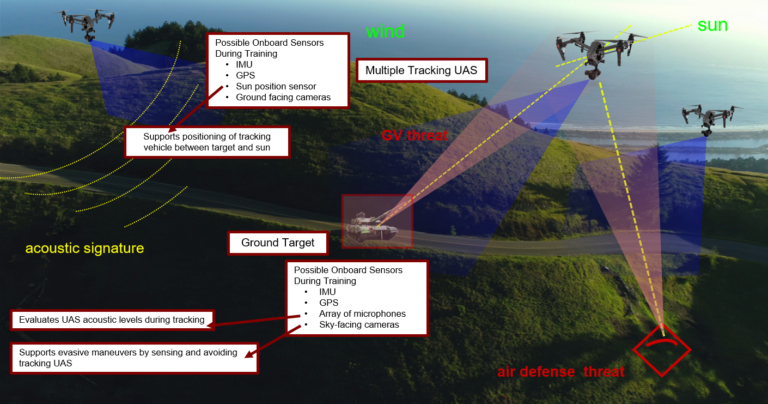
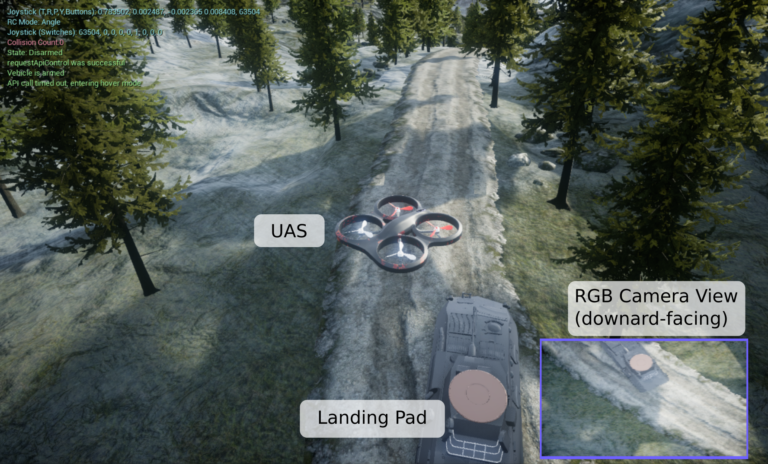
    Robust Threat Detection for Ground Combat Vehicles with Multi-Domain Surveillance in Hostile Environments
  • VSCL Group 2025
  • A26U8345-2
    Pegasus UAS Designed, Built, and Patented by VSCL
  • airsim_col
    Cycle-of-Learning for Autonomous Systems to Facilitate Human-Agent Teaming
  • gaze_vscl(1)
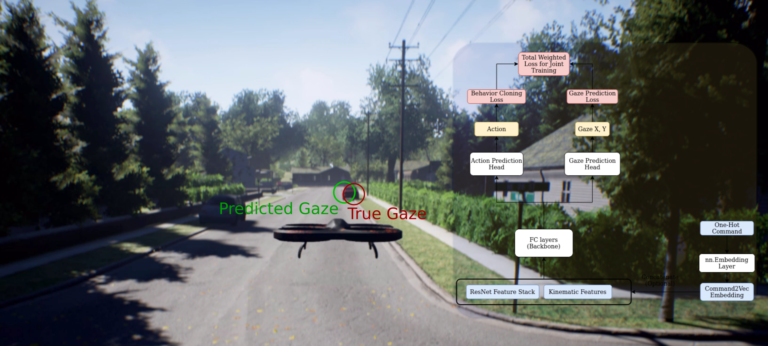
    Gaze-Guided Imitation Learning
  • image001 (2)
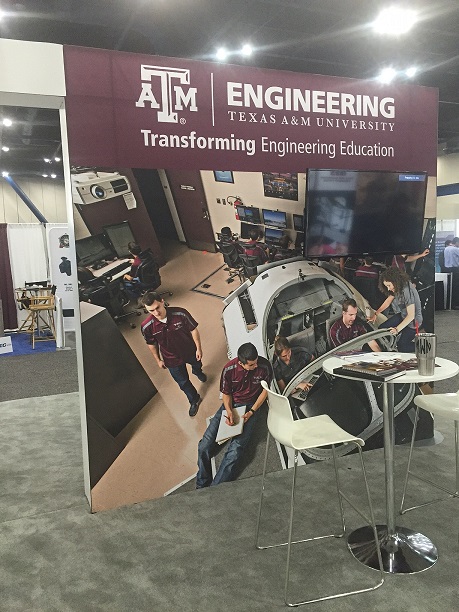
    2017 ASEE Annual Conference & Exposition, Columbus OH

People, Innovation, Excellence

Research Goal

Utilize the Theory-Computation-Experiment paradigm to research Low Cost Attritable Aircraft Technology (LCAAT) with autonomy to establish trust, providing a game changing capability that transforms the way manned and unmanned air, space, and ground systems are designed, controlled, and operated to effectively accomplish missions and tasks. VSCL is thus focused on synergistic strategies for the analysis, control, validation & verification of complex autonomous vehicle and sensor systems operating in challenging environments.

The Vehicle Systems & Control Laboratory is directed by Dr. John Valasek.

Graduate Research Assistant Positions Available

The Vehicle Systems & Control Laboratory (VSCL) has multiple fully funded Ph.D. positions in Aerospace Engineering that are available. Interested students are encouraged to apply for research in the following areas:
– Autonomous and Nonlinear Control of Cyber-Physical Air, Space, and Ground Systems
– Vision Based Sensors and Navigation Systems
– Cybersecurity for Air and Space Vehicles
– Air and Space Vehicle Control and Management
– Advanced Cockpit/UAS Systems and Displays
– Control of Bio-Nano Materials and Structures
– Human-in-the-Loop Artificial Intelligence for Coordinated Autonomous Unmanned Air Systems

More information and details for applying can be found here.

UAS Research and Flight Testing by the Numbers

  • 21 Years of Fixed-Wing UAS Flight Testing under FAA Auspices
  • 26 Externally Funded UAS Research Programs (1999 – Present)
  • 400+ Flights with an operational tempo of 133 thermal IR and multi-spectral data collection flights in the field over 12 months (2015 – 2016)
  • 24 Certified UAS Flight Testers Currently on Staff
  • 3 Certified UAS Pilots Currently on Staff
  • 13 UAS Vehicles in Current Fleet

Research Project Spotlight

Project: System Identification for Unmanned Air Systems

Sponsor: National Science Foundation (NSF) Center for Autonomous Air Mobility & Sensing (CAAMS)

Purpose: System Identification is a process to develop a mathematical representation of the dynamics of a physical system from measured data. Accurate models enable prediction of performance and dynamics of a system.

Challenges: Models for sUAS are generally not available as manufacturers do not have models for commercial sUAS and models for military sUAS are not typically available. Modeling and control systems are often vehicle dependent and not easily portable across sUAS. Many commercial autopilots do not provide data needed for online system identification

Our Approach: Utilizing the Observer Kalman Filter Identification algorithm with the Developmental Flight Test Instrumentation 2 framework, full state space models can be identified in near-real time onboard the vehicle utilizing data from a variety of sensors.


Recent News


Goecks to Present Cycle-of-Learning Paper at AAMAS 2020 on May 11

Posted on February 25, 2020 by Garrett Jares

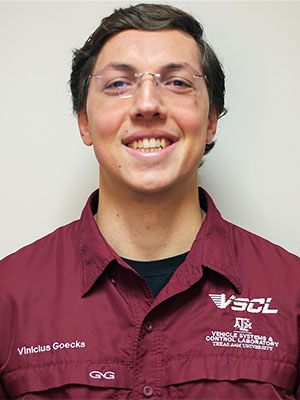
VSCL Graduate Research Assistant Vinicius Goecks will present a paper on “Integrating Behavior Cloning and Reinforcement Learning for Improved Performance in Dense and Sparse Reward Environments” at the International Conference on Autonomous Agents and Multi-Agent Systems on May 11, 2020. Co-authored by researchers from the US Army Research Laboratory’s Human Research and Engineering Directorate, this continuing project investigates how to efficiently transition and update policies, trained initially with demonstrations,  using off-policy actor-critic reinforcement learning. This method outperforms state-of-the-art techniques for combining behavior cloning and reinforcement learning for both dense and sparse reward scenarios. Results also suggest that directly including the behavior cloning loss on demonstration data helps to ensure stable learning and ground future policy updates.

The paper documenting this work, “Integrating Behavior Cloning and Reinforcement Learning for Improved Performance in Dense and Sparse Reward Environments,” is available at the official AAMAS 2020 proceedings, together with the supplemental material detailing the training hyperparameters.

A summary video of the proposed method can be found here, along with the project page that accompanied the paper submission.
Filed Under: Presentations, Publications

Valasek Editor of new AIAA book on computational intelligence and autonomy for aerospace systems

Posted on February 17, 2020 by Garrett Jares

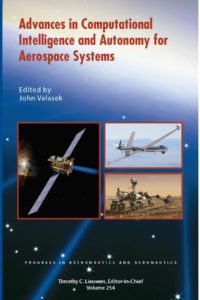
Dr. John Valasek, professor in the Department of Aerospace Engineering at Texas A&M University and director of the Vehicle Systems & Control Laboratory, has edited a new book titled Advances in Computational Intelligence and Autonomy for Aerospace Systems (AIAA Progress in Aeronautics and Astronautics Series, 2018).  The book seeks to provide both the aerospace researcher and the practicing aerospace engineer with further insight into the latest innovative methods and approaches regarding intelligent and autonomous aerospace systems. Written by leading researchers in the field, it focuses on:

  • Intelligent Space Systems
  • Intelligent Validation and Verification Methods
  • Intelligent Health Monitoring
  • Intelligent Flight Control

Research advances in embedded computational intelligence, communication, control, and new mechanisms for sensing, actuation, and adaptation hold the promise to transform aerospace. The result will be air and space vehicles, propulsion systems, exploration systems, and vehicle management systems that respond more quickly, provide large-scale distributed coordination, work in dangerous or inaccessible environments, and augment human capabilities.

Filed Under: Books

VSCL Students selected for Summer 2020 Internships

Posted on February 17, 2020 by Garrett Jares

Many students of the Texas A&M Vehicle Systems & Control Laboratory have been selected for offsite internships for the Summer of 2020. These internships show VSCL student representation at a variety of companies and institutions across the United States. Students which have been selected for internships in the Summer of 2020 include:

VSCL Graduate Research Assistant and Ph.D. Student Ritwik Bera has been selected for a Summer 2020 internship at US Army Research Lab ’s Human Research and Engineering Directorate in Aberdeen, MD. Ritwik will be working as a Research Associate on the ARL-HRED initiative to investigate how humans can shape the behavior of autonomous machines driven by learning algorithms.

VSCL Graduate Research Assistant and M.S. student Blake Krpec has been selected for a Summer 2020 internship at US Army Research Lab in Aberdeen, MD.  Blake will be working as a Journeyman Research Fellow on the US Army initiative to investigate a potential target tracking /following system involving one UAS being able to detect another UAS, and navigate relative to said target. Blake has been a member of VSCL since Fall of 2016, where he supported flight test projects, sensor and hardware integration, aircraft performance, and other target tracking efforts.

Incoming VSCL Graduate Research Assistant and Ph.D Student Hannah Lehman has been selected for a Summer 2020 research internship at Sandia National Laboratory in Albuquerque, NM. Hannah will be working as a Research & Development Intern, with a principal focus of applying machine learning to defense vehicles. Hannah started working with VSCL as an undergraduate in the Spring of 2017, with her major roles including managing the flight simulator lab and performing research into reinforcement learning for use onboard aircraft. Hannah will graduate with her BS in Aerospace Engineering in May 2020 and will be returning in the fall to pursue her Ph.D.

VSCL Graduate Research Assistant and Master of Science Student Morgan Wood has been selected for a Summer 2020 internship at  VectorNav Technologies, Dallas, TX. Morgan will be working as a Navigation Engineer Intern.  Morgan started working with VSCL in the Fall of 2019, with his major roles including research for Army Futures Command on coordinated maneuvering of air and ground vehicles.

Filed Under: Internships

VSCL undergraduate Hannah Lehman awarded Texas A&M University College of Engineering Graduate Merit Fellowship for 2020- 2023

Posted on February 9, 2020 by Garrett Jares

Hannah Lehman ‘20, a senior in the Department of Aerospace Engineering at Texas A&M University and an undergraduate research assistant of the Texas A&M Vehicle Systems & Control Laboratory, has been awarded the Texas A&M University College of Engineering Graduate Merit Fellowship for 2020- 2023.  This highly competitive fellowship funds $30,000 per year for 3-4 years (Ph.D.) in addition to health insurance costs, and tuition and fees.  All competitive domestic applicants who applied for a fall semester matriculation are considered for this prestigious fellowship. One student is awarded for each participating department. 

Dr. John Valasek will serve as her research Advisor and Chair of dissertation committee.  As a Graduate Research Assistant Hannah will research Tightly Integrated Navigation and Guidance for Multiple Autonomous Agents, which is sponsored by Sandia National Laboratory.  She will also do a 2020 summer internship at Sandia National Laboratory.

Hannah has been an active member of VSCL since Fall 2017, focusing on human-machine interaction and the control of UAS with Machine Learning.  She will graduate with the B.S. degree in aerospace engineering as a University Scholar, University Honors, and Engineering Honors in May 2020.  She has been awarded the 2019/2020 AIAA Foundation Cary Spitzer Digital Avionics Scholarship, the 2019 Gathright Phi Kappa Phi Outstanding Junior in the College of Engineering, and placed 1st in the 2018 AIAA Region IV Student Paper Conference. 

Filed Under: Awards

Vinicius G. Goecks Defends Ph.D. Dissertation on Wednesday, 4 December 2019

Posted on January 25, 2020 by Garrett Jares

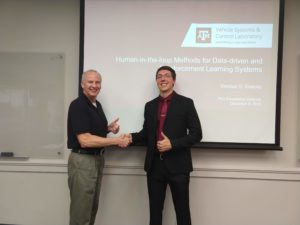
Vinicius G. Goecks (B.S. Federal University of Mato Grosso do Sul (Brazil), M.S. Texas A&M University) successfully defended his Ph.D. dissertation titled “Human-In-The-Loop Methods For Data-Driven And Reinforcement Learning Systems”.  This work is supported by the Army Research Laboratory, Human Research and Engineering Directorate (HRED) at Aberdeen Proving Ground, MD.  Vinicius is a recipient of a graduate research fellowship sponsored by the Oak Ridge Associated Universities (ORAU) to research novel forms of human-robot interaction to enable humans to train intelligent robotic agents in real-time to perform desired tasks.  He spent three consecutive summer internships in HRED working on it.  Vinicius has accepted a Post-Doctoral research position at HRED. Vinicius is currently a member of the American Institute of Aeronautics and Astronautics Intelligent Systems Technical Committee, and his main research interests are reinforcement learning, computer vision, and data-driven controllers applied to unmanned air systems.  Congratulations Vinicius, all of VSCL is very proud of you and your accomplishments!

Filed Under: Defense

Four New Graduate Students Join VSCL in Fall 2019

Posted on January 25, 2020 by Garrett Jares

VSCL is proud to welcome four new graduate research assistants:

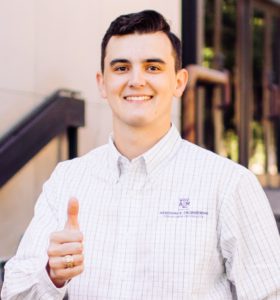
Ritwik Bera is a Ph.D. student in the aerospace engineering department.  He graduated with the B.S. degree in mechanical engineering from Indian Institute of Technology, Kanpur in 2018. During his undergraduate studies, Ritwik worked on modelling multi-agent systems using differential game theory. He also interned at VSCL in 2017, working on two time-scale control systems at the time. At VSCL, Ritwik works on human-in-the-loop learning to train autonomous systems to perform various tasks. Ritwik has been primarily focused on making human-in-the-loop learning scalable for real-time learning on hardware as well as developing unsupervised learning techniques to help agents learn macro-behaviors from human demonstrations.

Kameron Eves is a Ph.D. student in the aerospace engineering department.  He graduated from Brigham Young University (BYU) with a B.S. degree in mechanical engineering. At BYU, Kameron worked in the Multiple Agent Intelligent Coordination and Control (MAGICC) laboratory. As part of this research, Kameron helped to develop a ground based optical tracking and imaging system capable of estimating an aircraft’s pose.  In the VSCL, Kameron will work to develop the capabilities necessary for autonomous reconnaissance in military settings. This project is a partnership with the National Robotics Engineering Center (NREC) at Carnegie Mellon University. Kameron’s research interests include reinforcement learning, autonomous control, and vehicle dynamics.

Blake Krpec is a Masters of Science student in the Vehicle Systems & Control Laboratory. He has been working with his advisor, Dr. John Valasek, since the fall semester of his sophomore year (Fall 2016) as an undergraduate research assistant. During this time he assisted in flight test validation of UAS (unmanned air systems), as well as the integration of various sensors and on board computers. He earned his bachelor’s degree in Aerospace Engineering from Texas A&M University in May 2019 and began working on his masters in August 2019. In June of 2019, Blake was selected to be a Journeyman Fellow for the Army Research Lab. The work for this fellowship includes using computer vision control techniques to enable UAS to autonomously detect and navigate relative to the detected UAS. Blake’s main research interests include computer vision, controls using computer vision, and traditional controls applied to unmanned air systems.

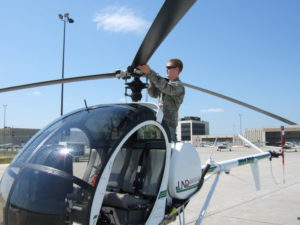
Morgan Wood is an M.S. student in the aerospace engineering department.  He earned the Bachelor of Science in Mechanical Engineering from the United States Military Academy at West Point. While in school, he studied engineering abroad at the Instituto Tecnológico de Monterrey in Mexico, soloed in a Schweizer H300 helicopter at the University of North Dakota,  and conducted research for BAE Systems as the lead structural designer to fabricate and employ a working exoskeleton for the Air Force Research Laboratory Rapid Reaction Challenge at Kirtland Air Force Base, NM. After graduation in 2011, Morgan was commissioned as a Second Lieutenant in the United States Army and served for eight years in Army Aviation as an AH-64D Apache Helicopter aviator.

Filed Under: New Members

VSCL undergraduate Hannah Lehman to pursue Ph.D. in aerospace engineering starting Fall 2020

Posted on January 25, 2020 by Garrett Jares

Hannah Lehman ‘20, a senior in the Department of Aerospace Engineering at Texas A&M University and an undergraduate research assistant of the Texas A&M Vehicle Systems & Control Laboratory, has accepted a Graduate Research Fellowship and will join the Ph.D. program in aerospace engineering in Fall 2020.  Dr. John Valasek will serve as her research Advisor and Chair of dissertation committee.  As a Graduate Research Assistant Hannah will research Tightly Integrated Navigation and Guidance for Multiple Autonomous Agents, which is sponsored by Sandia National Laboratory.  She will also do a 2020 summer internship at Sandia National Laboratory.

Hannah has been an active member of VSCL since Fall 2017, focusing on human-machine interaction and the control of UAS with Machine Learning.  She will graduate with the B.S. degree in aerospace engineering as a University Scholar, University Honors, and Engineering Honors in May 2020.  She has been awarded the 2019/2020 AIAA Foundation Cary Spitzer Digital Avionics Scholarship, the 2019 Gathright Phi Kappa Phi Outstanding Junior in the College of Engineering, and placed 1st in the 2018 AIAA Region IV Student Paper Conference.   

Filed Under: Awards

Valasek Invited Panelist in Innovation at Startup Speed: Vehicle Sensor Systems, at Capital Factory

Posted on January 25, 2020 by Garrett Jares

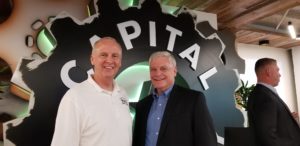
Dr. John Valasek, professor in the Department of Aerospace Engineering at Texas A&M University and director of the Vehicle Systems & Control Laboratory, was in invited panelist on the topic of Innovation at Startup Speed: Vehicle Sensor Systems, Capital Factory, Austin, TX, 26 June 2019.  Sponsored by BAE Systems of Austin, TX, panelists in the session discussed the need and use for advanced sensor systems and how they pose a challenge for researchers, developers, and regulators who are tasked with evaluating those systems and putting them into the field.

Filed Under: Presentations

VSCL graduate student Blake Krpec awarded 2019-2020 ORAU fellowship by US Army Research Laboratory (ARL)

Posted on January 25, 2020 by Garrett Jares

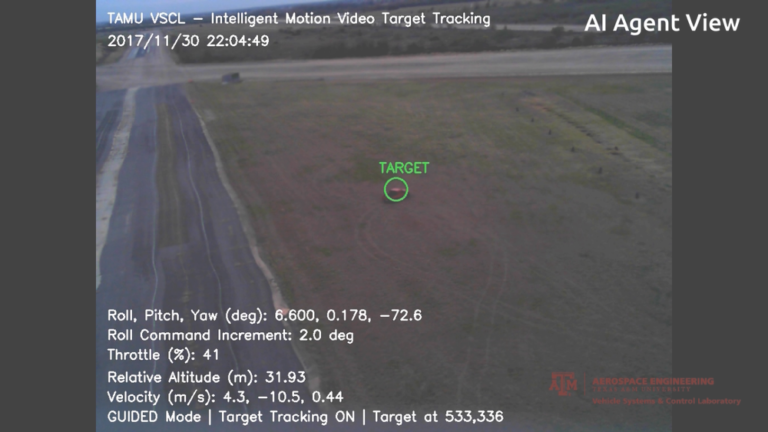
Blake Krpec, a master’s student in the Department of Aerospace Engineering at Texas A&M University and graduate research assistant of the Vehicle Systems & Control Laboratory, has been awarded the Journeyman Fellowship by the Army Research Lab (ARL).  It is presented to a graduate student interested in combining computer vision and control techniques. Specifically, this fellowship is intended to investigate forms of vision based control that will enable UAS (unmanned air systems) to autonomously navigate relative to another UAS that has been detected.  “Attempts have been made to address this problem, however they fell short of being able to track a target in real time, or were so computationally expensive that image classification and control techniques had to be computed off-board and sent to the vehicle via some wireless communication method. This use of a more powerful computer on the ground introduces strict infrastructure restrictions on the real world implementation of the solution. Our approach aims to perform all necessary computations on board the vehicle so that our solution could be implemented almost anywhere,” says Blake. “I would like to think Dr. John Valasek for supporting my pursuit of this fellowship, and supporting my research interest in this field. Also, I would like to think the Army Research Laboratory for presenting me with this opportunity, welcoming me on its facilities, and for funding this work.”

Blake has been working with his advisor, Dr. John Valasek, since the fall semester of his sophomore year (Fall 2016) as an undergraduate research assistant assisting in flight test validation of UAS, as well as the integration of various sensors and on board computers. He has earned his B.S. degree in Aerospace Engineering from Texas A&M University in May 2019 and began working on his masters in August 2019. Blake’s main research interests include computer vision, controls using computer vision, and traditional controls applied to unmanned air systems.

Filed Under: Awards

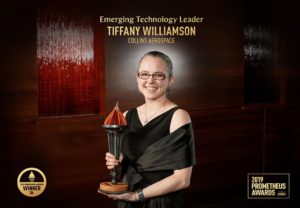
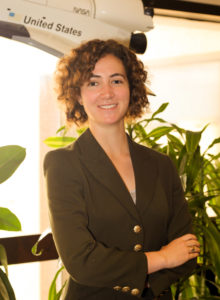
Williamson recipient of 2019 Prometheus Award for Emerging Technology Leader of the Year

Posted on January 25, 2020 by Garrett Jares

Tiffany Williamson ‘07, a former member of the Texas A&M Vehicle Systems & Control Laboratory and currently Senior Engineering Manager of Advanced Flightdeck Research and Concept Development at Collins Aerospace, is the 2019 Emerging Technology Leader of the Year from the Technology Association of Iowa.  The most prestigious recognition for Iowa’s technology industry, The Prometheus Awards presented by LWBJ brings together leaders from technology, business, education and government to celebrate the year’s most momentous innovations. The awards acknowledge individuals and companies impacting Iowa’s $11 billion technology industry, which accounts for 8.8 percent of the state’s GDP and employs over 88,400 workers. Finalists and award winners epitomize the great talent, companies and communities solidifying Iowa’s reputation as a technology state.  Finalists were selected based on their contributions to Iowa’s technology community through innovation, development of creative solutions, and demonstration of industry leadership.  Congratulations Tiffany, VSCL is very proud of you and your accomplishments!

Read the full article here.

Filed Under: Alumni

« Previous Page
Next Page »

© 2016–2026 Log in

Texas A&M Engineering Experiment Station Logo
  • State of Texas
  • Open Records
  • Risk, Fraud & Misconduct Hotline
  • Statewide Search
  • Site Links & Policies
  • Accommodations
  • Environmental Health, Safety & Security
  • Employment