• Skip to primary navigation
  • Skip to main content
  • LinkedIn
  • Videos
  • Research
    • Facilities
    • Vehicles
    • Sponsors
  • Publications
    • Books
    • Journal Papers
    • Conference Papers
  • People
    • Faculty
    • Staff
    • Graduate Students
    • Undergraduate Students
    • Alumni
    • Where VSCL Alumni Work
    • Friends and Colleagues
  • Prospective Students
  • About Us
  • Contact Us
  • Where VSCL Alumni Work

Texas A&M University College of Engineering
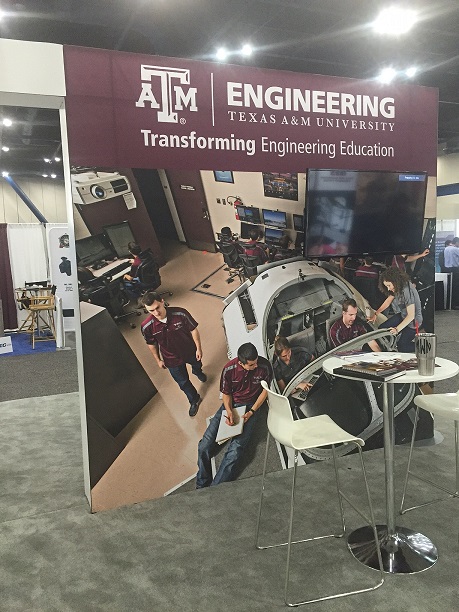
  • image001 (2)
    2017 ASEE Annual Conference & Exposition, Columbus OH
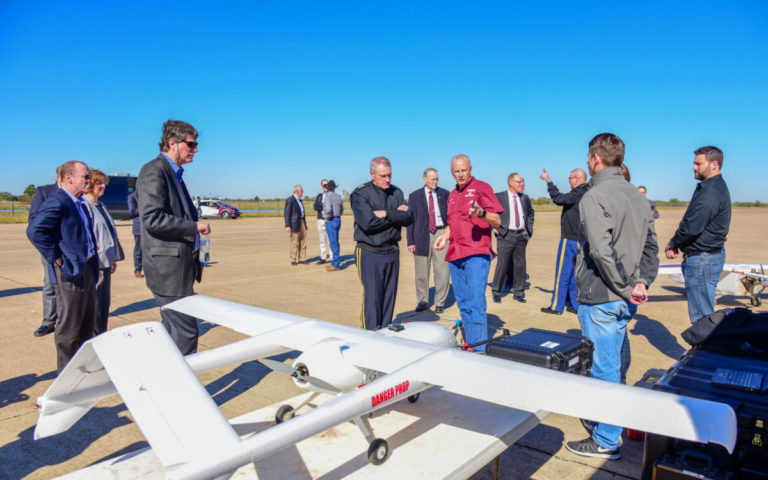
  • A26U8172
    UAS Flight Research Facility at RELLIS Test Range
  • A26U8345-2
    Pegasus UAS Designed, Built, and Patented by VSCL
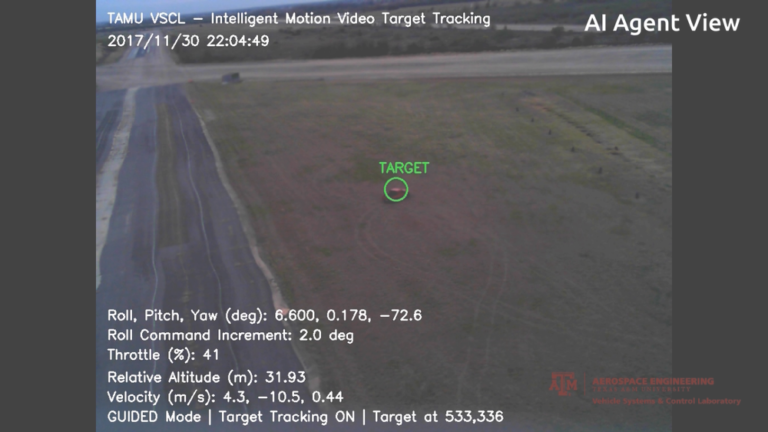
  • WebsiteTarget
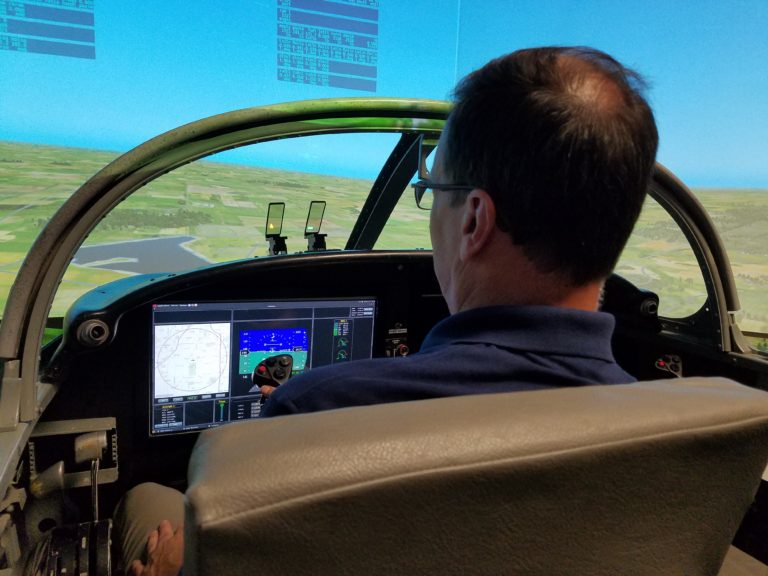
  • A26U7927

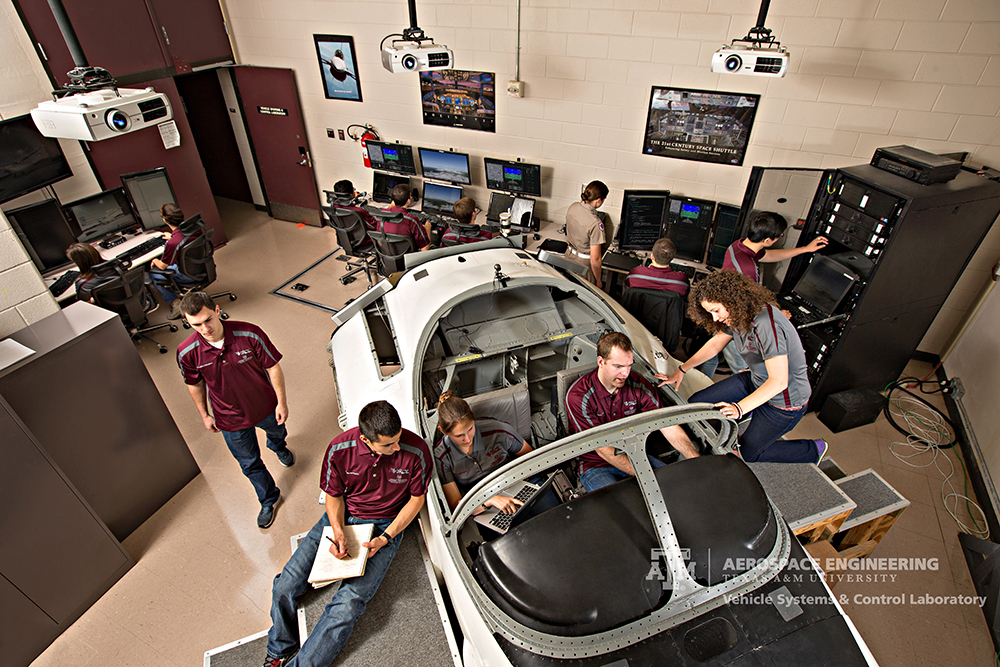
    Engineering Fight Simulator Facility
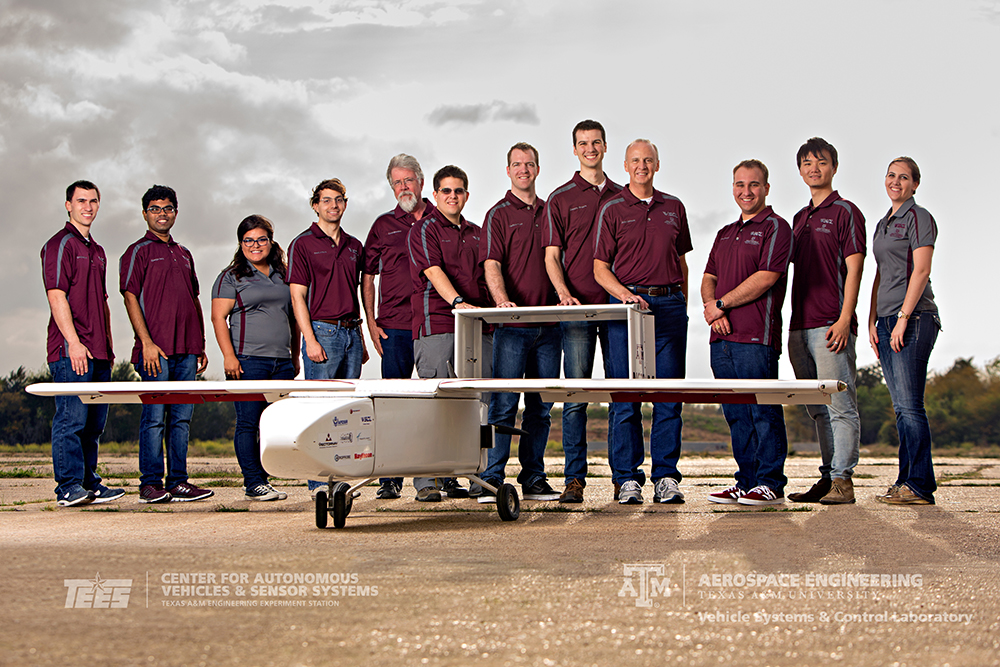
  • VSCL Group 2025
  • RTD Full Scenario
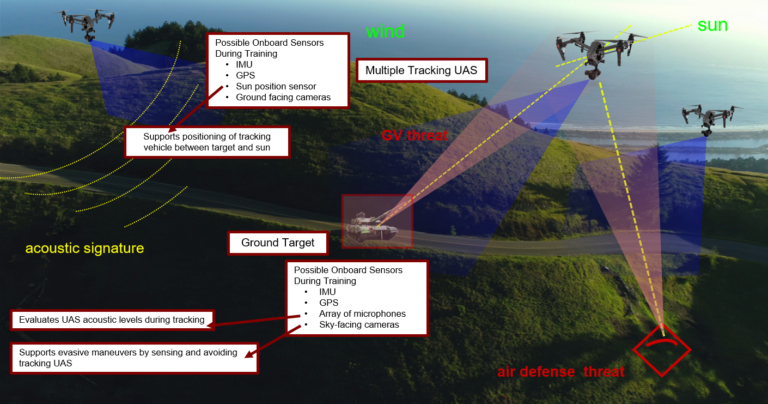
    Robust Threat Detection for Ground Combat Vehicles with Multi-Domain Surveillance in Hostile Environments
  • 20160727_143456
    FAA Test Pilot David Sizoo Flies an Approach Using Derived AOA in the Engineering Flight Simulator
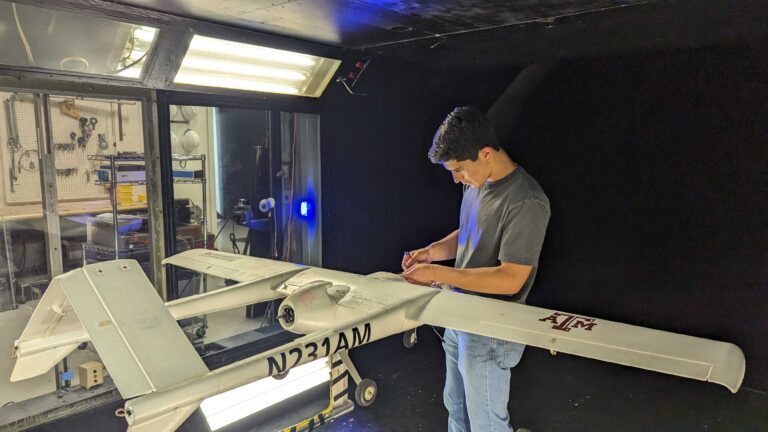
  • Undergraduate research assistant working on UAS platform for wind tunnel testing.
    Wind tunnel testing of UAS platform.
  • gaze_vscl(1)
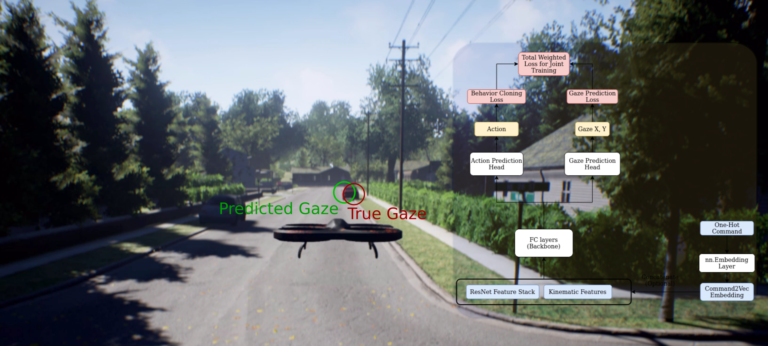
    Gaze-Guided Imitation Learning
  • AUS-2
    Pegasus UAS Designed, Built, and Patented by VSCL
  • airsim_col
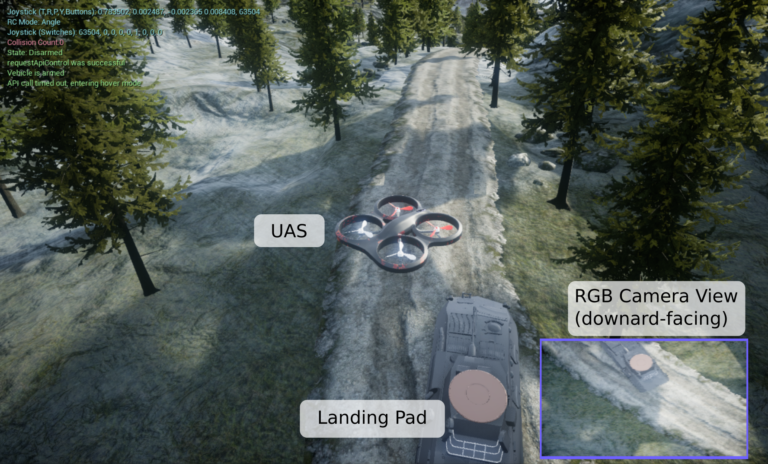
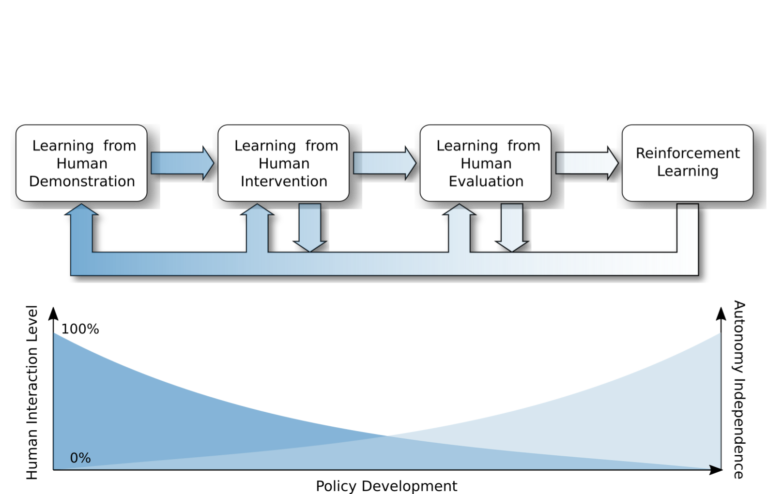
    Cycle-of-Learning for Autonomous Systems to Facilitate Human-Agent Teaming
  • 28-Army-futures-command-1200×750
    Dr. John Valasek briefs General John M. Murray, commanding general of United States Army Futures Command (AFC), on autonomous UAS research in VSCL
  • col_diagram_exp2
    Cycle of Learning for Human-Agent Interaction

People, Innovation, Excellence

Research Goal

Utilize the Theory-Computation-Experiment paradigm to research Low Cost Attritable Aircraft Technology (LCAAT) with autonomy to establish trust, providing a game changing capability that transforms the way manned and unmanned air, space, and ground systems are designed, controlled, and operated to effectively accomplish missions and tasks. VSCL is thus focused on synergistic strategies for the analysis, control, validation & verification of complex autonomous vehicle and sensor systems operating in challenging environments.

The Vehicle Systems & Control Laboratory is directed by Dr. John Valasek.

Graduate Research Assistant Positions Available

The Vehicle Systems & Control Laboratory (VSCL) has multiple fully funded Ph.D. positions in Aerospace Engineering that are available. Interested students are encouraged to apply for research in the following areas:
– Autonomous and Nonlinear Control of Cyber-Physical Air, Space, and Ground Systems
– Vision Based Sensors and Navigation Systems
– Cybersecurity for Air and Space Vehicles
– Air and Space Vehicle Control and Management
– Advanced Cockpit/UAS Systems and Displays
– Control of Bio-Nano Materials and Structures
– Human-in-the-Loop Artificial Intelligence for Coordinated Autonomous Unmanned Air Systems

More information and details for applying can be found here.

UAS Research and Flight Testing by the Numbers

  • 21 Years of Fixed-Wing UAS Flight Testing under FAA Auspices
  • 26 Externally Funded UAS Research Programs (1999 – Present)
  • 400+ Flights with an operational tempo of 133 thermal IR and multi-spectral data collection flights in the field over 12 months (2015 – 2016)
  • 24 Certified UAS Flight Testers Currently on Staff
  • 3 Certified UAS Pilots Currently on Staff
  • 13 UAS Vehicles in Current Fleet

Research Project Spotlight

Project: System Identification for Unmanned Air Systems

Sponsor: National Science Foundation (NSF) Center for Autonomous Air Mobility & Sensing (CAAMS)

Purpose: System Identification is a process to develop a mathematical representation of the dynamics of a physical system from measured data. Accurate models enable prediction of performance and dynamics of a system.

Challenges: Models for sUAS are generally not available as manufacturers do not have models for commercial sUAS and models for military sUAS are not typically available. Modeling and control systems are often vehicle dependent and not easily portable across sUAS. Many commercial autopilots do not provide data needed for online system identification

Our Approach: Utilizing the Observer Kalman Filter Identification algorithm with the Developmental Flight Test Instrumentation 2 framework, full state space models can be identified in near-real time onboard the vehicle utilizing data from a variety of sensors.


Recent News


VSCL Hosts Dr. Robert Abrose

Posted on June 21, 2022 by Garrett Jares

VSCL hosted Dr. Robert Abrose, Professor in the Texas A&M Department of Mechanical Engineering and Director for Space and Robotics at the Bush Combat Development Complex, at the Texas A&M University UAS Flight Testing Facility at RELLIS Campus. Dr. Ambrose met with Lab Director Dr. John Valasek and several VSCL Graduate Students. Dr. Ambrose and VSCL discussed UAS autonomy research and flight testing capabilities to identify points for potential  collaboration with the Bush Combat Development Complex.
Filed Under: Presentations

VSCL Hosts Army Research Laboratory

Posted on June 20, 2022 by Garrett Jares

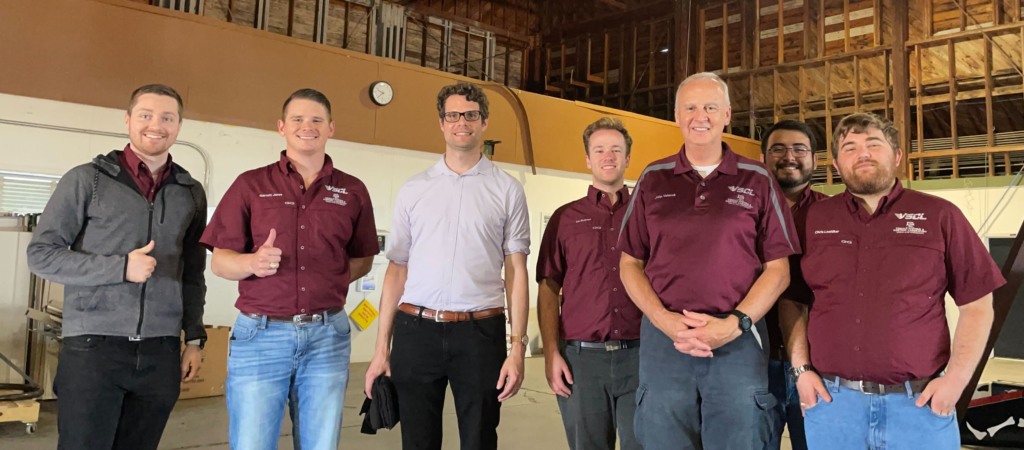
VSCL hosted Dr. Steve Nogar, Research Engineer at the Army Research Laboratory, at the Texas A&M University UAS Flight Testing Facility at RELLIS Campus.  Dr. Nogar met with VSCL lab director Dr. John Valasek and VSCL graduate students Kameron Eves, Garrett Jares, Ian Holmes, Esteban Gomez, and Chris Leshikar about the autonomous control of UAS research that VSCL conducts at the flight testing facility and toured the grounds.

Filed Under: Presentations

VSCL Students Graduate with M.S., M.Eng., and B.S. Degrees

Posted on May 16, 2022 by Garrett Jares

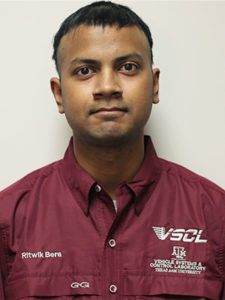
VSCL graduate student Ritwik Bera has graduated with his Master of Science in Aerospace Engineering. Ritwik successfully defended his thesis “A Modular Framework for Training Autonomous Systems via Human Interaction” in December 2021. He is now working with Zoox in Foster CIty, CA as a Software Engineer in the Planning and Control department working on trajectory generation algorithms. Ritwik joined VSCL in 2019 after having spent a summer working with the lab in 2017 and has focused much of his work on human-in-the-loop learning to train autonomous systems to perform various tasks. Ritwik has also led the efforts for the Enhancing the Cycle-of-Learning for Autonomous Systems to Facilitate Human-Agent Teaming project.


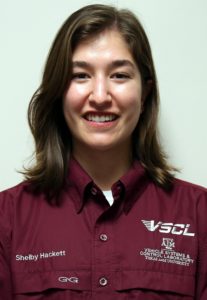
VSCL graduate student Shelby Hackett has graduated with her Master of Engineering in Aerospace Engineering. Shelby will be going to work for Jet Propulsion Laboratory in Pasadena, CA where she will be a part of the guidance, navigation, and control systems group and will aid in various space missions. Shelby has been a member of VSCL since Fall 2020 and has worked on a number of projects including Tightly Integrated Navigation and Guidance for Multiple Autonomous Agents. She has also served as a Teaching Assistant for AERO 321: Dynamics of Aerospace Vehicles and aided undergraduate students in learning aircraft stability and control.


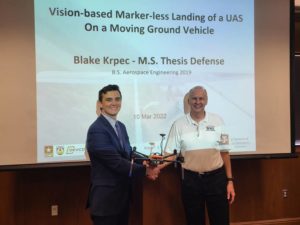
VSCL graduate student Blake Krpec has graduated with his Master of Science in Aerospace Engineering. Blake successfully defended his thesis “Vision-Based Marker-Less Landing of a UAS On a Moving Ground Vehicle” in March 2022. He is now working as an Engineer in the Applied Sensing Department for Southwest Research Institute in San Antonio, TX. Blake began working with VSCL during the fall semester of his sophomore year (Fall 2016) as an undergraduate research assistant and began working on his masters in August 2019. Blake was selected to be a Journeyman Fellow for the Army Research Lab and his main research interests include computer vision, controls using computer vision, and traditional controls applied to unmanned air systems


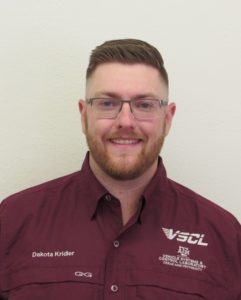
VSCL undergraduate research assistant Dakota Kridler has graduated with his Bachelor of Science in Aerospace Engineering. Dakota will be working as a Flight Test & Systems Engineer for Albers Aerospace in McKinney, TX. He has been working with VSCL since January 2019 and has worked to develop the air vehicle autonomy on the Agile Technology Development (ATD) – Air-Ground Coordinated Teaming project. Dakota is also a US Army veteran who served from 2012 to 2017 as an Infantryman during the Inherent Resolve Campaign.


VSCL undergraduate research assistant Luke Moy has graduated with his Bachelor of Science in Aerospace Engineering. Luke will be working as an R&D Engineer 1 at Los Alamos National Laboratory. Luke has been a member of VSCL since August 2020 and has been involved in much of the flight testing operations at RELLIS Campus. Luke has also been an integral part of the Tightly Integrated Navigation and Guidance for Multiple Autonomous Agents project.

Filed Under: Alumni, Graduation

VSCL Students Selected for Summer 2022 Internships

Posted on March 16, 2022 by Garrett Jares

Many students of the Texas A&M Vehicle Systems & Control Laboratory have been selected for offsite internships for the Summer of 2022. These internships show VSCL student representation at a variety of companies and institutions across the United States. Students which have been selected for internships in the Summer of 2022 include:

VSCL Graduate Research Assistant Connor Atkins has been selected for a Summer 2022 internship with Los Alamos National Laboratory in Los Alamos, NM. Connor will be working as a Graduate Student Intern and assisting with documentation/procedure and testing of new systems within the physics lab. Connor has been a member of VSCL since 2018 and has worked on numerous projects. Currently, he is working with the flight testing group at the RELLIS Campus. Having experience with both the software and hardware sides of the vehicles, he performs preflight maintenance and aids in the testing of a variety of UAS that VSCL handles.


VSCL Undergraduate Research Assistant Alex Gross has been selected for a Summer 2022 internship at Sandia National Laboratory in Albuquerque, NM. Alex will be working as a Research & Development Intern focusing on applying machine learning to hypersonic applications. Alex is a Junior and has been a member of VSCL since 2020. He has focused his research on UAS autonomous guidance and landing, embedded systems, and user-interface integration.
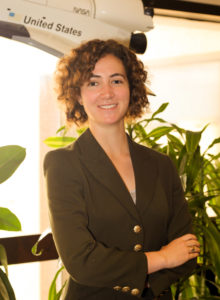


VSCL Graduate Research Assistant and Ph.D Student Hannah Lehman has been selected for a Summer 2022 research internship at Sandia National Laboratory in Albuquerque, NM. Hannah has been working as a Year-Round Research & Development Intern since 2020, with a principal focus of applying machine learning to defense vehicles. Hannah started working with VSCL as an undergraduate in the Spring of 2017, with her major roles including managing the flight simulator lab and performing research into reinforcement learning for use onboard aircraft. Hannah graduated with her B.S. in Aerospace Engineering in May 2020 and and continued with VSCL to pursue her Ph.D.
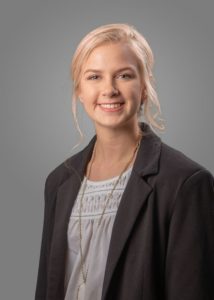


VSCL Graduate Research Assistant and M.S. Student Cassie-Kay McQuinn has been selected for a Summer 2022 research internship at Sandia National Laboratory in Albuquerque, NM. Cassie will be a Research and Development Intern with a focus of applying autonomy solutions to advance the national security mission. Cassie has been a member of VSCL since Spring 2021 and joined as a M.S. student in the Spring 2022 semester. Cassie-Kay’s main interests include flight test engineering, aircraft dynamics, and system identification.
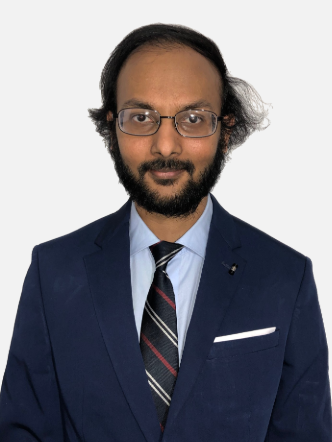


VSCL Graduate Research Assistant Md Nazmus Sunbeam has been selected for a Summer 2022 internship with the Army Research Laboratory in Aberdeen, MD. Sunbeam will be working as a Summer Student Researcher with the Human Research and Engineering Directorate developing algorithms and extensions for Cycle-of-Learning. Cycle-of-Learning is a framework for quick training of AI agents through human interaction. Sunbeam has been a member of VSCL: since August 2021. His research has focused on advancing the Cycle-of-Learning by investigating the use of similarity metrics.
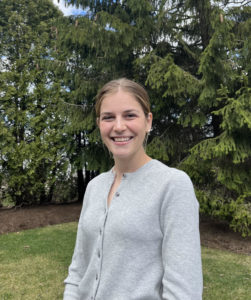
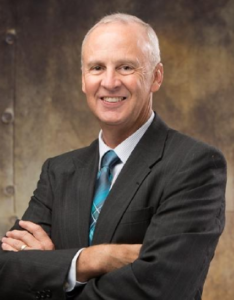
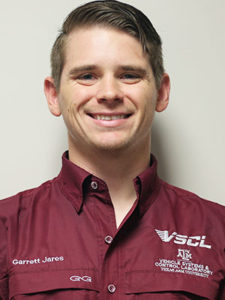


VSCL Undergraduate Research Assistant Carla Zaramella has been selected for a Summer 2022 internship at Raytheon Technologies in Tewksbury MA. Carla will be working as a Whole Life Program – Systems Engineering Intern in RTX Missiles and Defense with a team to ensure that hardware and systems are effective, reliable and maintainable. Carla is a Sophomore and has been a member of VSCL since January of 2022 and has been involved in flight testing and supporting research for system identification.


Filed Under: Internships

Valasek and Jares Present for Sandia National Labs STARCS Mission Campaign

Posted on March 16, 2022 by Garrett Jares

Valasek, John

Dr. John Valasek

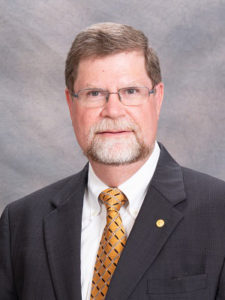
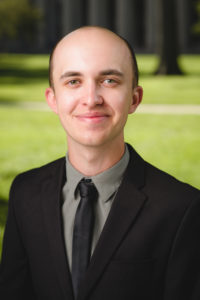
Dr. John Valasek, Professor in the Department of Aerospace Engineering at Texas A&M University and Director of the Vehicle Systems & Control Laboratory, and VSCL student Garrett Jares gave a virtual seminar titled “Control Acquisition Attack of Aerospace Systems via False Data Injection of Sensor Data” for Sandia National Laboratories. The seminar was presented as part of a monthly seminar series for the Science and Technology Advancing Resilience for Contested Space (STARCS) Mission Campaign. The date of the seminar was 28 February 2022.


Filed Under: Presentations

VSCL Graduate Student Maison Clouatre is Awarded Avilés-Johnson Fellowship

Posted on March 14, 2022 by Garrett Jares

Maison ClouatreVSCL Graduate Student Maison Clouatre has been awarded the Avilés-Johnson Fellowship – Doctoral. The fellowship citation states “Texas A&M University believes that diversity is an indispensable component of academic excellence. The Dr. Dionel Avilés ’53 and Dr. James Johnson ’67 Fellowship Program seeks to increase diversity in the graduate and professional student population at Texas A&M University and support the development of high achieving scholars who show promise of distinguished careers for the benefit of all students.”
Clouatre is grateful to be awarded the fellowship, and says “I am most humbled by my selection as an Avilés-Johnson fellow, and I am thankful to be part of a department and university that celebrates diversity. I am also thankful for Dr. John Valasek and his continued efforts—since I was an undergraduate freshman—to mentor me and recruit me to Texas A&M. His kindness is representative of the Texas A&M community and his efforts reflect the core values behind the Avilés-Johnson fellowship program.”

Maison Clouatre is an incoming Ph.D. student in the aerospace engineering department. He will graduate in May 2022 with a double major in electrical engineering and mathematics from Mercer University. As an undergraduate, Clouatre held visiting research positions in the Electronic Systems (ELSYS) Laboratory at the Georgia Tech Research Institute (GTRI), the Vehicle Systems & Control Laboratory (VSCL) at Texas A&M University, and the Laboratory for Information & Decision Systems (LIDS) at the Massachusetts Institute of Technology (MIT). His research interests lay at the intersection of control theory, optimization, and learning, and he focuses on applying his theory to the fields of quantum information science and aerospace engineering. Clouatre is both a Goldwater Scholar and Stamps Scholar. At VSCL, Clouatre will research quantum control and learning for quantum dynamics.

Filed Under: Awards

VSCL Student Blake Krpec Defends Master of Science Thesis

Posted on March 14, 2022 by Garrett Jares

VSCL student Blake Krpec, who will graduate with his Master of Science degree in May 2022, has defended his thesis “Vision-Based Marker-Less Landing of a UAS On a Moving Ground Vehicle”.  Blake’s defense had 34 people in attendance including many in attendance from the Army Research Lab.  His committee is Drs. Reza Langari, Manoranjan Majji, Srikanth Saripalli, and Stephen Nogar (special committee member from Army Research Laboratory and the Technical Monitor). His research is supported as a Journeyman Fellow by the Army Research Laboratory (ARL) on an Oak Ridge Associated Universities (ORAU) Fellowship. Blake has been working with VSCL for 7 years after joining as a freshman. After graduation, Blake will work with Southwest Research Institute in San Antonio, TX.

Filed Under: Defense, Machine Learning

VSCL Postdoctoral Researcher Sangwoo Moon Joins JPL

Posted on March 9, 2022 by Garrett Jares

Dr. Sangwoo Moon, postdoctoral researcher in VSCL, has accepted a position as a Postdoctoral Fellow with NASA’s Jet Propulsion Laboratory. Dr. Moon will be working with the JPL Robotics Group, Robotic Aerial Mobility. His work at JPL will be mainly focused on communication-aware decision making and perception approaches for multi-robot systems. The work will include software development/integration for data fusion and multi-level planning/control, simulation verification/validation to assess the developed approaches, and hardware demonstration and evaluation with heterogeneous multi-robot systems with harsh communication environments.

Dr. Moon has worked with VSCL since March 2021. As a research engineer, he was involved in the hardware/software implementation for large hexacopter platforms. He particularly developed specialized hardware and software components for the vehicles consisting of a battery monitoring system, onboard computer set up for planning and guidance, and terrain-following algorithms. He worked with VSCL flight crews to evaluate the vehicles, in which his team including himself took flight tests of over 200 sorties and 60 hours of flight time. He contributed to the successful demonstration of a cooperative zone recon mission with four large hexarotors for searching unknown ground moving targets.

Filed Under: Alumni

Valasek Presents at 6th Annual UAS Handling Qualities Workshop

Posted on February 1, 2022 by Garrett Jares

Valasek, John

Dr. John Valasek

Dr. John Valasek, Professor in the Department of Aerospace Engineering at Texas A&M University and Director of the Vehicle Systems & Control Laboratory, gave a virtual seminar titled “Flight Results of Autopilot Gain Tuning for Large Hexacopter Handling Qualities” for the 6th Annual UAS Handling Qualities Workshop. The date of the seminar was 28 January 2022.

Filed Under: Presentations

Spring 2022 FoRCE Online Seminar by Valasek – January 28 at 11:00 Central Time

Posted on January 24, 2022 by Garrett Jares

Valasek, John

Dr. John Valasek

Seminar 1:  Multiple-Time-Scale Nonlinear Output Feedback Control of Systems With Model Uncertainties (Dr. John Valasek)

WebEx Link: https://force.my.webex.com/force.my/j.php?MTID=mba10bd9e12f5b612d2adc2b79c1c7d2f

Meeting number (access code): 2550 544 5654

Meeting password: neCev2rfT35 (63238273 from phones and video systems)


Abstract: Systems with dynamics evolving in distinct slow and fast timescales include aircraft (Khalil & Chen, 1990), robotic manipulators, (Tavasoli, Eghtesad, & Jafarian, 2009), electrical power systems (Sauer, 2011), chemical reactions (Mélykúti, Hespanha, & Khammash, 2014), production planning in manufacturing (Soner, 1993), and so on.  The Geometric Singular Perturbation theory (Fenichel, 1979) is a powerful control law development tool for multiple-timescale systems because it provides physical insight into the evolution of the states in more than one timescale.  The behaviour of the full-order system can be approximated by the slow subsystem, provided that the fast states can be stabilised on an equilibrium manifold.  The fast subsystem describes how the fast states evolve from their initial conditions to their equilibrium trajectory or the manifold.  This presentation develops two nonlinear, multiple-time-scale, output feedback tracking controllers for a class of nonlinear, nonstandard systems with slow and fast states, slow and fast actuators, and model uncertainties. The class of systems is motivated by aircraft with uncertain inertias, control derivatives, engine time-constant, and without direct measurement of angle-of-attack and sideslip angle. One controller achieves the control objective of slow state tracking, while the other does simultaneous slow and fast state tracking.  Each controller is synthesized using time-scale separation, lower-order reduced subsystems, and estimates of unknown parameters and unmeasured states. The estimates are updated dynamically, using an online parameter estimator and a nonlinear observer. The update laws are so chosen that errors remain ultimately bounded for the full-order system. The controllers are simulated on a six-degree-of-freedom, high-performance aircraft model commanded to perform a demanding, combined longitudinal and lateral/directional maneuver. Even though two important aerodynamic angles are not measured, tracking is adequate and as good as a previously developed full-state feedback controller handling similar parametric uncertainties.  Additionally, even though the two controllers in theory achieve two different control objectives, it is possible to choose either one of them for the same maneuver. Of the two new output feedback controllers, the slow state tracker accomplishes the maneuver with less control effort, while the simultaneous slow and fast state tracker does so with a smaller number of gains to tune.


Filed Under: Presentations

« Previous Page
Next Page »

© 2016–2026 Log in

Texas A&M Engineering Experiment Station Logo
  • State of Texas
  • Open Records
  • Risk, Fraud & Misconduct Hotline
  • Statewide Search
  • Site Links & Policies
  • Accommodations
  • Environmental Health, Safety & Security
  • Employment