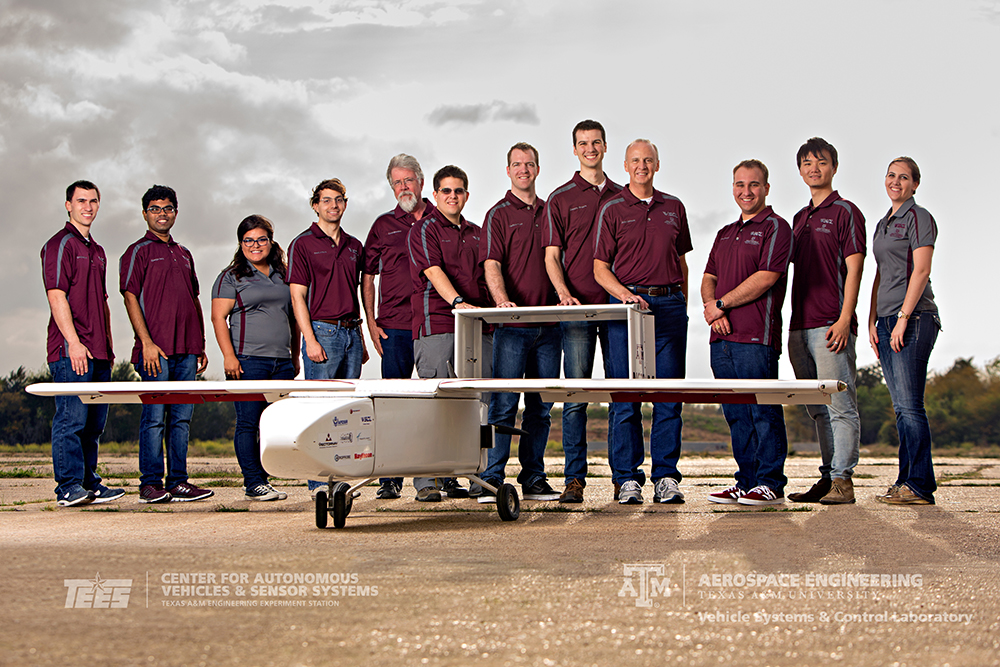


 Dr. John Valasek and the Vehicle Systems & Control Laboratory has been awarded a multi-year (2023-2026) research grant by the Office of Naval Research (ONR) to investigate multiple time scale (MTS) adaptive control systems for naval applications such as unmanned air systems (UAS), high performance aircraft, and satellites. MTS systems are systems with some states that evolve quickly and some states that evolve slowly. These systems can have coupled fast and slow modes which occur simultaneously. MTS systems are particularly interesting from a controls perspective because the time scale separation in the plant can cause degraded performance or even instability under traditional control methods. Accounting for the time scales can remedy this problem. For example, a MTS control technique demonstrated significantly reduced rise times over traditional Nonlinear Dynamic Inversion (NDI). Similarly, traditional adaptive control has been demonstrated to have reduced performance on MTS systems. On the other hand, traditional control techniques that are specifically designed for MTS systems cannot account for systems with model uncertainties. Thus, a method of MTS control for uncertain systems is needed.
A novel methodology called [K]Control of Adaptive MTS Systems (KAMS) is developed which expands upon the class of dynamical systems to which MTS control and adaptive control can apply. While other techniques use elements of adaptive control and MTS control, other research stops short of fully and rigorously combining them. KAMS is a significant improvement over prior methods and provides insight into the physics of the system. It is capable of controlling systems with model uncertainty unlike traditional MTS control, and is robust to systems with unstable zeros unlike traditional adaptive control and feedback linearization.
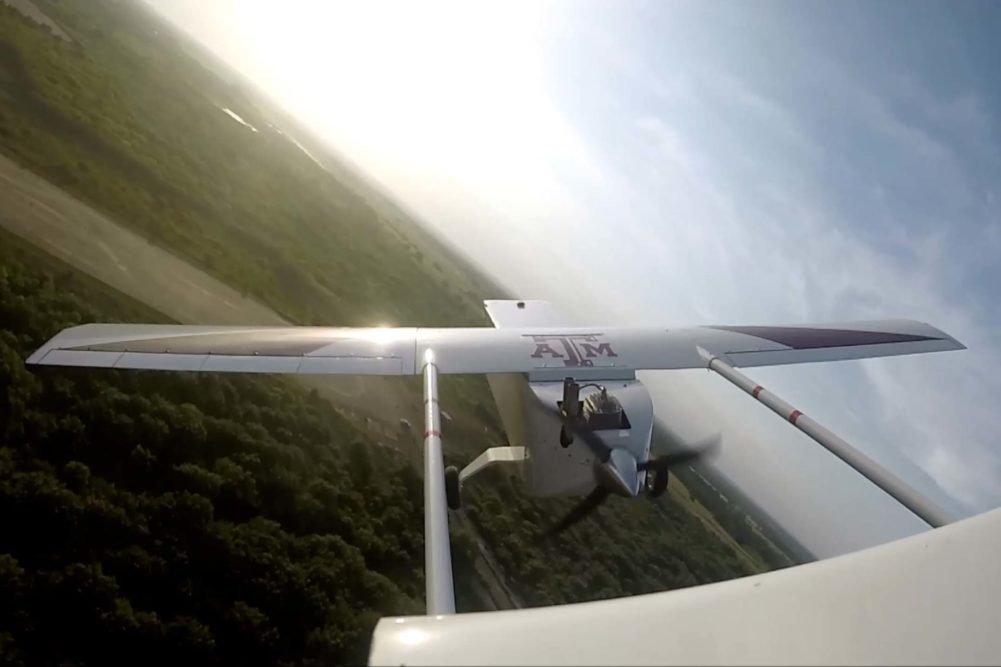
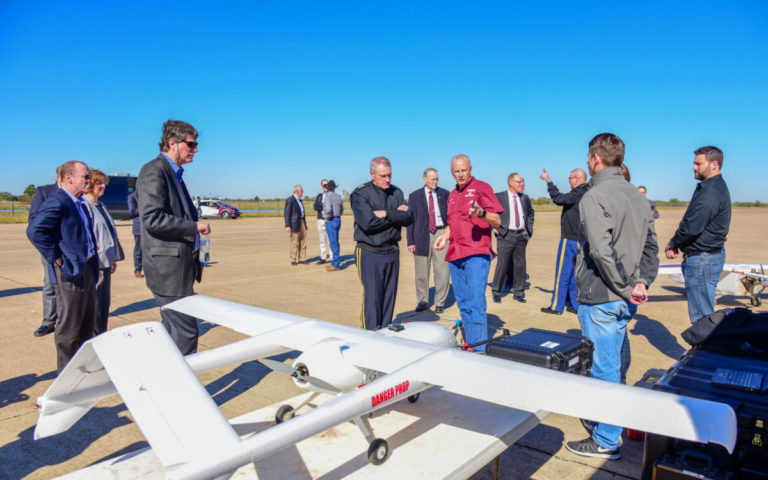
In addition to investigating theoretical research questions for KAMS, hardware validation of the resulting theory will be performed with a flight testing evaluation campaign using a small unmanned air system (UAS), both fixed-wing and rotorcraft, operating in a challenging environment.
More details of the benefits of KAMS and the research objectives for this project can be found here: https://vscl.tamu.edu/research/novel-multiple-time-scale-adaptive-control-for-uncertain-nonlinear-dynamical-systems/
This project is part of VSCL’s ongoing work in the area of Autonomous, Nonlinear Control of Air, Space and Ground Systems




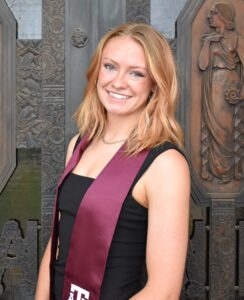 Jillian Bennett is a Masters of Science student in the Aerospace Engineering department. She graduated with her Bachelors of Science in Aerospace Engineering and Minor in Mathematics in Fall 2023. As an undergraduate she interned with Los Alamos National Laboratory and TAMU Material Science and Engineering, working on characterizing impacted materials. Additionally she was the lead ambassador for the Aerospace Ambassador program and a Fish Camp chair. Her work with VSCL will be primarily focused on
 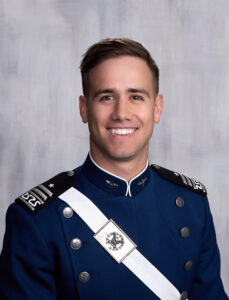 2nd Lieutenant Noah Luna is a Masters of Science student in the Aerospace Engineering Department. He graduated from the United States Air Force Academy with a Bachelors of Science in Aeronautical Engineering and Computer Science. During his undergraduate studies, he performed research on a neural network based flight control system for an ongoing fixed-wing project through the Air Force Research Lab (AFRL). Additionally, he completed an internship and further research with Lockheed Martin Skunk Works as a Software and Flight Test engineer developing nonlinear adaptive flight controls for aerial systems. At VSCL, Noah will be working on
 This paper presents a summary of system identification flight testing and results for a variety of large and small fixed-wing and multirotor Unmanned Air Systems at Texas A&M University from 1999-2023. The six different types of vehicles range from a large powered-parafoil, to a fixed-wing vehicle with synthetic jet actuated roll control effectors, to a radially asymmetric multirotor, to large and small fixed-wing vehicles, and a Steppe eagle. The Observer/Kalman Filter Identification algorithm is used to generate linear time invariant state-space models, and results for both near real-time online model generation, and post-flight offline model generation are presented. The use and efficacy of a variety of test input types and their sensitivity to exogenous inputs such as turbulence, in addition to identified model evaluation and selection criteria are discussed. Several generations of low size, weight, power, and cost flight test instrumentation including the Developmental Flight Test Instrumentation data acquisition package are also presented. Challenges that arose from the flight testing campaigns along with solutions are highlighted in the paper.
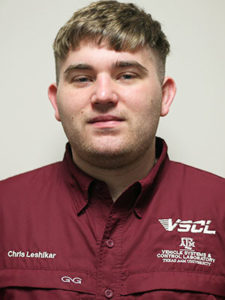 VSCL Graduate Research Assistant and Ph.D Student Chris Leshikar has been selected for a Summer 2023 internship with the
  VSCL Graduate Research Assistant and Ph.D Student Hannah Lehman has been selected for a Summer 2023 research internship at
  VSCL Graduate Research Assistant and MS student MD-Nazmus Sunbeam has been selected for a Summer 2023 internship with
 VSCL Graduate Research Assistant and MS Student Cassie-Kay McQuinn has been selected for a Summer 2023 research internship at the
 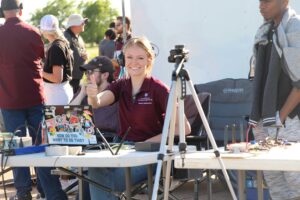 VSCL Graduate Research Assistant