• Skip to primary navigation
  • Skip to main content
  • LinkedIn
  • Videos
  • Research
    • Facilities
    • Vehicles
    • Sponsors
  • Publications
    • Books
    • Journal Papers
    • Conference Papers
  • People
    • Faculty
    • Staff
    • Graduate Students
    • Undergraduate Students
    • Alumni
    • Where VSCL Alumni Work
    • Friends and Colleagues
  • Prospective Students
  • About Us
  • Contact Us
  • Where VSCL Alumni Work

Texas A&M University College of Engineering

News

VSCL Students Selected for Summer 2026 Internships

Posted on March 3, 2026 by Cassie-Kay McQuinn

Many students of the Texas A&M Vehicle Systems & Control Laboratory have been selected for internships for the Summer of 2026. These internships show VSCL student representation at a variety of companies and institutions across the United States. Students which have been selected for internships in the Summer of 2026 include:

Jillian Bennett will be interning with the Naval Air Warfare Center Aircraft Division in Patuxent River, Maryland with the STEM Student Employment Program (SSEP) implementing an adaptive multiple time-scale controller (KAMS) on a VTOL vehicle.

Raul Santos accepted an internship with the Force Projection Sector of John Hopkins University APL in Laurel, Maryland where he will be a Missiles GNC Engineering Intern.
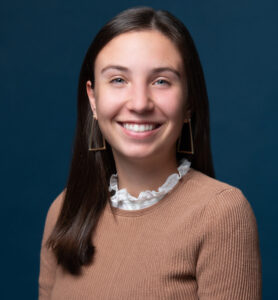
Sadie Binz is joining the Naval Research Office (NRO) in Washington DC as a NREIP Intern working on single and multi agent reinforcement learning.
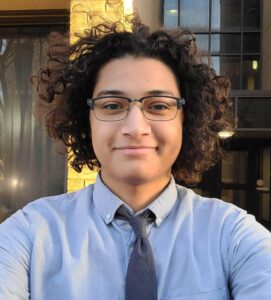
Seth Johnson accepted an internship with VectorNav Technologies in Dallas,Texas as a Navigational Engineering Intern where he will be working on software for sensor data fusion.
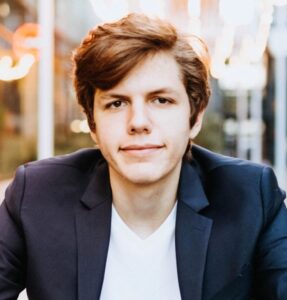
Aidan Timofte is joining General Atomics ASI in San Diego, California as a Flight Controls Engineering intern.
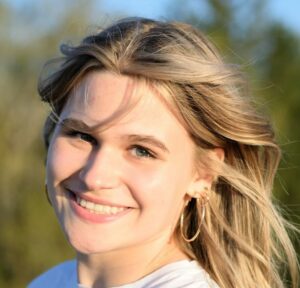
Lily Mikulas accepted an internship with the Air Force Research Lab (AFRL) Autonomous Capabilities Team (ACT3), facilitated through the University of Dayton Research Institute (UDRI).

Allision Barnes will be an Aviation Programs Engineering Intern with Garmin in Olathe, Kansas facilitating avionics integration with OEMs.
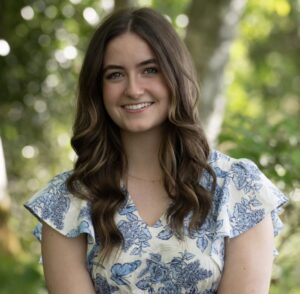
Bella Grayson will be joining NASA at Johnson Space Center in Houston, Texas as a systems engineering intern supporting Artemis III and IV.

Paige Warren is joining Gulfstream in Savannah, Georgia as a Flight Sciences Engineering Intern – Control Laws working on control law theory and simulation.
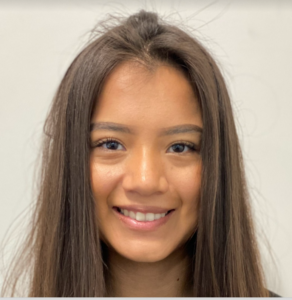
Laura Escamilla accepted an internship with AeroVironment in Moorpark, California as an Autonomy Engineering Intern.

Izzy Peressim was selected for the S-REU at Texas A&M University with Dr. Valasek. She will be researching the use of human eye gaze for improving the real-time training and mission performance of intelligent agents
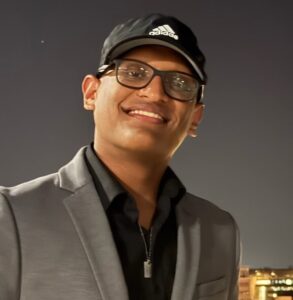
Ishaan Bansal will be a software engineering intern for United Launch Alliance (ULA) in Denver, Colorado working on their control systems and state machines.

Filed Under: Internships

VSCL Students Present at 2026 AIAA SciTech Forum

Posted on January 7, 2026 by Cassie-Kay McQuinn

VSCL researchers Raul Santos, Seth Johnson, Carla Zaramella, Zach Curtis will present papers in January at the 2026 AIAA SciTech Forum in Orlando, Florida.

On 12 January, Raul Santos will present the paper ”Deep Reinforcement Learning Waypoint Generation for Attitude Station-Keeping with Sun Avoidance”. This work studies deep reinforcement learning–based waypoint generation for autonomous on-orbit attitude control and examines how observation and action space design influence neural network performance.

Santos, Raul, Binz, Sadie, McQuinn,Cassie-Kay, Valasek, John, Hamilton, Nathaniel, Hobbs, Kerianne L., and Dulap, Kyle, ”Deep Reinforcement Learning Waypoint Generation for Attitude Station-Keeping with Sun Avoidance,” 2026 AIAA Science and Technology Forum and Exposition, Orlando, FL, 12 January 2026


On 12 January, Seth Johnson will present the paper “Modular Open System Architecture for Low-cost Integrated Avionics (MOSA LINA)”. This work investigates a modular, open-system avionics architecture for experimental vehicles that reduces integration complexity and supports platform-agnostic mission reconfiguration through plug-and-play sensor integration. Two case studies are investigated: one focused on synchronized high-fidelity data collection and the other on autonomous fixed-wing target tracking.

Johnson, Seth, Santos, Raul, Martinez-Banda, Isabella, Luna, Noah, and Valasek, John, “Modular Open System Architecture for Low-cost Integrated Avionics (MOSA LINA),” 2026 AIAA Science and Technology Forum and Exposition, Orlando, FL, 12 January 2026.


On 15 January, Carla Zaramella will present the paper “Identification of Non-Dimensional Aerodynamic Derivatives using Markov Parameter Based Least Squares Identification Algorithm”. This work expands apon previous developments of the MARBLES algorithm to directly identify non-dimensional stability and control derivatives using computed Markov Parameters with a least squares estimator and a priori information.

Leshikar, Christopher, Zaramella, Carla, Madewell, Evelyn, and Valasek, John, “Identification of Non-Dimensional Aerodynamic Derivatives using Markov Parameter Based Least Squares Identification Algorithm,” 2026 AIAA Science and Technology Forum and Exposition, Orlando, FL, 15 January 2026


On 16 January, Zachary Curtis will present the paper “Real-Time Controller Architecture for sUAS Flight Test”. This work investigates a C++/ROS architecture for real -time controller implementation. The said architecture, Kanan, allows safe and fast integration of custom controllers across a broad range of vehicles and controller types.

Luna, Noah, Valasek, John, and Curtis, Zachary, “Real-Time Controller Architecture for sUAS Flight Test,”  2026 AIAA Science and Technology Forum and Exposition, Orlando, FL, 16 January 2026.


Filed Under: Control, Machine Learning, Presentations, Publications, Reinforcement Learning, System Identification

Payton Clem Defends Masters Thesis

Posted on December 16, 2025 by Cassie-Kay McQuinn

Payton Clem successfully defended her M.S. thesis Autonomous Target Tracking of Hostile Ground Target under Wind Disturbance and Sun Concealment using Deep Reinforcement Learning on 12 December.  Payton has been with VSCL since the first semester of her senior year and is highly engaged in AI and flight testing.

Intelligence, surveillance, and reconnaissance (ISR) missions benefit from the use of unmanned aircraft systems (UAS) capable of maintaining visual contact with ground targets, referred to here as target tracking. For practical deployment, it is valuable for tracking to be autonomous and function without detailed knowledge of the surrounding environment. The task becomes more complex when additional objectives, such as concealment or avoiding a hostile target, are introduced. To address this problem, a Soft Actor-Critic (SAC) reinforcement learning controller is developed that uses only the target’s location in the image frame. The agent controls a multirotor UAS equipped with a fixed optical sensor, requiring the agent to adjust vehicle attitude to keep the target in view while accounting for wind, varying target behaviors, altitude-based concealment constraints, and sun-related concealment. Previous work on fixed-camera target tracking has shown that RL-based algorithms can produce unstable behaviors such as control oscillations and large altitude changes. This work focuses on reward shaping to mitigate these issues and encourage stable, consistent tracking. In addition, the influence of including solar concealment information in the reward function is examined to assess its effect on vehicle behavior. The results demonstrate that the proposed reward structure effectively reduces unwanted behaviors such as diving and pitch and yaw ringing. The reward structure enables stable, long-duration tracking, despite the incorporation of constraints associated with sun concealment strategies. The resulting policy achieves reliable tracking across the evaluated conditions.

Payton’s research is supported by the Army Research Laboratory on the project Robust Threat Detection for Ground Combat Vehicles with Multi-Domain Surveillance in Hostile Environments

Filed Under: Defense, Machine Learning, Presentations

Hannah Lehman and Chris Leshikar Graduate with Ph.D.

Posted on August 12, 2025 by Cassie-Kay McQuinn

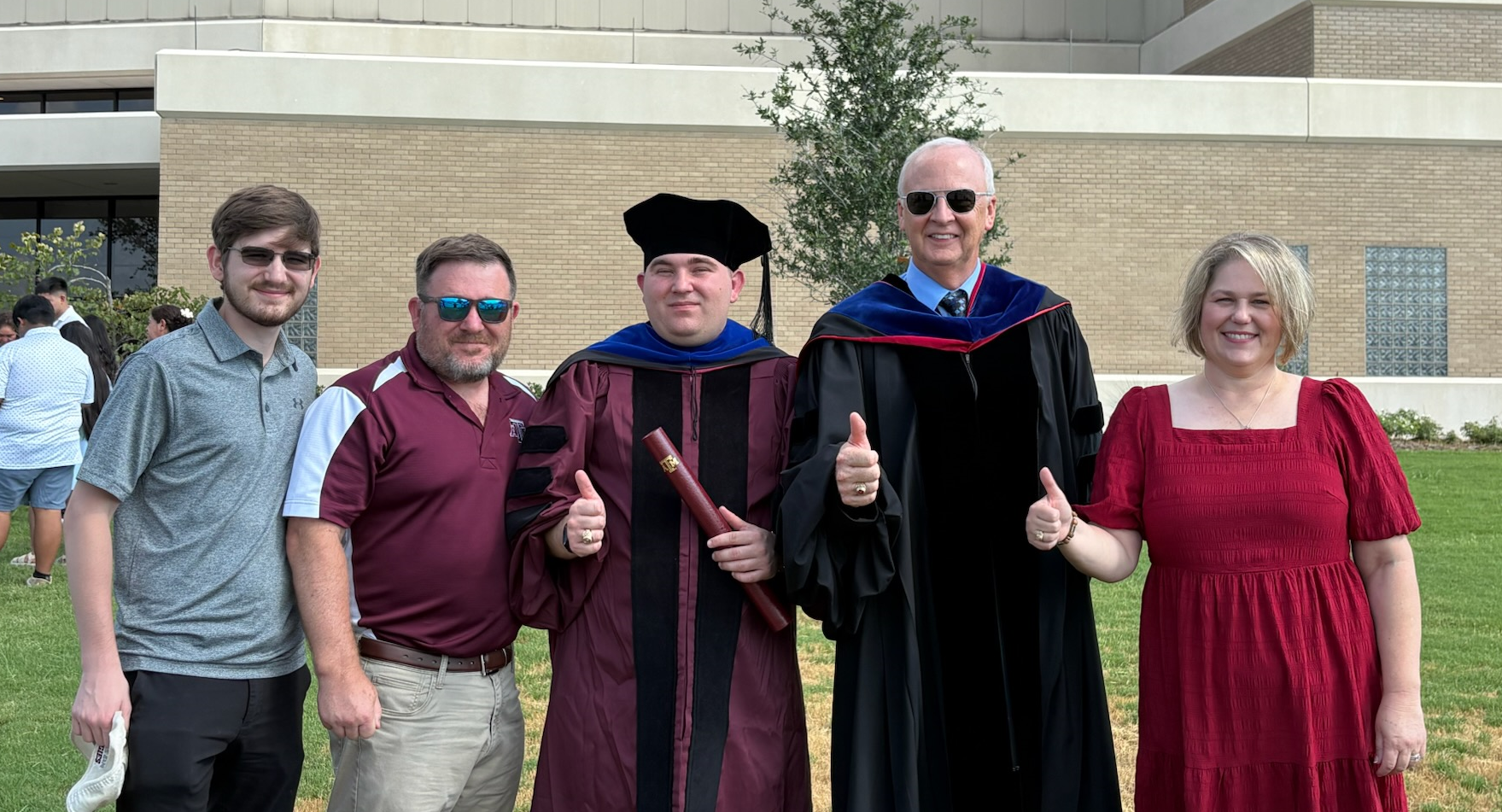
Hannah Lehman and Chris Leshikar graduated with their Ph.D. Degrees in Aerospace Engineering.Congratulations Hannah and Chris, VSCL is proud of your accomplishments!
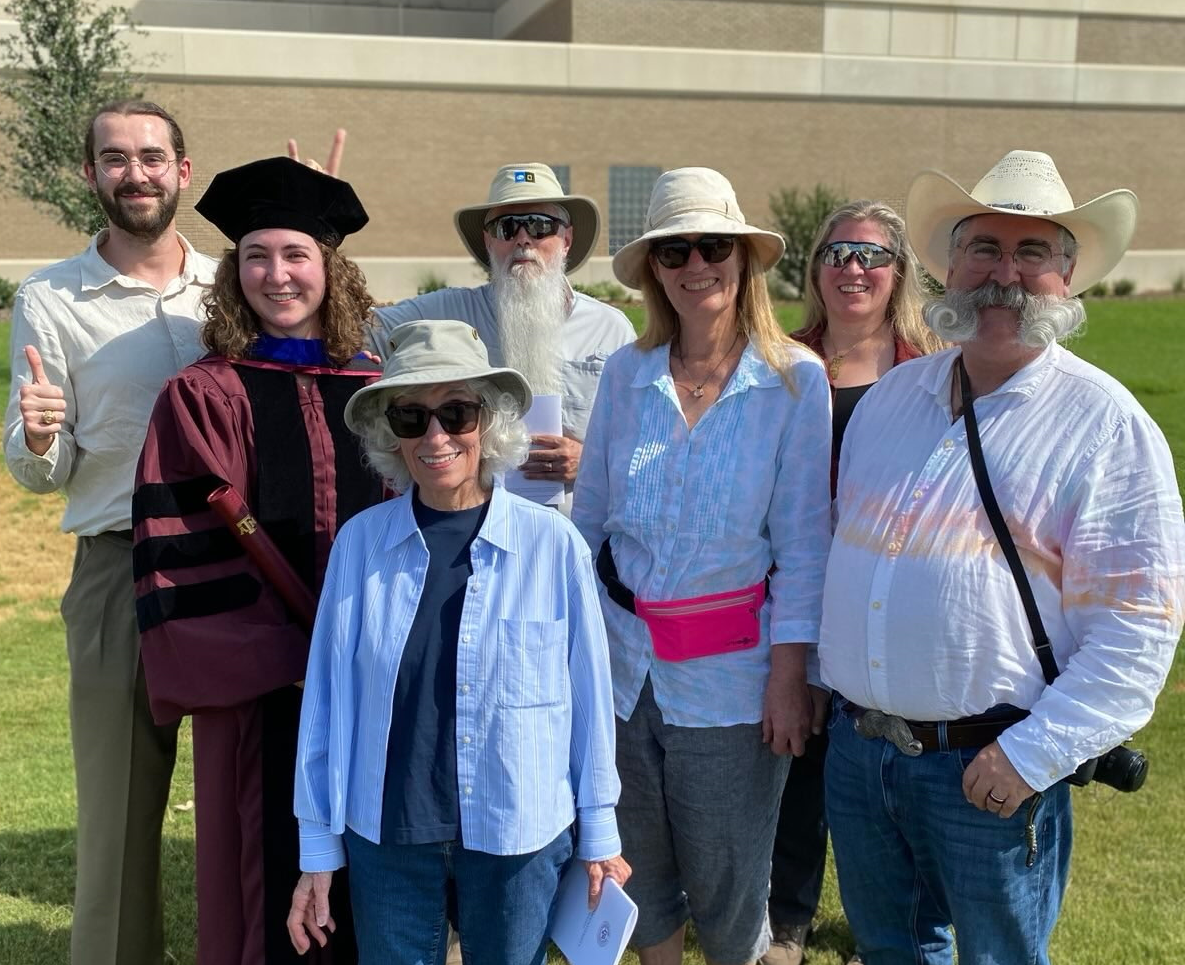



Hannah Lehman is the 62nd graduate student advised to completion of their degree by Dr. Valasek, and the title of her dissertation is “Hierarchical Auctions for the Coordination of Heterogeneous Agents using Machine Learning“. Hannah will be working at Sandia National Laboratories, where she has now done four graduate internships.


Chris Leshikar is the 63rd graduate student advised to completion of their degree by Dr. Valasek. Chris’s research was supported by the National Science Foundation under the Center for Autonomous Air Mobility and Sensors (CAAMS) and the title of his dissertation is “Markov Parameter Based Methods for System Identification“. Chris will begin seminary formation for the Catholic Diocese of Victoria later this year.


Filed Under: Alumni, Graduation

Swansen and McQuinn inducted into AIAA Technical Committees

Posted on August 11, 2025 by Cassie-Kay McQuinn

PhD students Erin Swansen and Cassie-Kay McQuinn were inducted into AIAA technical committees this year.

Erin Swansen: Guidance, Navigation, and Control TC

The Guidance, Navigation, and Control Technical Committee (GNCTC) aims to advance the technology and provide forums for the theoretical and practical consideration of techniques, devices and systems for the navigation, guidance and control of flight vehicles and the control of related aerospace systems.

Cassie-Kay McQuinn: Intelligent Systems TC

The Intelligent Systems Technical Committee (ISTC) is concerned with the application of Intelligent System (IS) technologies and methods to aerospace systems, the verification and validation of these systems, and the education of the AIAA membership in the use of IS technologies in aerospace and other technical disciplines.

Filed Under: Awards

McQuinn awarded Doctoral Research Excellence Assistantship

Posted on July 14, 2025 by Hannah Lehman

PhD student Cassie-Kay McQuinn was awarded the Texas A&M University Doctoral Research Excellence Assistantship (DREA). The DREA provides fully funded doctoral assistantships and aims to attract top-tier doctoral students. The assistantship is designed to enhance Texas A&M’s research capacity and productivity thus fortifying the university’s reputation as a leading research institution and facilitate groundbreaking contributions to various fields of study. The DREA is award by the university to only four students annually with selection criteria based on demonstrated academic excellence, relevant experiences beyond the classroom, and research potential. Cassie-Kay’s selection reflects not only her academic excellence but also her commitment to advancing knowledge and contributing meaningfully to her field.

McQuinn graduated with a B.S. and M.S. in Aerospace Engineering from Texas A&M, and has been an active member of VSCL since 2021. Throughout her tenure as a student she has been involved in several leadership and engineering organizations including serving as the president of the Texas A&M chapter of Sigma Gamma Tau, the national aerospace engineering honor society. As a graduate student she has interned with Sandia National Labs as a research and development intern. Since 2023 she has interned with the Air Force Research Lab’s Autonomous Capabilities Team (ACT3) where her work on safety assurance and multi-constraint satisfaction contributes to the  Safe Trusted Autonomy for Responsible Spacecraft (STARS) program.

Congratulations Cassie-Kay!

Filed Under: Awards

Bennett Awarded Stanger Endowed Graduate Fellowship

Posted on June 28, 2025 by Cassie-Kay McQuinn

Jillian Bennett was selected as the recipient of the Stanger Endowed Graduate Fellowship. Established by Dianna Stanger, the fellowship provides academic freedom to selected fellows by providing a portion of their support for two years. The selection process for the fellowship focuses on how the student plans to leverage their Ph.D. toward general welfare and on ways in which the student has shown commitment to advancing women’s participation and inclusion in Aerospace Engineering and other STEM fields. On the fellowship, Jillian says “I am extremely thankful and honored to have received the Stanger Endowed Graduate Fellowship. This fellowship has given me the opportunity to dive further into my interests within my research. Because of Ms. Stanger’s generosity, I am able to broaden my knowledge and pursue a career in topics that most excite me and make an impact in aerospace engineering.”
Filed Under: Awards

1st Lt Noah R. Luna defends Masters Thesis

Posted on June 27, 2025 by Cassie-Kay McQuinn

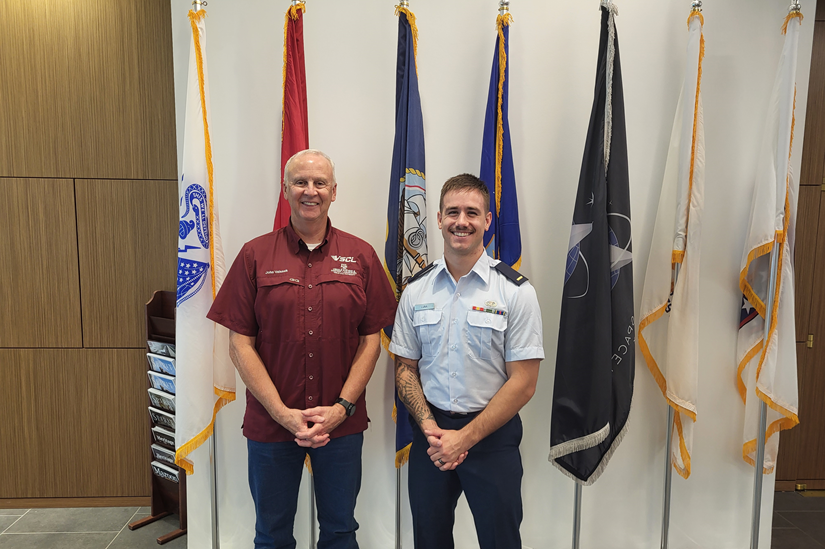
1st Lt Noah R. Luna, USAF successfully defended his M.S. thesis on June 12th, 2025.  Noah has been with VSCL since he graduated from the USAF Academy and commissioned in June 2023.  The title of his thesis is: Real-Time Controller Architecture for the Flight Test of Custom Control Algorithms on Small Unmanned Aircraft Systems

Flight test of experimental controller designs can be difficult when using commercially available hardware on small unmanned aircraft systems. The supported software often relies on specific messaging protocols to send commands to the aircraft which can vary significantly between controllers. Furthermore, modification of an existing package to accept different types of controllers can prove to be a difficult task. This thesis details a real-time control architecture for small unmanned aircraft systems, named Kanan, capable of safely and quickly integrating a variety of flight controller designs on a various platforms including fixed-wing aircraft and rotorcraft. Kanan is a C++ based software package which supports command authority using RC channel overrides, attitude control, and both local and global position control. The Robot Operating System and MAVLink messaging protocols are fundamental for how messages are shared between an Ardupilot flight stack and onboard companion computer. Additionally, the framework provides support for pilot operated safety measures and the ability to perform common flight test maneuvers, such as doublets or sawtooth climbs, for further control system and vehicle analysis. A low-barrier to entry is achieved by restricting all necessary changes needed for various tests to only two files and including a graphical user interface to reduce the required experience to operate the ground station computer. Testing and development of experimental flight controllers with Kanan can be done more quickly and significant changes can be made to the control design without having to modify or sacrifice existing data logging and safety functionality.

Noah addressed the need for a capability to easily port custom complex control laws from our research into commercial autopilots for use in demonstrating and evaluating them in flight testing.  Noah has named his system Kanan, after his son Kanan whom was born a few short months ago. Noah’s research is supported by the United States Air Force and during his time with VSCL has contributed to all of the current research projects. Noah was also a grad assistant and lead for Dr. Valasek’s AERO 401/402 project this past year, in which a team of six Aero students addressed another need: a modular and extensible common architecture for sensors/avionics/navigation/autopilot. The new system is called Modular Open System Architecture for Low-cost Integrated Avionics (MOSA LINA).  A paper on this framework was submitted to 2026 AIAA SciTech.

Noah’s is the 65th graduate degree completed that Dr. John Valasek has advised.

Filed Under: Defense

Next Page »

© 2016–2026 Log in

Texas A&M Engineering Experiment Station Logo
  • State of Texas
  • Open Records
  • Risk, Fraud & Misconduct Hotline
  • Statewide Search
  • Site Links & Policies
  • Accommodations
  • Environmental Health, Safety & Security
  • Employment