• Skip to primary navigation
  • Skip to main content
  • LinkedIn
  • Videos
  • Research
    • Facilities
    • Vehicles
    • Sponsors
  • Publications
    • Books
    • Journal Papers
    • Conference Papers
  • People
    • Faculty
    • Staff
    • Graduate Students
    • Undergraduate Students
    • Alumni
    • Where VSCL Alumni Work
    • Friends and Colleagues
  • Prospective Students
  • About Us
  • Contact Us
  • Where VSCL Alumni Work

Texas A&M University College of Engineering

Presentations

VSCL Student Presents at ACC

Posted on February 23, 2023 by Hannah Lehman

VSCL graduate student Kameron Eves will present a paper in May at the 2023 American Control Conference (ACC) in San Diego, California.
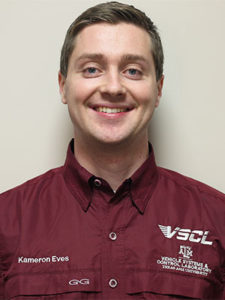
Kameron Eves will be presenting the paper “Adaptive Control for Non-minimum Phase Systems Via Time Scale Separation,”. Adaptive control for non-minimum phase systems remains a challenging problem. Eves proposes a method of adaptive control for systems that may be both nonlinear and non-minimum phase. This is accomplished by exploiting time scale separation between the internal and external dynamics.
 

Filed Under: Presentations

VSCL students present at AIAA SciTech Forum

Posted on January 11, 2023 by Hannah Lehman

VSCL graduate students Kameron Eves and David Van Wijk will present papers in January at the 2023 AIAA SciTech Forum in National Harbor, MD.

Kameron Eves will be presenting the paper “Introduction to Adaptive Control for Multiple Time Scale Systems”. Eves presents a novel approach to Adaptive Control for Multiple Time Scale Systems with [K]Control of Adaptive Multiple Time Scale Systems (KAMS). KAMS fuses two adaptive control signals using multiple time scale techniques. Generalized formal definitions, stability criteria, and examples are developed and presented for each method. Results show that [K]Control of Adaptive Multiple Time Scale
Systems has the best performance because each reduced-order model is stabilized separately and because the fast dynamics converge to the manifold more quickly than the other methods.


David Van Wijk will be presenting the paper “Deep Reinforcement Learning Controller for Autonomous Tracking of Evasive Ground Target”. Van Wijk presents a method of tracking an evasive ground target using deep RL on a rotorcraft wherein the target attempts to hide behind occlusions. A variety of environment conditions are trained and evaluated, resulting in an agent able to successfully track a randomly moving target with the presence of occlusions.
 

Filed Under: Presentations

VSCL Hosts Dr. Robert Abrose

Posted on June 21, 2022 by Garrett Jares

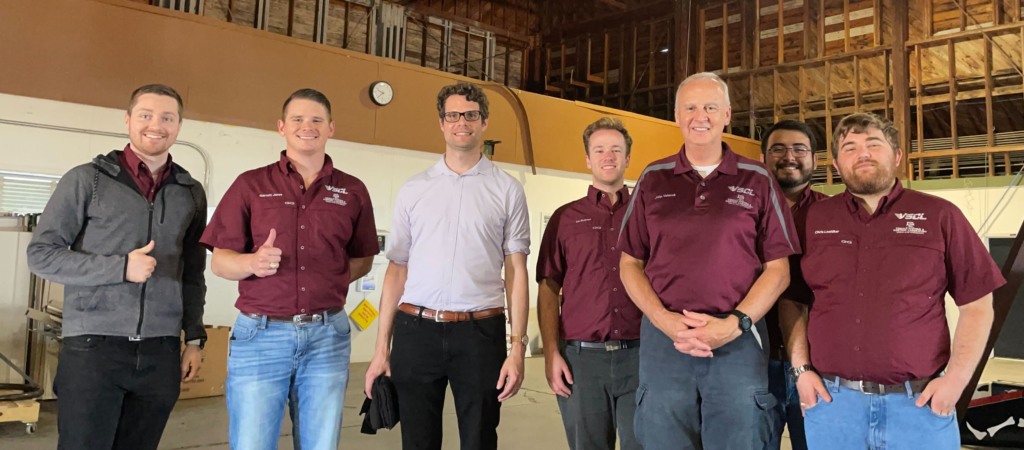
VSCL hosted Dr. Robert Abrose, Professor in the Texas A&M Department of Mechanical Engineering and Director for Space and Robotics at the Bush Combat Development Complex, at the Texas A&M University UAS Flight Testing Facility at RELLIS Campus. Dr. Ambrose met with Lab Director Dr. John Valasek and several VSCL Graduate Students. Dr. Ambrose and VSCL discussed UAS autonomy research and flight testing capabilities to identify points for potential  collaboration with the Bush Combat Development Complex.

Filed Under: Presentations

VSCL Hosts Army Research Laboratory

Posted on June 20, 2022 by Garrett Jares

VSCL hosted Dr. Steve Nogar, Research Engineer at the Army Research Laboratory, at the Texas A&M University UAS Flight Testing Facility at RELLIS Campus.  Dr. Nogar met with VSCL lab director Dr. John Valasek and VSCL graduate students Kameron Eves, Garrett Jares, Ian Holmes, Esteban Gomez, and Chris Leshikar about the autonomous control of UAS research that VSCL conducts at the flight testing facility and toured the grounds.

Filed Under: Presentations

Valasek and Jares Present for Sandia National Labs STARCS Mission Campaign

Posted on March 16, 2022 by Garrett Jares

Valasek, John

Dr. John Valasek

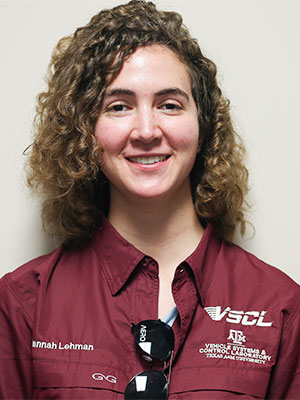
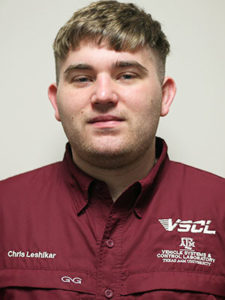
Dr. John Valasek, Professor in the Department of Aerospace Engineering at Texas A&M University and Director of the Vehicle Systems & Control Laboratory, and VSCL student Garrett Jares gave a virtual seminar titled “Control Acquisition Attack of Aerospace Systems via False Data Injection of Sensor Data” for Sandia National Laboratories. The seminar was presented as part of a monthly seminar series for the Science and Technology Advancing Resilience for Contested Space (STARCS) Mission Campaign. The date of the seminar was 28 February 2022.


Filed Under: Presentations

Valasek Presents at 6th Annual UAS Handling Qualities Workshop

Posted on February 1, 2022 by Garrett Jares

Valasek, John

Dr. John Valasek

Dr. John Valasek, Professor in the Department of Aerospace Engineering at Texas A&M University and Director of the Vehicle Systems & Control Laboratory, gave a virtual seminar titled “Flight Results of Autopilot Gain Tuning for Large Hexacopter Handling Qualities” for the 6th Annual UAS Handling Qualities Workshop. The date of the seminar was 28 January 2022.

Filed Under: Presentations

Spring 2022 FoRCE Online Seminar by Valasek – January 28 at 11:00 Central Time

Posted on January 24, 2022 by Garrett Jares

Valasek, John

Dr. John Valasek

Seminar 1:  Multiple-Time-Scale Nonlinear Output Feedback Control of Systems With Model Uncertainties (Dr. John Valasek)

WebEx Link: https://force.my.webex.com/force.my/j.php?MTID=mba10bd9e12f5b612d2adc2b79c1c7d2f

Meeting number (access code): 2550 544 5654

Meeting password: neCev2rfT35 (63238273 from phones and video systems)


Abstract: Systems with dynamics evolving in distinct slow and fast timescales include aircraft (Khalil & Chen, 1990), robotic manipulators, (Tavasoli, Eghtesad, & Jafarian, 2009), electrical power systems (Sauer, 2011), chemical reactions (Mélykúti, Hespanha, & Khammash, 2014), production planning in manufacturing (Soner, 1993), and so on.  The Geometric Singular Perturbation theory (Fenichel, 1979) is a powerful control law development tool for multiple-timescale systems because it provides physical insight into the evolution of the states in more than one timescale.  The behaviour of the full-order system can be approximated by the slow subsystem, provided that the fast states can be stabilised on an equilibrium manifold.  The fast subsystem describes how the fast states evolve from their initial conditions to their equilibrium trajectory or the manifold.  This presentation develops two nonlinear, multiple-time-scale, output feedback tracking controllers for a class of nonlinear, nonstandard systems with slow and fast states, slow and fast actuators, and model uncertainties. The class of systems is motivated by aircraft with uncertain inertias, control derivatives, engine time-constant, and without direct measurement of angle-of-attack and sideslip angle. One controller achieves the control objective of slow state tracking, while the other does simultaneous slow and fast state tracking.  Each controller is synthesized using time-scale separation, lower-order reduced subsystems, and estimates of unknown parameters and unmeasured states. The estimates are updated dynamically, using an online parameter estimator and a nonlinear observer. The update laws are so chosen that errors remain ultimately bounded for the full-order system. The controllers are simulated on a six-degree-of-freedom, high-performance aircraft model commanded to perform a demanding, combined longitudinal and lateral/directional maneuver. Even though two important aerodynamic angles are not measured, tracking is adequate and as good as a previously developed full-state feedback controller handling similar parametric uncertainties.  Additionally, even though the two controllers in theory achieve two different control objectives, it is possible to choose either one of them for the same maneuver. Of the two new output feedback controllers, the slow state tracker accomplishes the maneuver with less control effort, while the simultaneous slow and fast state tracker does so with a smaller number of gains to tune.


Filed Under: Presentations

VSCL Graduate Students Present Papers at the 2022 AIAA SciTech Forum

Posted on December 17, 2021 by Garrett Jares

VSCL graduate students Garrett Jares, Chris Leshikar, and Hannah Lehman will present papers in January at the 2022 AIAA SciTech Forum in San Diego, California.

Garrett Jares ’17 will be presenting the paper “Flight Demonstration and Validation of Control Acquisition Autopilot Attack”. The paper investigated a method of cyber attack by which an attacker might take over control of a vehicle. This paper built upon prior work by demonstrating and validating the attack on a DJI F450 quadrotor running the ArduCopter autopilot. The experiments focused on two scenarios. One in which the victim performed regulation while the attacker performed non-zero setpoint control and another in which the victim performed non-zero setpoint control while the attacker performed regulation of the system. The experimental results show how the attack poses a threat to real-world UAS and evaluates its performance under different control scenarios.


Hannah Lehman ’20 will be presenting the paper “Addressing Undesirable Emergent Behavior in Deep Reinforcement Learning UAS Ground Target Tracking”, which seeks to investigate and further understand the impact of emergent behavior in reinforcement learning controlled UAS. The paper builds on previous work by further investigating a fixed wing tracking a ground target through reinforcement learning and extends the learning environment and possible agent behavior. The emergent behavior is discovered, categorized, and mitigated through a number of algorithmic, reward, and environment modifications. These approaches are evaluated in simulation based on their ability to improve tracking and extend total tracking time.


Chris Leshikar ’20 will be presenting the paper “System Identification Flight Testing of Inverted V-Tail small Unmanned Air System”, which addresses challenges in conducting flight testing an inverted V-Tail fixed-winged vehicle and the results obtained from the flight tests. The goal of the flight tests was to obtain longitudinal, lateral/directional and combined longitudinal lateral/directional linear state-space model for the RMRC Anaconda using the Observer\Kalman Identification (OKID) algorithm. Both manual and automated excitation signals were injected into the Anaconda. Parametric sweeps of the excitation signals were performed using the Developmental Flight Test Instrumentation Two (DFTI2) system. The identified longitudinal linear state-space model modelled the longitudinal dynamics well and the identified lateral/directional reasonably well while the identified combined longitudinal lateral/directional model showed decent correlation with the decoupled models.


Filed Under: Presentations, Publications

Valasek Gives NASA Jet Propulsion Laboratory AI Seminar on Cycle of Learning Research

Posted on August 23, 2021 by Garrett Jares

Valasek, John

Dr. John Valasek

Dr. John Valasek, Professor in the Department of Aerospace Engineering at Texas A&M University and Director of the Vehicle Systems & Control Laboratory, gave a virtual seminar titled “Combining Human Demonstrations and Interventions for Safe Training of Autonomous Systems in Real-Time” for the AI Seminar Series hosted by the NASA Jet Propulsion Laboratory (JPL).  The date of the seminar was 18 August 2021.

Cycle-of-Learning (CoL) (https://www.youtube.com/watch?v=AQwsk6kZfok) was presented as a framework using an actor-critic architecture with a loss function that combines behavior cloning and 1-step Q-learning losses with an off-policy pre-training step from human demonstrations.  This enables transition from behavior cloning to reinforcement learning without performance degradation and improves reinforcement learning in terms of overall performance and training time.  This approach is shown to outperform state-of-the-art techniques for combining behavior cloning and reinforcement learning, for both dense and sparse reward scenarios. Results are presented for haptic and eye tracking input modalities, and suggest that directly including the behavior cloning loss on demonstration data helps to ensure stable learning and ground future policy updates.

Filed Under: Machine Learning, Presentations

VSCL graduate students present papers virtually at the 2021 International Conference on Unmanned Air Systems (ICUAS)

Posted on June 21, 2021 by Garrett Jares

VSCL graduate students Garrett Jares and Chris Leshikar presented papers virtually on 18 June at the 2021 ICUAS in Athens, Greece.

Garrett Jares ’17 presented the paper “Investigating Malware-in-the-Loop Autopilot Attack Using Falsification of Sensor Data”, which seeks to investigate and further understand the threat of UAS hijacking via cyber attack. The paper builds on previous work by further investigating an attack method in which the attacker attempts to gain control of the vehicle by intercepting and modifying the vehicle’s sensor data. This attack is explained analytically, demonstrated on a simple second-order system in a MATLAB/Simulink simulation, and validated in a series of Gazebo simulation experiments using the ArduPilot Software-In-The-Loop simulation.  These experiments serve to validate and evaluate the performance of the attack on a real-world autopilot software and the attack is shown to pose a legitimate threat to the system.


Chris Leshikar ’20 presented the paper “Asymmetric Quadrotor Modeling and State-Space Identification”, which addresses system identification flight test results of an asymmetric quadrotor.  The goal of the flight tests was to obtain a linear state-space model of an asymmetric Modified F450 quadrotor using the Observer/Kalman Identification (OKID) algorithm.  Automated excitation maneuvers were injected using the Developmental Flight Test Instrumentation Two (DFTI2) system. The identified models obtained from the flight tests are then compared to analytical state-space models derived and presented in the paper.  The identified linear state-space model using automated excitations matched reasonably well with the nonzero elements of the analytical linear state-space model.

Filed Under: Presentations

« Previous Page
Next Page »

© 2016–2026 Log in

Texas A&M Engineering Experiment Station Logo
  • State of Texas
  • Open Records
  • Risk, Fraud & Misconduct Hotline
  • Statewide Search
  • Site Links & Policies
  • Accommodations
  • Environmental Health, Safety & Security
  • Employment