
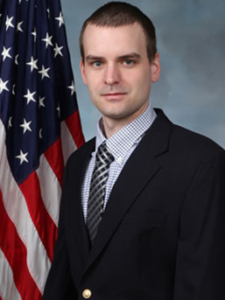
 VSCL alumnus Dr. Ryan Weisman ’12 has been inducted as a 2023 Fellow of KBR for his contributions in space situational awareness. Space superiority requires decision-making in ambiguous situations characterized by short timelines, reduced sensing, and conflicting information. Dr. Ryan Weisman’s work increases military space mission resilience to adversary parity, mission anomalies, and unforeseen situations by identifying and enabling operations under less explored, physically possible conditions beyond conventional, probable operating regimes. His operational tools provide warfighters proactive sensing recommendations, situation assessment, and solution confidence directly traceable to physics and data quality for navigation and vehicle safety without excessive data collection or exhaustive simulation.
Co-advised by Dr. John Valasek and Dr. Kyle T. Alfriend, Weisman was a recipient of the Science, Mathematics & Research for Transformation Fellowship (SMART) with the Air Force Research Laboratory, Albuquerque, NM, for which he was employed before joining KBR. KBR delivers science, technology and engineering solutions to governments and companies around the world
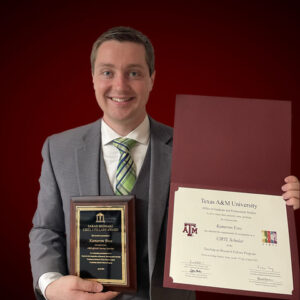 Ph.D. student Kameron Eves received two awards from the
  Dr. John Valasek and the Vehicle Systems & Control Laboratory has been awarded a multi-year (2023-2026) research grant by the Office of Naval Research (ONR) to investigate multiple time scale (MTS) adaptive control systems for naval applications such as unmanned air systems (UAS), high performance aircraft, and satellites. MTS systems are systems with some states that evolve quickly and some states that evolve slowly. These systems can have coupled fast and slow modes which occur simultaneously. MTS systems are particularly interesting from a controls perspective because the time scale separation in the plant can cause degraded performance or even instability under traditional control methods. Accounting for the time scales can remedy this problem. For example, a MTS control technique demonstrated significantly reduced rise times over traditional Nonlinear Dynamic Inversion (NDI). Similarly, traditional adaptive control has been demonstrated to have reduced performance on MTS systems. On the other hand, traditional control techniques that are specifically designed for MTS systems cannot account for systems with model uncertainties. Thus, a method of MTS control for uncertain systems is needed.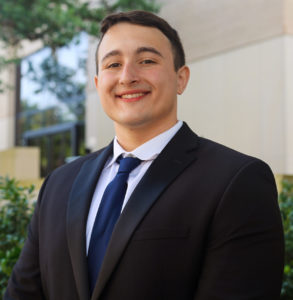

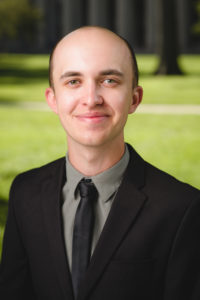 Maison Clouatre, a graduate student in the Department of Aerospace Engineering at Texas A&M University, has received two prestigious awards, the 2022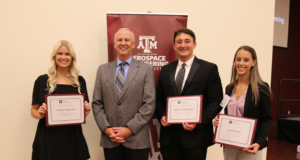

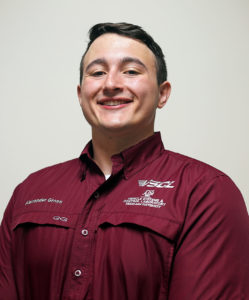 Alex Gross, a Junior Aerospace engineering student, has been awarded the prestigious AIAA Cary Spitzer Digital Avionics Scholarship.