• Skip to primary navigation
  • Skip to main content
  • LinkedIn
  • Videos
  • Research
    • Facilities
    • Vehicles
    • Sponsors
  • Publications
    • Books
    • Journal Papers
    • Conference Papers
  • People
    • Faculty
    • Staff
    • Graduate Students
    • Undergraduate Students
    • Alumni
    • Where VSCL Alumni Work
    • Friends and Colleagues
  • Prospective Students
  • About Us
  • Contact Us
  • Where VSCL Alumni Work

Texas A&M University College of Engineering

News

Eves and Valasek Publish “Slow Timescale Adaptive Control for Multiple-Timescale Systems,” in Journal of Guidance, Control, and Dynamics

Posted on July 19, 2023 by Cassie-Kay McQuinn

Ph.D. student Kameron Eves and Dr. John Valasek of VSCL published the paper “Slow Timescale Adaptive Control for Multiple-Timescale Systems,” in Journal of Guidance, Control, and Dynamics.
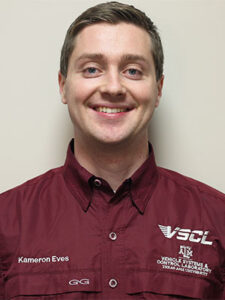
Multiple-timescale systems are a noteworthy class of dynamical systems that can be modeled with singularly perturbed differential equations. Adaptive control has not been studied in the context of singularly perturbed plants. This paper introduces and evaluates three methods of adaptive control for multiple-timescale systems. Each method is a framework that is valid for a wide class of adaptive control methods. Full-Order Adaptive Control (FOAC) applies adaptive control to the system as a whole.  It is straightforward but can be sensitive to timescale effects.  Reduced-Order Adaptive Control (ROAC) applies adaptive control to either the fast or slow modes only. This simplifies synthesis but can also constrain the range of valid timescale separation. [K]Control of Adaptive Multiple-timescale Systems (KAMS) fuses two adaptive control signals using multiple-timescale techniques.  KAMS takes advantage of model reduction unlike FOAC, and allows for unstable fast dynamics unlike ROAC. Generalized formal definitions, stability criteria, and examples are developed and presented for each method.  Results presented in the paper for the control of a Boeing 747-100/200 on approach show that [K]Control of Adaptive Multiple-timescale Systems has a desirable blend of performance and robustness because each reduced-order model is stabilized separately.

This publication is part of VSCL’s ongoing work in the area of nonlinear multiple time-scale control.  The early access version of the article can be viewed at https://arc.aiaa.org/doi/full/10.2514/1.G007439

Filed Under: Adaptive Control, Multiple-Timescale, Publications

VSCL Student Presents at Interactive Learning with Implicit Human Feedback Workshop at 2023 International Conference on Machine Learning (ICML)

Posted on July 18, 2023 by Cassie-Kay McQuinn

VSCL graduate student M.D. Sunbeam will present a workshop paper on 29 July at the 2023 International Conference on Machine Learning (ICML) in Honolulu, Hawaii.

Sunbeam will be presenting the paper “Imitation Learning with Human Eye Gaze via Multi-Objective Prediction,”. Approaches for teaching learning agents via human demonstrations have been widely studied and successfully applied to multiple domains. However, the majority of imitation learning work utilizes only behavioral information from the demonstrator, i.e. which actions were taken, and ignores other useful information. In particular, eye gaze information can give valuable insight towards where the demonstrator is allocating visual attention, and holds the potential to improve agent performance and generalization. In this work, we propose Gaze Regularized Imitation Learning (GRIL), a novel context-aware, imitation learning architecture that learns concurrently from both human demonstrations and eye gaze to solve tasks where visual attention provides important context.

We apply GRIL to a visual navigation task, in which an unmanned quadrotor is trained to search for and navigate to a target vehicle in a photorealistic simulated environment. We show that GRIL outperforms several state-of-the-art gaze-based imitation learning algorithms, simultaneously learns to predict human visual attention, and generalizes to scenarios not present in the training data. Supplemental videos can be found at https://sites.google.com/view/gaze-regularized-il/, and code will be made available.

Filed Under: Machine Learning, Presentations, Publications

Two New Graduate Students Join VSCL in Fall 2023

Posted on July 18, 2023 by Cassie-Kay McQuinn

VSCL is proud to welcome two new graduate research assistants:

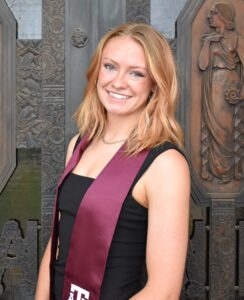
Jillian Bennett is a Masters of Science student in the Aerospace Engineering department. She graduated with her Bachelors of Science in Aerospace Engineering and Minor in Mathematics in Fall 2023. As an undergraduate she interned with Los Alamos National Laboratory and TAMU Material Science and Engineering, working on characterizing impacted materials. Additionally she was the lead ambassador for the Aerospace Ambassador program and a Fish Camp chair. Her work with VSCL will be primarily focused on Adaptive Control for Multiple Time Scale Systems.
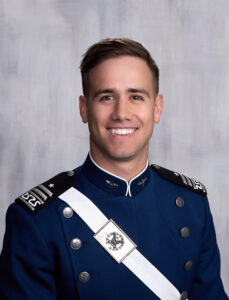


2nd Lieutenant Noah Luna is a Masters of Science student in the Aerospace Engineering Department. He graduated from the United States Air Force Academy with a Bachelors of Science in Aeronautical Engineering and Computer Science. During his undergraduate studies, he performed research on a neural network based flight control system for an ongoing fixed-wing project through the Air Force Research Lab (AFRL). Additionally, he completed an internship and further research with Lockheed Martin Skunk Works as a Software and Flight Test engineer developing nonlinear adaptive flight controls for aerial systems. At VSCL, Noah will be working on Adaptive Control for Multiple Time Scale Systems.
Filed Under: New Members

VSCL graduate student Kameron Eves inducted into the AIAA Guidance, Navigation, and Control Technical Committee

Posted on July 18, 2023 by Cassie-Kay McQuinn

Kameron Eves, a recently graduated Ph.D. student in the Vehicle Systems & Control Laboratory (VSCL), has been inducted into the AIAA Intelligent Systems Technical Committee (GNCTC) for 2024.  The GNCTC is a group within AIAA that seeks to advance the technology and provide forums for the theoretical and practical consideration of techniques, devices and systems for the navigation, guidance and control of flight vehicles and the control of related aerospace systems.  Eves was inducted due to his technical experience in nonlinear control.   

Eves’s primary research topic is adaptive control for hypersonic systems in addition to reinforcement learning, autonomous control, and vehicle dynamics.  In the VSCL, Eves also worked to develop the capabilities necessary for autonomous reconnaissance in military settings. This project was a partnership with the National Robotics Engineering Center (NREC) at Carnegie Mellon University. Eves earned his bachelor’s degree in 2019 from Brigham Young University in Mechanical Engineering and joined the VSCL immediately after.  At BYU, Eves worked in the Multiple Agent Intelligent Coordination and Control (MAGICC) laboratory As part of this research, Kameron helped to develop a ground based optical tracking and imaging system capable of estimating an aircraft’s pose.

Filed Under: Alumni, Control

Jares and Valasek Publish “Control Acquisition Attack of Aerospace Systems via False Data Injection,” in Journal of Aerospace Information Systems

Posted on July 17, 2023 by Cassie-Kay McQuinn

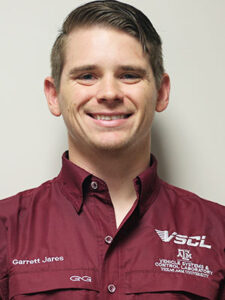
Ph.D. student Garrett Jares and Dr. John Valasek of VSCL published the paper “Control Acquisition Attack of Aerospace Systems via False Data Injection,” in Journal of Aerospace Information Systems.

The cyber threat to aerospace systems has been growing rapidly in recent years with several real-world and experimental cyberattacks observed. This growing threat has prompted investigation of cyber-attack and defense strategies for manned and unmanned air systems, spacecraft, and other aerospace systems. The work in this paper seeks to further understand these attacks by introducing and developing a novel cyberattack for autonomous aerospace systems. The problem faced by the attacker is posed and discussed analytically using false data injection of state measurements to exploit the vehicle’s onboard controller to take control of the system. It is shown that the attacker can utilize traditional control techniques to exert control over the system and eliminate the control of the victim by intercepting and modifying the vehicle’s measurement data. The attacker is able to accomplish this objective without any prior knowledge of the system’s plant, controller, or reference signal. The attack is demonstrated on the elevator-to-pitch-attitude-angle dynamics of a Cessna T-37 aircraft model. It is shown to be successful in eliminating the victim’s control influence over the system and driving the system to its own target state.

This publication is part of VSCL’s ongoing work in the area of cybersecurity. The article can be viewed at https://arc.aiaa.org/doi/full/10.2514/1.I011199.

Filed Under: Cybersecurity, Publications

Leshikar, McQuinn, and Valasek Publish Invited Paper “System Identification of Unmanned Air Systems at Texas A&M University,” in Journal of Aircraft

Posted on July 1, 2023 by Cassie-Kay McQuinn

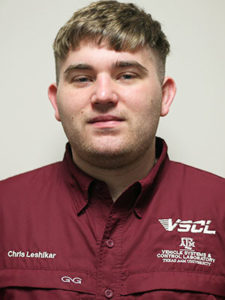
Ph.D. student Christopher Leshikar, M.S. student Cassie McQuinn, and Dr. John Valasek of VSCL published the invited paper “System Identification of Unmanned Air Systems at Texas A&M University,” in Journal of Aircraft.

This paper presents a summary of system identification flight testing and results for a variety of large and small fixed-wing and multirotor Unmanned Air Systems at Texas A&M University from 1999-2023. The six different types of vehicles range from a large powered-parafoil, to a fixed-wing vehicle with synthetic jet actuated roll control effectors, to a radially asymmetric multirotor, to large and small fixed-wing vehicles, and a Steppe eagle. The Observer/Kalman Filter Identification algorithm is used to generate linear time invariant state-space models, and results for both near real-time online model generation, and post-flight offline model generation are presented. The use and efficacy of a variety of test input types and their sensitivity to exogenous inputs such as turbulence, in addition to identified model evaluation and selection criteria are discussed. Several generations of low size, weight, power, and cost flight test instrumentation including the Developmental Flight Test Instrumentation data acquisition package are also presented. Challenges that arose from the flight testing campaigns along with solutions are highlighted in the paper.
This publication is part of VSCL’s ongoing work in the area of system identification. The early access version of the article can be viewed at https://doi.org/10.2514/1.C037314.

Filed Under: Publications, System Identification

VSCL Students Selected for Summer 2023 Internships

Posted on May 21, 2023 by Hannah Lehman

Many students of the Texas A&M Vehicle Systems & Control Laboratory have been selected for offsite internships for the Summer of 2023. These internships show VSCL student representation at a variety of companies and institutions across the United States. Students which have been selected for internships in the Summer of 2023 include:

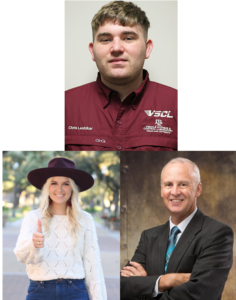
VSCL Graduate Research Assistant and Ph.D Student Chris Leshikar has been selected for a Summer 2023 internship with the Gulfstream Aerospace Corporation this summer in Savannah, GA. Chris will be working in the Flight Dynamics group on system identification methods and analyses for jets going through the certification process.
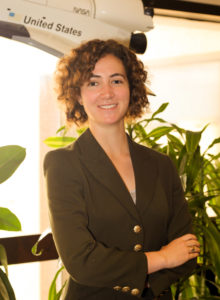


VSCL Graduate Research Assistant and Ph.D Student Hannah Lehman has been selected for a Summer 2023 research internship at Sandia National Laboratory in Albuquerque, NM. Hannah has been working as a Year-Round Research & Development Intern since 2020, with a principal focus of applying machine learning to defense vehicles.



VSCL Graduate Research Assistant and MS student MD-Nazmus Sunbeam has been selected for a Summer 2023 internship with Starfish Space in Seattle, WA. Sunbeam will be working on computer vision / navigation DL algorithms for space vehicles.



VSCL Graduate Research Assistant and MS Student Cassie-Kay McQuinn has been selected for a Summer 2023 research internship at the Airforce Research Labatory at Wright-Patterson Air Force Base near Dayton, OH.
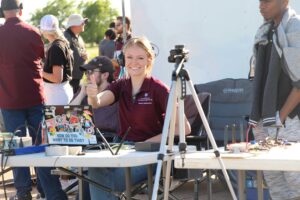


jillianVSCL Graduate Research Assistant Jillian Bennett has been selected for a Summer 2023 research internship with VSCL. Jillian will be starting the adaptive time scale control project.


VSCL Undergraduate Research Assistant Seth Johnson has been selected for a Summer 2023 internship with VectorNav in Dallas, TX. Seth will be working as a Nevigation Engineer.

VSCL Undergraduate Research Assistant Yuki Janvier has been selected for a Summer 2023 internship with Atlassian in Austin, TX. Yuki will be working as a Software Engineering Intern.

VSCL Undergraduate Research Assistant Katelyn Lancaster has been selected for a Summer 2023 internship with Lockheed Martin in Marietta, GA. Katelyn will be doing Test and Evaluation engineering.

VSCL Undergraduate Research Assistant Carla Zaramella has been selected for a Summer 2023 internship with Raytheon in Tewsbury, MA. Carla will be working as a “Whole Life Program – Systems Engineering Intern” in RTX Missiles and Defense. She will be working with a team to ensure that hardware and systems are effective, reliable and maintainable, the goal of WLE.

VSCL Undergraduate Research Assistant Laura Escamilla has been selected for a Summer 2023 research internship with VSCL. Laura will be working with a Vector nav calibration for the anaconda, and will support the Robust Threat Detection project.

VSCL Undergraduate Research Assistant Abby Andrews has been selected for a Summer 2023 research internship with Impact Systems Engineering in Temple, TX. Abby will be working with 4200 and 5200 3D printers, with her role primarily focusing on de-powering parts and structuring builds units.

VSCL Undergraduate Research Assistant Payton Clem has been selected for a Summer 2023 research internship with VSCL. Payton will be working with systems architecture on the Robust Threat Detection project.

Filed Under: Internships

VSCL Students Graduate with PhD, M.Eng., and B.S. Degrees

Posted on May 21, 2023 by Hannah Lehman

Esteban Gomez
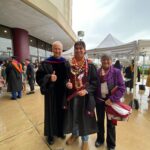
Dr. Eves, Dr. Valasek, and Dr. Jares
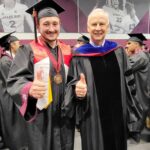
Alexander Gross and Dr. Valasek

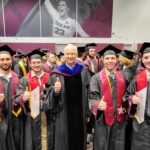
Dr. Valasek and graduates including Cameron Brooks
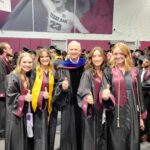
Dr. Valasek and graduates including Lauren Herrera and Jillian Bennett
Dr. Valasek and Connor Atkins

VSCL graduate student Dr. Kameron Eves has graduated with his Doctor of Philosophy on May 13th in Aerospace Engineering.

VSCL graduate student Dr. Garrett Jares has graduated with his Doctor of Philosophy on May 13th in Aerospace Engineering.

VSCL graduate student Esteban Gomez has graduated with his Master of Science on May 13th in Aerospace Engineering.

VSCL graduate student Connor Atkins has graduated with his Master of Science on May 13th in Aerospace Engineering.

VSCL undergraduate student Alexander Gross has graduated with his Bachelors on May 12th in Aerospace Engineering.

VSCL undergraduate student Cameron Brooks has graduated with his Bachelors on May 12th in Aerospace Engineering.

VSCL undergraduate student Lauren Herrera has graduated with her Bachelors on May 12th in Aerospace Engineering.

VSCL undergraduate student Jillian Bennett has graduated with her Bachelors on May 12th in Aerospace Engineering.


Filed Under: Alumni, Graduation

« Previous Page
Next Page »

© 2016–2026 Log in

Texas A&M Engineering Experiment Station Logo
  • State of Texas
  • Open Records
  • Risk, Fraud & Misconduct Hotline
  • Statewide Search
  • Site Links & Policies
  • Accommodations
  • Environmental Health, Safety & Security
  • Employment