• Skip to primary navigation
  • Skip to main content
  • LinkedIn
  • Videos
  • Research
    • Facilities
    • Vehicles
    • Sponsors
  • Publications
    • Books
    • Journal Papers
    • Conference Papers
  • People
    • Faculty
    • Staff
    • Graduate Students
    • Undergraduate Students
    • Alumni
    • Where VSCL Alumni Work
    • Friends and Colleagues
  • Prospective Students
  • About Us
  • Contact Us
  • Where VSCL Alumni Work

Texas A&M University College of Engineering

Research

Our research is focused on bridging the scientific gaps between traditional computer science topics and aerospace engineering topics, while achieving a high degree of closure between theory and experiment.  We focus on machine learning and multi-agent systems, intelligent autonomous control, nonlinear control theory, vision based navigation systems, fault tolerant adaptive control, and cockpit systems and displays.  What sets our work apart is a unique systems approach and an ability to seamlessly integrate different disciplines such as dynamics & control, artificial intelligence, and bio-inspiration.  Our body of work integrates these disciplines, creating a lasting impact on technical communities from smart materials to General Aviation flight safety to Unmanned Air Systems (UAS) to guidance, navigation & control theory.  Our research has been funded by AFOSR, ARO, ONR, AFRL, ARL, AFC, NSF, NASA, FAA, and industry.

Autonomous and Nonlinear Control of Cyber-Physical Air, Space and Ground Systems

Vision Based Sensors and Navigation Systems

Cybersecurity for Air and Space Vehicles

Air Vehicle Control and Management

Space Vehicle Control and Management

Advanced Cockpit/UAS Systems and Displays

Control of Bio-Nano Materials and Structures

Flight Evaluation of Prototype Optical Landing System

Cockpit Computer Corporation, Inc., Saratoga, CA
1 March 1999 – 30 September 1999
Co-P.I.’s Donald T. Ward and Thomas C. Pollock
Total award $51,241

Block diagram of video landing system
This is a flight test research and demonstration program utilizing the Grumman American Commander 700 aircraft of the Texas A&M Flight Mechanics Laboratory Flight Test Facility. It is a cooperative effort between Cockpit Computer Corporation, and Texas A&M University, to develop an affordable video-based position sensor and associated cockpit display that should significantly improve the landing precision and safety of the new breed of high performance single-pilot General Aviation (GA) airplanes.

During the latter stages of an approach and landing, guidance commands for the initial approach segment, final approach segment, flare segment, and touchdown segment are displayed to the pilot as the approach is executed. The required accuracy is provided from six degree-of-freedom information processed from forward- and down-looking video imagery, integrated with GPS position data and a 3D Graphic Synthetic Vision Generator. An onboard database contains accurate position coordinates of runways, obstacles, and terrain.

This guidance scheme, even for VFR operations, has the potential to draw larger numbers of relatively low-time pilots into the GA aircraft market, while keeping accident rates at an acceptable level. With this system, relatively low time GA pilots should be able to land more precisely (on airspeed and at the desired touchdown point) than without the system.

Working with me on this program is Graduate Research Assistants:

  • Jennifer A. Georgie
  • Surya U. Shandy

Evaluation of Dynamic Inversion as a Flight Control Methodology for Re-entry Vehicles

GN&C Design and Analysis Branch, NASA Johnson Space Center
16 February 1999 – 16 February 2000
Co-P.I. Donald T. Ward
Total award $64,307

x38  x38
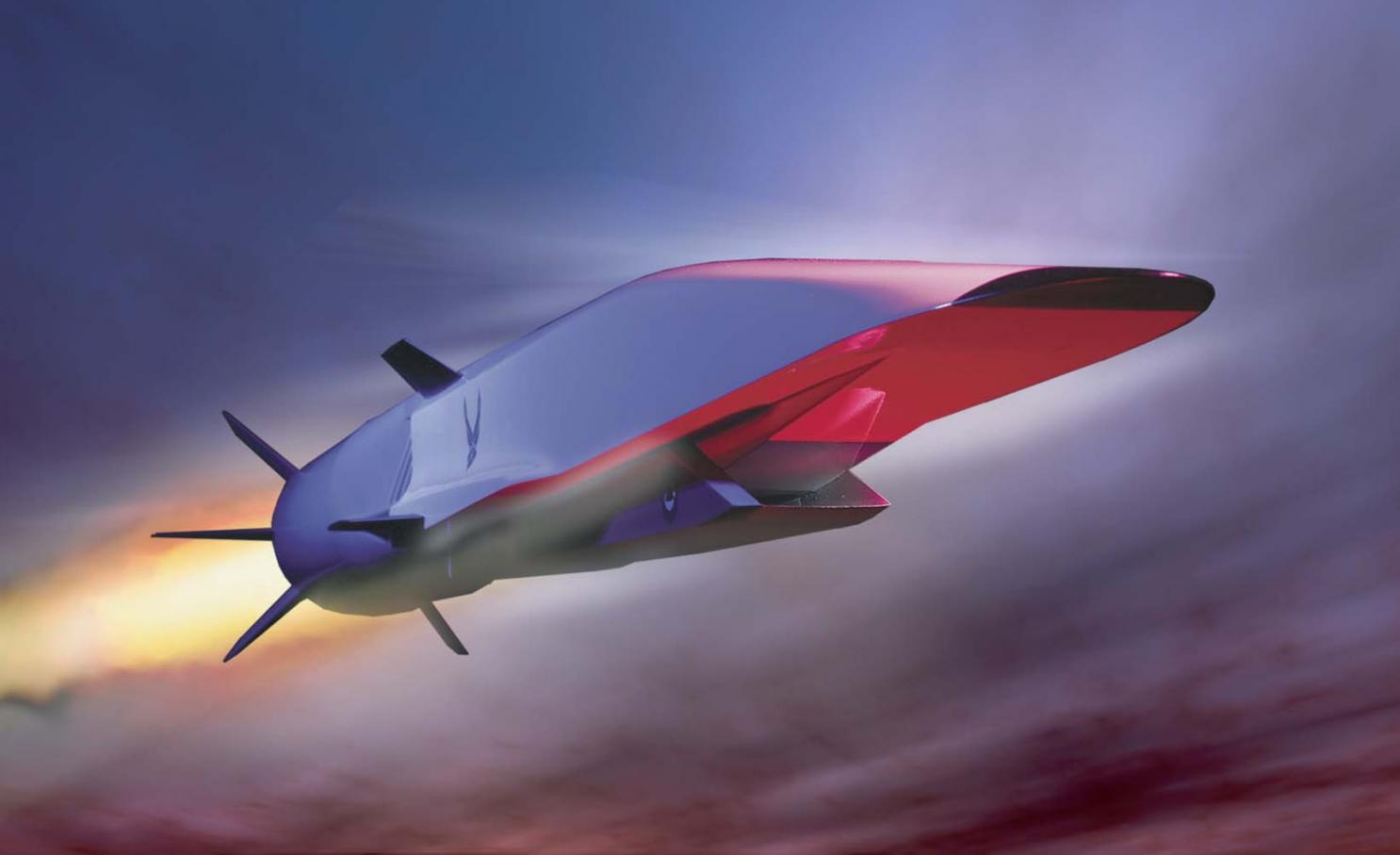
Pictured above is the NASA X-38 Crew Return Vehicle (CRV), also known as the Lifeboat in Space. The CRV will provide personnel on the International Space Station with the capability to safely return to Earth in the event of an emergency. As currently designed it will carry seven people, and will be flown autonomously, i.e. no one on board need be a pilot to safely land it.

One of the flight control methodologies which will permit this capability is Dynamic Inversion. Also called Feedback Linearization, it is a non-traditional methodology for synthesizing closed-loop control laws. As opposed to traditional techniques whereby the nonlinear plant is separated into several linearized models at discrete operating points and a closed-loop controller is synthesized for each one, Dynamic Inversion seeks to synthesize a global control law from a single nonlinear model. It has been applied to paper studies of controllers for aircraft such as the F-18 HARV, and has been flown successfully on the X-36.

Specific questions to be answered by this research are:

  • Is the methodology suitable for a flight vehicle with an extreme range of operating conditions (hypersonic-supersonic-transonic-subsonic) like the X-38?
  • Is the method suitable for rapid prototyping? Specifically, is software validation of the resulting control laws straightforward and rapid?
  • For which type of applications and in what circumstances (range of operating conditions or flight regimes) is output feedback suitable as opposed to full-state feedback?
  • Is it sufficiently robust to handle flight vehicle uncertainties (aerodynamics and mass properties), atmospheric distrurbances, and effector failures?

Working with me on this program is Graduate Research Assistant:

  • Dai Ito

Real Time Adaptive Navigation and Control of Highly Nonlinear Autonomous Systems

United States Navy Office of Naval Research
1 July 1997 – 30 June 2000
Co-P.I.’s John L. Junkins and Donald T. Ward
Total award $563,649

navy ucav
The goal of this program is to investigate novel and highly advanced technologies which will enable autonomous systems with high levels of uncertainty in the presence of noise and unbounded disturbances to achieve breakthrough combat capabilities in future high threat environments. Specific enabling technologies being researched by the collective Texas A&M team on this program include Shape Memory Alloy (SMA) control effector actuation, vision based automatic landing systems, and intelligent autonomous flight controllers. The broad class of system includes autonomous underwater vehicles, robotic land vehicles, and Unmanned Combat Aerial Vehicles (UCAV) such as the type pictured above, which is the vehicle type for this research.

Specific topic areas being researched include:

  • Robust nonlinear adaptive control.
  • Online, real-time, nonlinear system identification in the presence of noise.
  • Intelligent flight directors.
  • Extremal mapping.
  • Fighter agility metrics for UCAV’s.

Working with me on this program are Graduate Research Assistants:

  • Wei Chen
  • Praveen Joshi
  • David M. Smith

ucav chart

Multi-Axis Pneumatic Vortex Control: Advanced Pneumatic Vortex Control For Aircraft

Air Force Office of Scientific Research
Air Force Research Laboratory
Total monies awarded as stipend while in-residence


Texas A&M University Research Enhancement Program
Total award $7,500

f-16xl  x-29
Pneumatic Vortex Control (PVC) is concerned with generating controlling forces and moments on aircraft by injecting small jets of gas (such as nitrogen or air) into the vehicle flowfield. The jets create vortices which, by the Von Kármán effect, reduce local pressures, thereby generating forces. Early full-scale research and flight testing used PVC on the X-29A (right) to generate forebody vortices for yaw control at high angles-of-attack. These tests validated the PVC concept, and subsequent research developed Model Predictive Variable Structure Controllers (MPVSC) and Fuzzy Logic Controllers for this aircraft. The ultimate expression of the PVC concept is full pneumatic control at high speeds and low angles-of-attack. This would be characterized by engine bleed air supplied PVC devices on the forebody, wing, and vertical tail completely replacing elevators, ailerons and rudders. Current research is focused upon extending the controllers developed for the X-29A, and developing new Neural Controllers for multi-axis PVC control of the F-16XL (left).

Working with me on this project are Graduate Research Assistants:

  • Praveen Joshi
  • Dai Ito


Coupled Static and Dynamic Stability of Aircraft

Based Upon Previous Work By Juri Kalviste

The stability of aircraft is usually expressed in terms of both static stability criteria (e.g., ##C_{m_{\alpha}} < 0##), and dynamic stability criteria (e.g., ##\zeta_{D.R.} > 0##). These criteria are normally evaulated with steady, linear aerodynamic data. The results are adequate for low angle-of-attack, light maneuvering flight regimes (where aircraft spend the majority of their flight time). In heavy maneuvering, high angle-of-attack flight regimes, the aerodynamic data tends to be unsteady and nonlinear, whereby these stability criteria are no longer valid. A set of new stability parameters are sought for analysis of aircraft stability throughout the flight envelope. These parameters will define aircraft stability based on the aircraft’s aerodynamic and inertial properties, and will include both static and dynamic effects, inertial coupling, and kinematic coupling effects. A method of relating these parameters to the conventional stability modes of an aircraft is sought, in order to isolate the formation of new dynamic modes due to coupling.

Novel Methods To Replace Mechanical Fasteners On Major Aircraft Component Attachments

Raytheon Aircraft
1996 – 1997

PROBLEM: The wing-to-fuselage and empennage-to-fuselage attachment points of conventional aircraft are heavy structures which use large mechanical fasteners such as bolts and rivets. Reduction of complexity and weight in these areas would be beneficial from the standpoints of maintenance (maintenance man-hours-per-flight-hour), supply infrastructure (spare parts and cataloging), and performance (reduced empty weight). For aircraft with major graphite/epoxy type composite components, the problem is more accute since durability and structural integrity tend to be compromised by the prsesence of holes in the component. The holes are necessary attachment points for mechanical fasteners.

SOLUTION: Use adhesives to bond the composite assemblies, thereby eliminating the need for mechanical fasteners.

DRAWBACK: Aircraft operate in extreme environmental conditions of moisture, heat, cold, and thermal/mechanical cycling. Adhesive bonds which are durable in such environments are costly, maintenance intensive (re-bonding), and not durable over the life of the aircraft.

BETTER SOLUTION: Use the adjoining structure to maintain the relative position of components and transfer loads.

spar  cap
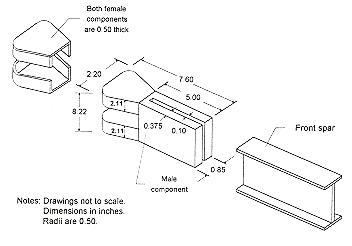
Specifically, replace the bulky original equipment mechanical attachment (left) with the “capped” arrangement (right). Using the Beechcraft Bonanza Model A36 as a starting point, three candidate configurations have been designed to carry the equivalent flight loads of the existing conventional strucuture:

  • Capped
  • Tongue-In-Groove
  • Dovetail

The new configurations are made of conventional materials, and were evaluated using Finite Element Methods.

cap
We expect to obtain experimental data using laboratory test articles.

FUTURE DIRECTION: Design graphite/epoxy type replacement attachment structures.

« Previous Page

© 2016–2026 Log in

Texas A&M Engineering Experiment Station Logo
  • State of Texas
  • Open Records
  • Risk, Fraud & Misconduct Hotline
  • Statewide Search
  • Site Links & Policies
  • Accommodations
  • Environmental Health, Safety & Security
  • Employment