• Skip to primary navigation
  • Skip to main content
  • LinkedIn
  • Videos
  • Research
    • Facilities
    • Vehicles
    • Sponsors
  • Publications
    • Books
    • Journal Papers
    • Conference Papers
  • People
    • Faculty
    • Staff
    • Graduate Students
    • Undergraduate Students
    • Alumni
    • Where VSCL Alumni Work
    • Friends and Colleagues
  • Prospective Students
  • About Us
  • Contact Us
  • Where VSCL Alumni Work

Texas A&M University College of Engineering

Publications

VSCL Graduate Students Present Papers at the 2022 AIAA SciTech Forum

Posted on December 17, 2021 by Garrett Jares

VSCL graduate students Garrett Jares, Chris Leshikar, and Hannah Lehman will present papers in January at the 2022 AIAA SciTech Forum in San Diego, California.
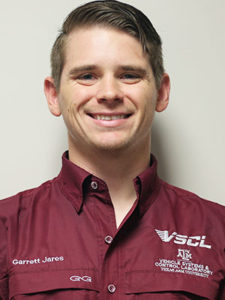
Garrett Jares ’17 will be presenting the paper “Flight Demonstration and Validation of Control Acquisition Autopilot Attack”. The paper investigated a method of cyber attack by which an attacker might take over control of a vehicle. This paper built upon prior work by demonstrating and validating the attack on a DJI F450 quadrotor running the ArduCopter autopilot. The experiments focused on two scenarios. One in which the victim performed regulation while the attacker performed non-zero setpoint control and another in which the victim performed non-zero setpoint control while the attacker performed regulation of the system. The experimental results show how the attack poses a threat to real-world UAS and evaluates its performance under different control scenarios.
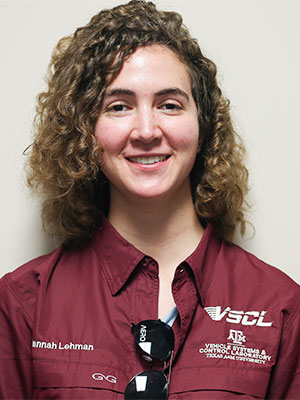


Hannah Lehman ’20 will be presenting the paper “Addressing Undesirable Emergent Behavior in Deep Reinforcement Learning UAS Ground Target Tracking”, which seeks to investigate and further understand the impact of emergent behavior in reinforcement learning controlled UAS. The paper builds on previous work by further investigating a fixed wing tracking a ground target through reinforcement learning and extends the learning environment and possible agent behavior. The emergent behavior is discovered, categorized, and mitigated through a number of algorithmic, reward, and environment modifications. These approaches are evaluated in simulation based on their ability to improve tracking and extend total tracking time.
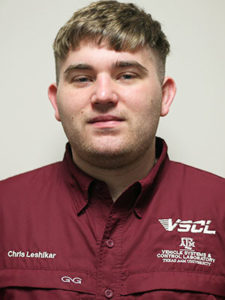


Chris Leshikar ’20 will be presenting the paper “System Identification Flight Testing of Inverted V-Tail small Unmanned Air System”, which addresses challenges in conducting flight testing an inverted V-Tail fixed-winged vehicle and the results obtained from the flight tests. The goal of the flight tests was to obtain longitudinal, lateral/directional and combined longitudinal lateral/directional linear state-space model for the RMRC Anaconda using the Observer\Kalman Identification (OKID) algorithm. Both manual and automated excitation signals were injected into the Anaconda. Parametric sweeps of the excitation signals were performed using the Developmental Flight Test Instrumentation Two (DFTI2) system. The identified longitudinal linear state-space model modelled the longitudinal dynamics well and the identified lateral/directional reasonably well while the identified combined longitudinal lateral/directional model showed decent correlation with the decoupled models.
 

Filed Under: Presentations, Publications

VSCL detection and tracking of small uncrewed air systems research featured in Aerospace America’s 2020 Year in Review

Posted on January 21, 2021 by Hannah Lehman

VSCL research on detection and tracking of small uncrewed air systems research was featured in Aerospace America’s 2020 Year in Review. To view the full article, please visit the Aerospace America website here.

Filed Under: Publications, Target Tracking

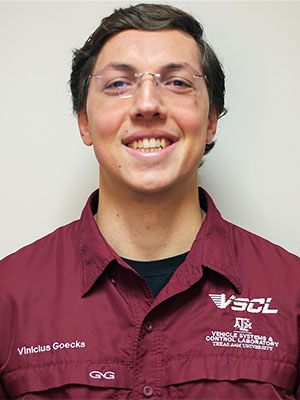
VSCL Alumni Vinicius G. Goecks Receives Best Student Paper Award

Posted on June 15, 2020 by Hannah Lehman

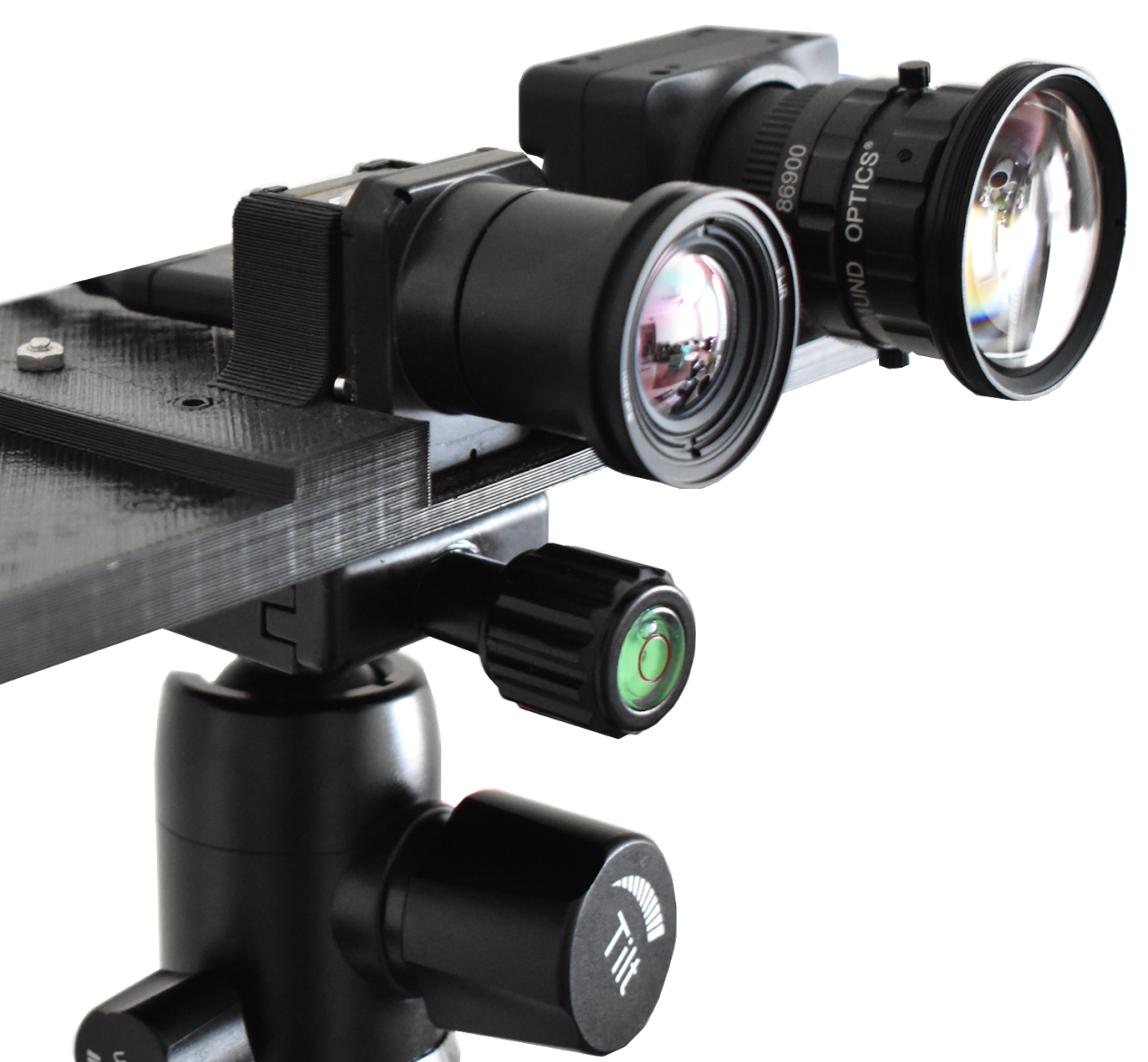
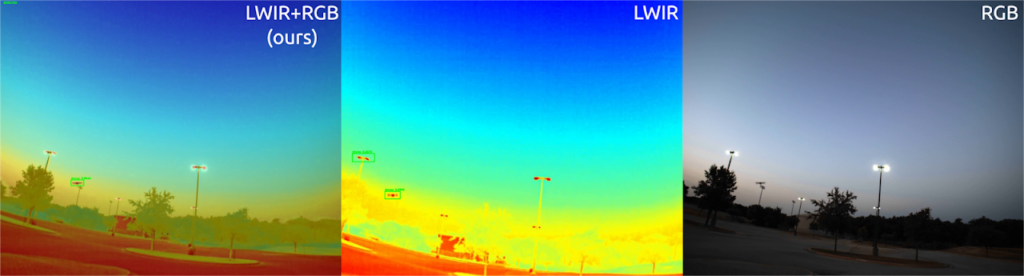
VSCL paper “Combining Visible and Infrared Spectrum Imagery using Machine Learning for Small Unmanned Aerial System Detection”, by Vinicius G. Goecks, Grayson Woods, and John Valasek, has been selected as the winner of the 2020 SPIE Automatic Target Recognition Best Student Paper Award. This paper presented a novel approach to combine data from RGB and long-wave infrared (LWIR) cameras to detect drones through previously difficult environments such as flying above and below the treeline/horizon, in the presence of birds, and glare from the sun.

“The main insight of our approach is that it enables detection and tracking of vehicles at any time of the day, around-the-clock, and in real-time.” says Dr. Goecks. “It also can be built on top of any existing camera system with minimal computation overhead.”

A summary video of the system can be found here, along with videos with all predictions for the single-vehicle case and multiple-vehicle case.

The paper was presented at the 2020 SPIE Defense + Commercial Sensing Conference Digital Forum held 27 April – 8 May 2020. The paper is available at the SPIE Digital Library and the preprint version is available at arXiv.

Long-wave Infrared and Visible Spectrum sensors

Filed Under: Alumni, Awards, Publications

Goecks to Present Cycle-of-Learning Paper at AAMAS 2020 on May 11

Posted on February 25, 2020 by Garrett Jares

VSCL Graduate Research Assistant Vinicius Goecks will present a paper on “Integrating Behavior Cloning and Reinforcement Learning for Improved Performance in Dense and Sparse Reward Environments” at the International Conference on Autonomous Agents and Multi-Agent Systems on May 11, 2020. Co-authored by researchers from the US Army Research Laboratory’s Human Research and Engineering Directorate, this continuing project investigates how to efficiently transition and update policies, trained initially with demonstrations,  using off-policy actor-critic reinforcement learning. This method outperforms state-of-the-art techniques for combining behavior cloning and reinforcement learning for both dense and sparse reward scenarios. Results also suggest that directly including the behavior cloning loss on demonstration data helps to ensure stable learning and ground future policy updates.

The paper documenting this work, “Integrating Behavior Cloning and Reinforcement Learning for Improved Performance in Dense and Sparse Reward Environments,” is available at the official AAMAS 2020 proceedings, together with the supplemental material detailing the training hyperparameters.

A summary video of the proposed method can be found here, along with the project page that accompanied the paper submission.

Filed Under: Presentations, Publications

VSCL’s Reinforcement Learning Control Law for Ground Target Tracking Featured in January’s Aerospace America

Posted on January 28, 2019 by Garrett Jares

The January 2019 edition of Aerospace America’s annual Year in Review section for Information Systems featured the flight-demonstration of a machine learning algorithm developed by a team of VSCL students and faculty.  The article discussed the progression of the project from its first demonstration in December 2017 to more recent demonstrations.  The algorithm is based on Q-Learning and provides a control policy for the vehicle’s orientation in order to keep the target fixed in the image frame autonomously. The algorithm was tested against stationary and randomly moving targets in both a structured and unstructured environment.

The Aerospace America article can be found here.

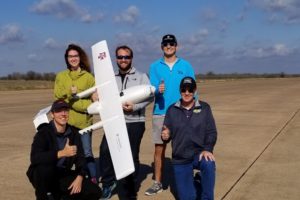
Dr. John Valasek, Vinicius Goecks, Hannah Lehman, Zeke Bowden, and Blake Krpec.

Filed Under: Publications, Target Tracking

VSCL has eight papers selected for presentation at the 2018 AIAA SciTech Conference

Posted on September 24, 2017 by Charles Noren

The Texas A&M University Vehicle Systems & Control Laboratory has had eight papers selected for presentation at the 2018 AIAA SciTech Conference in Kissimmee, Florida. Once paper numbers have been assigned, this post will be updated to reflect the assigned paper numbers.

  1. Famularo, Douglas, and Valasek, John,“A Sampled-Data Approach to Nonlinear Dynamic Inversion Adaptive Control,” 2018 AIAA Guidance, Navigation, and Control Conference, Kissimmee, FL, 8 January 2018.
  2. Famularo, Douglas, Valasek, John, Muse, Jonathan, and Bolender, Michael, “Adaptive Control of Hypersonic Vehicles Using Observer-Based Nonlinear Dynamic Inversion,” 2018 AIAA Guidance, Navigation, and Control Conference, Kissimmee, FL, 8 January 2018.
  3. Goecks, Vinicius, Leal, Pedro, Valasek, John, and Hartl, Darren, “Control of Morphing Wing Shapes with Deep Reinforcement Learning,” 2018 AIAA Information Systems-AIAA Infotech @ Aerospace, AIAA Science and Technology Forum and Exposition, Kissimmee, FL, 8 January 2018.
  4. Harris, Joshua, and Valasek, John, “Direct L1-Adaptive Nonlinear Dynamic Inversion Control for Command Augmentation Systems,” 2018 AIAA Guidance, Navigation, and Control Conference, AIAA Science and Technology Forum and Exposition, Kissimmee, FL, 8 January 2018. 
  5. Leal, Pedro, Goecks, Vinicius, Valasek, John, and Hartl, Darren, “Experimental and Computational Assessment of a Shape Memory Alloy Based Morphing Wing Incorporating Linear and Non-Linear Control, 2018 AIAA/AHS Adaptive Structures Conference, AIAA Science and Technology Forum and Exposition, Kissimmee, FL, 8 January 2018.
  6. Lu, Han Hsun, Rogers, Cameron, Goecks, Vinicius, and Valasek, John, “Online Near Rear Time System Identification on a Fixed-Wing Small Unmanned Air Vehicle,” 2018 AIAA Atmospheric Flight Mechanics Conference, AIAA Science and Technology Forum and Exposition, Kissimmee, FL, 8 January 2018.
  7. Noren, Charles, Valasek, John, and Rogers, Cameron, “Flight Testing of Intelligent Motion Video Guidance for Unmanned Air System Ground Target Surveillance ,” 2018 AIAA Information Systems-AIAA Infotech @ Aerospace, AIAA Science and Technology Forum and Exposition, Kissimmee, FL, 8 January 2018.
  8. Saha, Dipanjan, Valasek, John, Famularo, Douglas, and Reza, Mohammad, “Combined Longitudinal and Lateral/Directional Maneuvers of a Generic F-16A Using Multiple-Time-Scale Control,” 2018 AIAA Guidance, Navigation, and Control Conference, Kissimmee, FL, 8 January 2018.

Filed Under: Presentations, Publications

« Previous Page

© 2016–2026 Log in

Texas A&M Engineering Experiment Station Logo
  • State of Texas
  • Open Records
  • Risk, Fraud & Misconduct Hotline
  • Statewide Search
  • Site Links & Policies
  • Accommodations
  • Environmental Health, Safety & Security
  • Employment